

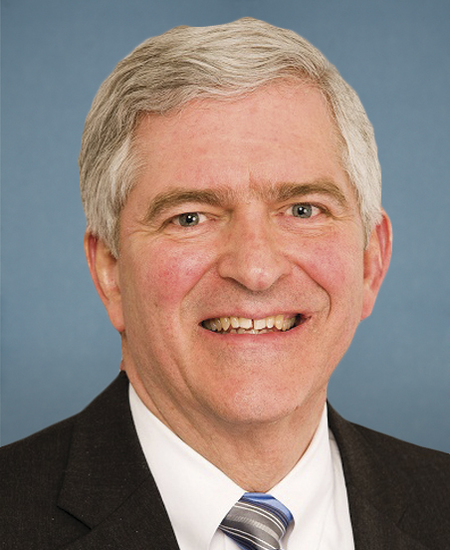
This resolution expresses the sense of the House of Representatives that former President Trump did not engage in insurrection or rebellion against, nor give aid or comfort to the enemies of, the United States.
Rep. Daniel Webster
Sponsored bills
Maddy summaryThis bill establishes a 7-year task force under the Commerce Secretary to address shark interactions with fishing gear (referred to as "shark depredation"). The task force, including representatives from regional fisheries councils, coastal states, and shark experts, will identify research priorities (like shark behavior causes and non-lethal deterrents), develop management strategies, and create educational materials for the fishing community. It directly affects coastal states, fisheries management councils, and commercial fishermen by improving coordination and funding for shark interaction research. The task force must submit biennial reports to Congress and will sunset after 7 years. The bill does not change fishing regulations but focuses on research and education to reduce harmful shark-human interactions.
Maddy summaryHR 7101, the FTC REDO Act, rescinds the Federal Trade Commission's (FTC) January 2024 rule targeting auto retail scams and prohibits the FTC from finalizing future auto retail rules without meeting specific requirements. Before proposing new rules, the FTC must conduct a quantitative study on deceptive practices, consumer testing on new mandates, and an economic analysis of costs/benefits - each subject to 30 days of public comment and independent peer review. These studies must demonstrate evidence of unfair practices, show new rules enhance consumer protection without unduly burdening businesses, and compare the proposed rule to less burdensome alternatives. The bill directly affects the FTC's rulemaking process for auto retail, impacting how regulations on dealerships, disclosures, and consumer protections are developed.
Maddy summaryThe AFIDA Improvements Act of 2024 updates the Agricultural Foreign Investment Disclosure Act to require foreign individuals or entities owning at least 1% of U.S. agricultural land (directly or through multiple ownership tiers) to report their holdings. It creates new enforcement duties for the Farm Production and Conservation Business Center (FPAC-BC) to validate data, ensure compliance, and identify violators. The bill mandates the Secretary of Agriculture to share foreign ownership reports with the Committee on Foreign Investment in the United States (CFIUS) and update agency handbooks using recommendations from a 2024 Government Accountability Office report. These changes apply directly to foreign landowners and agricultural agencies like the Farm Service Agency, aiming to improve transparency around foreign ownership of U.S. farmland.
Maddy summaryHR 6918 blocks a specific federal regulation that would have restricted funding for pregnancy centers. It prohibits the Health and Human Services Secretary from finalizing, implementing, or enforcing a proposed rule (described in a Federal Register notice) affecting pregnancy center funding. The bill directly affects pregnancy centers - defined as organizations supporting maternal and fetal life and providing services like counseling, pregnancy testing, and material support (e.g., diapers, baby clothes). This is a procedural measure preventing a regulatory change, not creating new programs or altering existing funding.
Maddy summaryHRES 974 is a non-binding House resolution supporting the designation of January 21-27, 2024, as "National School Choice Week." It encourages parents to learn about K-12 education options - including public schools, charter schools, private schools, and homeschooling - and promotes public awareness of educational choice. The resolution does not create new laws or policies but formally expresses the House's backing for this annual observance. It directly affects parents and students by highlighting available education pathways and urging communities to host events celebrating school choice. The resolution was introduced by multiple House members and referred to the Education Committee.
Maddy summaryThis bill maintains the existing minimum wage rate for H-2A agricultural workers in each state as it stood on December 31, 2023, through December 31, 2025. It directly affects farms that hire H-2A visa workers by requiring the Department of Labor to use these state-specific rates for wage calculations during this period. The bill also clarifies that wage determinations for these workers must consider their primary job duties, especially when workers perform multiple tasks. This provides stability for farms relying on seasonal agricultural labor without changing the current wage structure.
Maddy summaryHR 6926, the Safe and Open Streets Act, makes it a federal crime to intentionally block public roads or highways to disrupt the movement of goods or commerce. The bill adds a specific offense under federal law for purposefully obstructing, delaying, or affecting commerce by blocking roads, with penalties including fines or up to five years in prison. It directly affects individuals who block roads to interfere with transportation or delivery of goods, such as during protests or demonstrations. The law updates existing statutes to clarify and strengthen penalties for this specific type of obstruction, without changing broader traffic or protest laws.
Maddy summaryHR 6734 prohibits the use of federal funds to finalize, implement, or enforce the Bureau of Alcohol, Tobacco, Firearms, and Explosives' (ATF) proposed rule (2022R-17) defining "engaged in the business as a dealer in firearms." This bill directly affects the ATF by blocking funding for this specific regulatory rule, which was proposed in August 2023. The legislation does not create new requirements but prevents federal resources from being used to advance this particular ATF regulation.
Maddy summaryThis bill amends the Clean Air Act to explicitly include "fuel for ocean-going vessels" in the definition of fossil fuel used for regulatory purposes. It directly affects ocean shipping companies and the Environmental Protection Agency (EPA), as the EPA must create new regulations within one year to implement this change. The key provision expands existing Clean Air Act requirements to cover marine fuels, requiring the EPA to promulgate regulations and submit a report to Congress within 365 days of final rulemaking. The bill does not mandate specific fuel types but adjusts regulatory scope to include ocean vessels.