

Maddy summaryHR 418 requires federal agencies to have rules created under standard rulemaking procedures signed by a Senate-confirmed appointee or initiated by a senior agency official. This affects all agencies developing regulations, mandating that such rules follow specific leadership approval steps unless the agency head certifies public safety or security concerns require an exception. Agencies seeking to bypass this requirement must submit written justification to OIRA (Office of Information and Regulatory Affairs) and publish it in the Federal Register. OIRA will monitor compliance with these procedural requirements, which change the process for rulemaking without altering the substance of regulations.
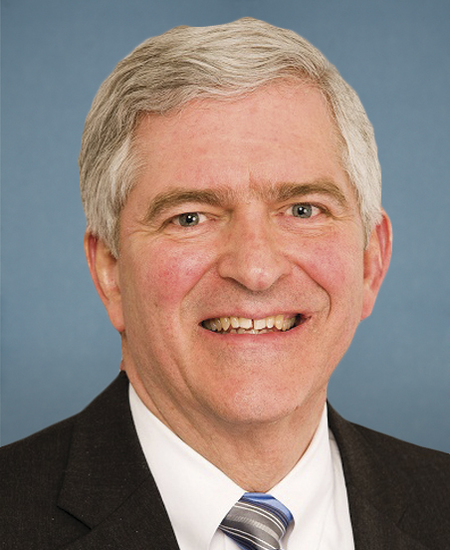
Rep. Daniel Webster
Sponsored bills
Maddy summaryHR 404, the "Hearing Protection Act," reclassifies firearm silencers (devices that reduce gunfire noise) as firearms for federal tax and regulatory purposes. It imposes a 10% federal tax on silencers, requires the destruction of all existing federal silencer registration records within one year, and preempts state laws that tax or regulate silencers. The bill clarifies that silencers are treated as firearms under federal law, including for licensing and marking requirements, and defines "firearm silencer" to include specific components. Note: The bill’s title is misleading - it addresses firearm silencer regulation, not hearing protection for people.
Maddy summaryHR 28, the *Protection of Women and Girls in Sports Act of 2025*, amends Title IX to prohibit federally funded schools from allowing male-identified individuals (based on biological sex at birth) to compete on women’s or girls’ sports teams. It explicitly states that such participation would violate federal civil rights law, with exceptions only for training/practice that doesn’t displace female athletes from roster spots, competitions, scholarships, or other benefits. The bill mandates a Comptroller General study to define "other benefits" lost by girls when males compete in single-sex sports, including impacts on psychological well-being, scholarship access, and safe participation environments. This bill directly affects all athletic programs receiving federal funding, requiring compliance with its biological-sex-based eligibility rules.
Maddy summaryHCONRES 3 is a symbolic congressional resolution expressing support for the Geneva Consensus Declaration, an international agreement signed by 39 countries that affirms women’s health, family protection, and opposes international abortion rights. It urges the U.S. to rejoin the declaration, which emphasizes that no country has an obligation to fund or facilitate abortion and that families are foundational to society. The resolution does not create new laws but reaffirms existing U.S. policies prohibiting federal funding for abortions or coercive family planning abroad. It directly affects U.S. foreign policy direction but has no binding effect on government actions.
Maddy summaryHRES 36 creates a new House committee, the Committee on the Elimination of Nonessential Federal Programs, to review and recommend cutting underperforming or unnecessary federal programs. The committee, composed of 14 members (including four from key committees and a bipartisan chair/vice chair), must annually report findings and propose specific legislation to eliminate targeted programs. It establishes expedited rules for such legislation, including a 10-hour debate limit and no amendments, while dissolving after the 120th Congress. This resolution directly affects House procedures and future budget decisions by streamlining program-cutting efforts.
Maddy summaryHR 342, the Honor Inauguration Day Act, requires the U.S. flag to be flown at its highest peak on every presidential Inauguration Day, overriding any conflicting laws. This procedural bill directly affects all federal buildings and properties where the flag is displayed on that specific day. It mandates a ceremonial flag display to "commemorate and celebrate" the presidential election process, as stated in the congressional findings. The bill makes no substantive policy changes but establishes a specific flag protocol for Inauguration Day.
Maddy summaryThis bill prohibits federal funding under Title X (which supports family planning services) for clinics or organizations that perform or fund abortions, except in cases of rape, incest, or when a physician certifies a life-threatening condition. It requires grantees to certify compliance annually and mandates detailed annual reports to Congress on exceptions, including abortion counts by circumstance. The law directly affects Title X-funded providers who currently offer abortion services, potentially forcing them to stop providing abortions or lose federal funding. Key mechanisms include the certification requirement, exception criteria, and the new reporting obligations for the Secretary of Health and Human Services.
Maddy summaryHR 283 authorizes the President, with coordination from the Secretary of State, to negotiate with Panama to reacquire the Panama Canal. The bill requires the President to submit a report to Congress within 180 days of enactment, detailing negotiation progress, challenges, and expected outcomes. This procedural bill focuses solely on initiating talks and reporting requirements, without specifying repurchase terms or funding. It directly affects U.S. executive branch actions and congressional oversight, not the canal’s current operations or Panama’s government.
Maddy summaryThis bill designates the U.S. Postal Service facility at 290 NW Peacock Boulevard in Port St. Lucie, Florida, as the "Trooper Zachary Fink Post Office Building." It updates all official U.S. government references (including laws, maps, and documents) to use this new name for the facility. The bill directly affects the postal facility and any federal records mentioning its location. As a naming resolution, it has no policy or funding provisions beyond the official designation.
Maddy summaryHR 272, the Protecting Life and Taxpayers Act of 2025, prohibits federal funding (directly or indirectly) to any organization that performs or funds abortions, requiring certification from all recipients. This applies to entities receiving federal funds, including contractors and subsidiaries, with limited exceptions for pregnancies resulting from rape or incest, or when a physician certifies a life-threatening condition. The bill directly affects healthcare providers, clinics, and organizations that rely on federal grants or contracts. It changes existing funding rules by banning federal money from supporting abortion services, except in the specified medical or criminal exceptions.