

Maddy summaryThis bill authorizes Congress to award a Congressional Gold Medal to American individuals and organizations that rescued Jews and other refugees from Nazi persecution between 1933 and 1945. The legislation directs the Speaker of the House and the President pro tempore of the Senate to arrange for the creation and presentation of a single gold medal, which will be given to the United States Holocaust Memorial Museum for display and research. Additionally, the bill permits the Secretary of the Treasury to produce duplicate bronze versions of the medal for sale, with the proceeds funding the mint's public enterprise fund.
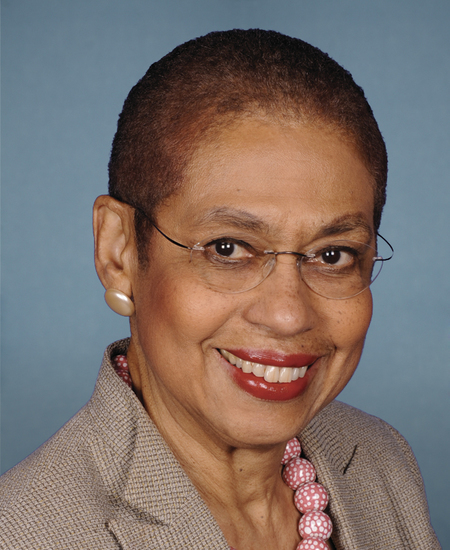
Rep. Eleanor Holmes Norton
Sponsored bills
Maddy summaryThe Juvenile Firearms Safety Act of 2026 makes it illegal for adults to give non-handgun firearms to minors who intend to use them for self-harm or crimes, and it also restricts adults from storing firearms in places where minors can easily access them. The law allows adults to avoid penalties if they keep guns locked up or on their person, and it considers factors like prior knowledge of a minor's mental health or violent behavior when determining liability. Penalties range from one year in prison for simple violations to up to ten years if a minor causes injury or death after receiving a prohibited firearm.
Maddy summaryThe Protect Every Preschooler Act of 2026 expands the federal Gun Free School Zones Act to include early childhood education programs and preschools. This change directly affects firearm regulations by prohibiting the possession of guns in these specific educational settings, which were previously not explicitly covered under the law. The bill achieves this by amending the United States Code to add definitions for early childhood education programs and preschools to the list of protected areas. Consequently, individuals attempting to carry firearms into these locations would be subject to federal penalties under the existing gun-free zone provisions.
Maddy summaryThe Gun Safety Innovation Opportunity Act of 2026 creates a new grant program to fund research and development of advanced safe firearm storage devices by institutions of higher education and firearms manufacturers. These grants, totaling up to $10 million annually from 2027 to 2030, are intended to support technologies that use biometric data or other security measures to prevent unauthorized access to guns and to study how consumers might adopt such devices. To receive funding, applicants must submit detailed plans explaining how their technology will enhance community safety and increase affordability for users. Additionally, the bill requires the Attorney General to submit a report to Congress within a year of enactment, outlining potential ways to support this technology development and its use by law enforcement to prevent suicide.
Maddy summaryThe SAFEGUARD Veterans Act of 2026 strengthens protections for veterans by imposing stricter penalties on individuals who charge unauthorized fees for helping with benefits claims and requiring that only accredited representatives or those under their supervision provide such assistance. Key provisions include creating an online searchable list of recognized and suspended agents, mandating warnings on Department websites about potential predatory practices, and adding questions to claim forms to identify anyone who charged fees for coaching or filing assistance. The bill also updates federal laws to prohibit the use of automated telephone equipment for making repeated calls to federal agencies and requires the Department of Veterans Affairs to establish a more accessible digital system for recognizing representatives and processing complaints. Additionally, the Department must conduct a review of its current regulations regarding representation and report its findings to Congress within 180 days of the law's enactment.
Maddy summaryThis House resolution reaffirms the United States' commitment to protecting refugees and displaced persons by calling for the restoration of the Refugee Admissions Program and asylum protections. It urges federal officials to lift current bans on refugee entry, resume vetting for approved applicants, and increase humanitarian aid to host countries. The measure highlights the economic contributions of refugees and emphasizes the need for fair, humane policies that align with international obligations and domestic law.
Maddy summaryThis resolution expresses support for designating June 21, 2026, as National ASK Day to promote the safe storage of firearms in homes. The bill encourages parents to ask visitors if there are guns in their house and, if so, whether those guns are locked and unloaded. It also urges medical and public health professionals to discuss gun safety and secure storage with their patients and parents. This symbolic measure aims to raise awareness about preventing accidental shootings and suicides among children by ensuring guns are stored safely.
Maddy summaryThis resolution expresses the sense of the House of Representatives that the United States should recognize and encourage acts of kindness to foster community and build social resilience. It highlights the belief that kindness strengthens families, neighborhoods, and the nation by connecting people across differences and promoting a healthier society. The bill does not create new laws or funding but serves as a symbolic statement affirming the value of everyday compassionate actions.
Maddy summaryThe Honor Their Service Act directs the Department of Veterans Affairs to provide grants to eligible organizations that offer immigration legal assistance to noncitizen veterans. These funds are intended to help veterans facing deportation, seeking citizenship, or needing discharge upgrades by covering legal services in removal proceedings, naturalization applications, and reentry efforts. To ensure broad access, the bill requires the VA to establish clear eligibility criteria, consult with relevant service groups, and prioritize funding for entities that can deliver services virtually or in remote areas. The legislation authorizes $20 million in funding for fiscal years 2027 through 2030 and mandates biennial reports to Congress detailing the number of assisted veterans and the effectiveness of the programs.
Maddy summaryThe Air Carrier Access Amendments Act of 2026 updates the Air Carrier Access Act to strengthen protections for individuals with disabilities who travel by air. It directly affects passengers with disabilities, service animal handlers, and air carriers by establishing new rules for handling specific violations. The bill allows aggrieved passengers to file civil lawsuits in federal court without first exhausting administrative remedies and permits courts to award compensatory and punitive damages. Additionally, it mandates that the Department of Transportation refer cases involving patterns of discrimination to the Attorney General for further legal action.