

Maddy summaryHR 7564, "Jaime’s Law," amends federal law to require background checks for ammunition transfers between unlicensed individuals. It mandates that unlicensed people cannot directly buy or receive ammunition; instead, they must go through a licensed dealer who conducts background checks and provides required notices. The bill specifically exempts transfers between family members, law enforcement, temporary safety-related transfers, and certain sporting activities. It does not create a national ammunition registry and leaves state laws intact.
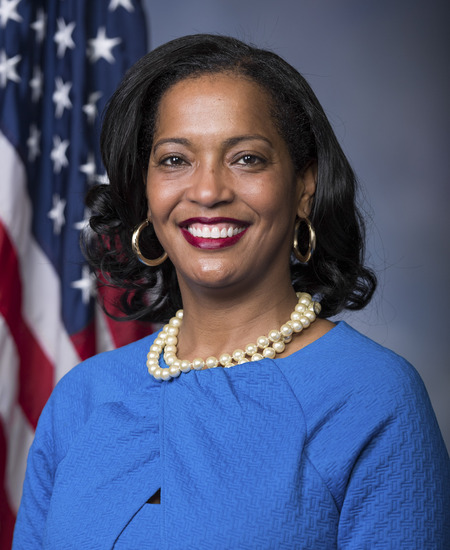
Rep. Jahana Hayes
Sponsored bills
Maddy summaryThe SCAM Act requires online platforms that display paid advertisements (like social media sites) to verify advertiser identities, implement scam detection systems, and remove fraudulent ads within 24 hours of confirmation. It directly affects platforms that accept payment for ads, targeting scams such as fake giveaways, romance scams, and AI impersonations that cost consumers $195 billion in 2024 (per FTC data). Key mechanisms include mandatory identity checks for advertisers, active monitoring systems, and a 72-hour investigation window for reported scams. The law aims to reduce fraud by shifting responsibility to platforms, with enforcement by the FTC and state attorneys general.
Maddy summaryHRES 1058 is a non-binding House resolution recognizing the federal government’s duty to develop a Transgender Bill of Rights. It calls for specific policy changes, including amending civil rights laws to explicitly prohibit discrimination based on gender identity in employment, housing, and public accommodations; protecting access to gender-affirming medical care; and streamlining legal recognition of gender identity on federal documents like passports and voter registration. The resolution also proposes expanding protections for transgender and nonbinary individuals in healthcare, education, immigration, and correctional facilities, while emphasizing community-led policy development. As a resolution, it does not create new law but sets a framework for future legislative action.
Department of Homeland Security Appropriations Act, 2026 This bill provides FY2026 appropriations for various agencies and offices within the Department of Homeland Security (DHS), except for U.S. Immigration and Customs Enforcement (ICE), U.S. Customs and Border Protection (CBP), and management and oversight activities of the Office of the Secretary. Specifically, the bill provides appropriations to DHS for the Federal Protective Service, the Office of Inspector General, the Transportation Security Administration, the U.S. Coast Guard, the U.S. Secret Service, the Cybersecurity and Infrastructure Security Agency, the Federal Emergency Management Agency (FEMA), U.S. Citizenship and Immigration Services, the Federal Law Enforcement Training Centers, and the Science and Technology Directorate. The bill does not provide appropriations for some agencies and activities that have been funded in prior DHS appropriations acts, including ICE, CBP, and management and oversight activities of the Office of the Secretary.
Maddy summaryHR 7497 establishes a new grant program to fund trauma-informed mental health support in schools, authorizing $50 million annually from 2027-2031. It directly affects students, teachers, school staff, and community mental health providers by requiring grantees to develop collaborative services between schools and local mental health systems. Key provisions include funding evidence-based staff training on trauma-informed practices, creating school-community partnerships, and ensuring culturally competent services for students - including those with disabilities. The bill mandates that funds supplement, not replace, existing resources and requires grantees to coordinate with agencies like child welfare and juvenile justice through formal interagency agreements.
Maddy summaryThis bill requires the military to approve leave for abortion and fertility care without commanders needing to know the specific procedure. It mandates reimbursement for travel, lodging, meals, and transportation costs when care isn't available nearby, and prohibits punishment for using this leave. It directly affects active-duty service members and their dependents who face barriers to reproductive care due to military restrictions or location. The policy change removes command discretion in approving leave for time-sensitive reproductive health services.
Maddy summaryHRES 1047 designates January 2026 as "National Mentoring Month" to highlight the importance of mentoring relationships for youth development. The resolution does not create new laws or allocate funding but encourages public awareness and support for existing mentoring programs that help young people build skills, confidence, and educational opportunities. It emphasizes mentoring's role in improving academic performance, career readiness, and mental health outcomes without imposing any new obligations on individuals or organizations.
Maddy summaryHR 7417 reauthorizes and expands the WISEWOMAN program to include heart health screenings and education for low-income women. The bill directs the CDC to award grants for blood pressure and cholesterol screenings, health education, and referrals for heart disease prevention, building on existing breast and cervical cancer services. It specifically targets low-income women who are already served by the WISEWOMAN program or meet new eligibility criteria set by the Secretary. The expansion is funded with $250 million over five fiscal years (2027-2031), with services to be provided by current WISEWOMAN grantees or approved alternative providers.
Maddy summaryThis bill directs the Postmaster General to issue a commemorative "forever stamp" depicting Bayard Rustin, a key civil rights leader and organizer of the 1963 March on Washington. The stamp must meet standard first-class mail postage requirements and remain valid for that purpose even if postage rates later increase. It is purely symbolic, honoring Rustin's legacy in civil rights and LGBTQ+ advocacy without creating new policies or affecting any laws. The Postal Service is the sole entity responsible for implementing this commemorative measure.
Maddy summaryHR 7391, the Community Health Center Drug Pricing Protection Act, requires that Federally Qualified Health Centers (FQHCs) pay the discounted 340B ceiling price for covered drugs **at the time of purchase**, not later through rebates or adjustments. This directly affects FQHCs, which rely on 340B discounts to provide affordable care to low-income patients. The bill amends the Public Health Service Act to prohibit manufacturers from entering agreements where FQHCs initially pay more than the ceiling price, with later reimbursement. It takes effect immediately upon enactment for all new drug purchases and applies to existing agreements starting then.