

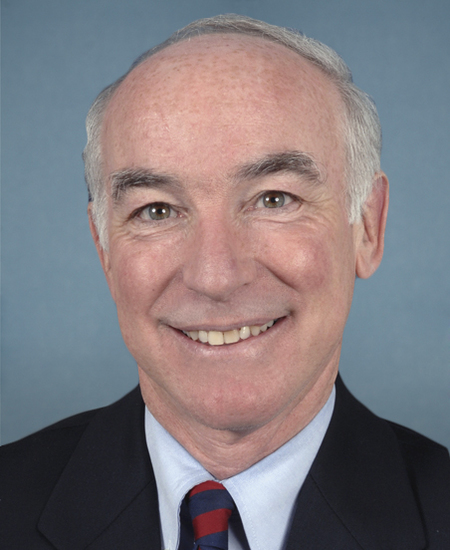
Photo of Joe Courtney
D United States House · District 2 · Connecticut On the 2026 ballot

Rep. Joe Courtney

Compare
Total votes
2,837
all sessions
Attendance
98%
44 missed
Lower than 79% of chamber peers
With party
97%
of cast votes
Near the chamber average
Bipartisan score
2%
crosses aisle rarely
Near the chamber average
Sponsored
868
bills & resolutions
Near the chamber average
Committees
6
assignments
868 bills and resolutions

Sponsored bills

Total
868
Primary
58
Co-sponsor
810
This page
868
matching current filters
Co-sponsor HR 3413
In committee · Indiana House · Co-sponsor
AM Radio for Every Vehicle Act of 2023

Maddy summaryThis bill requires that AM radio receivers be included as standard equipment in all new motor vehicles (such as cars and trucks) sold in the United States, with a rule to be issued by the Department of Transportation within one year. The rule must ensure AM radio is easily accessible on the dashboard and allows manufacturers to use digital AM radio technology instead of traditional AM. During the one-year period between the bill's enactment and the rule's effective date, manufacturers must clearly label vehicles without AM radio. The bill also directs a study to evaluate whether an alternative system could deliver emergency alerts as reliably as AM radio across the country, especially during crises.

In committee May 19, 2023 1 co-sponsor
Co-sponsor HR 3305
In committee · Indiana House · Co-sponsor
Black Maternal Health Momnibus Act

Maddy summary# Comprehensive Summary: Maternal Health and Vaccination Legislation This proposed legislation establishes a comprehensive framework to improve maternal health outcomes across multiple dimensions, with a strong focus on equity and addressing systemic disparities. The bill is organized into 13 titles covering various aspects of maternal health care. ## Key Focus Areas 1. **Maternal Health Equity**: The legislation emphasizes reducing racial and ethnic disparities in maternal health outcomes, with specific provisions targeting communities of color and underserved populations. 2. **Incarcerated Mothers**: Includes provisions to end shackling of pregnant individuals in correctional facilities and establishes programs for maternal health care in prisons and jails. 3. **Technology and Telehealth**: Creates grant programs for telehealth models, technology-enabled collaborative learning, and digital tools to improve access to maternal care. 4. **Climate Change Impact**: Addresses how climate change affects maternal and infant health, with a focus on vulnerable populations. 5. **Public Health Emergencies**: Establishes protocols for maternal care during public health crises like pandemics. 6. **Vaccinations**: Expands maternal vaccination awareness and equity campaigns. ## Major Provisions **Maternal Vaccination Campaign (Title XIII)**: - Expands awareness campaigns to specifically target pregnant and postpartum individuals - Allocates $17 million annually (2024-2028) for vaccination outreach - Includes specific efforts to increase vaccination rates among racial/ethnic minority groups **Technology and Telehealth (Titles IX)**: - $6 million annually for technology-enabled collaborative learning models - $6 million annually for digital tools to promote equity in maternal health - Creates a demonstration project for alternative payment models in maternal care **Climate Change and Maternal Health (Title XII)**: - $100 million for a grant program to protect vulnerable mothers and babies from climate change risks - $5 million for education and training at health profession schools - Establishes a National Institutes of Health Consortium on Birth and Climate Change Research **Incarcerated Mothers (Title VIII)**: - Requires 25% grant reduction for states that don't restrict restraints on pregnant incarcerated individuals - Establishes model programs in Bureau of Prisons facilities for pregnant and postpartum incarcerated individuals - $10 million annually for State and local prison and jail programs **Public Health Emergency Response (Title XI)**: - $100 million for data collection on maternal health during public health emergencies - $30 million for expanding maternal mortality reviews - $45 million for Pregnancy Risk Assessment Monitoring System (PRAMS) - $15 million for research on public health emergencies' impact on maternal health ## Cross-Cutting Themes - **Equity Focus**: Nearly every provision includes specific measures to address racial and ethnic disparities - **Data Collection**: Strong emphasis on collecting and analyzing demographic data - **Community Involvement**: Requires input from community-based organizations and affected populations - **Interagency Coordination**: Mandates collaboration between multiple federal agencies - **Long-Term Investment**: All funding is allocated for 5-year periods (2024-2028) The legislation represents a comprehensive, multi-faceted approach to improving maternal health outcomes in the United States, with particular attention to vulnerable populations and systemic barriers that contribute to poor maternal health outcomes.

In committee May 19, 2023 1 co-sponsor
Co-sponsor HR 3470
In committee · Indiana House · Co-sponsor
Keeping All Students Safe Act

Maddy summaryThe Keeping All Students Safe Act prohibits the use of "unlawful" seclusion and restraint in schools, including physical restraint that's life-threatening, contraindicated for a student's disability, or not properly trained for. It requires schools to use less restrictive interventions first, mandates training for school personnel in crisis intervention, and establishes reporting requirements for restraint incidents, including immediate parent notification and annual public reporting. The bill prohibits using physical restraint as a planned intervention in student education plans and requires states to submit compliance plans with data on restraint incidents disaggregated by race, disability status, and other factors. It applies to public schools and programs receiving federal funding, but does not affect private schools not receiving federal funds or home schools.

In committee May 18, 2023 1 co-sponsor
Co-sponsor HR 3411
In committee · Indiana House · Co-sponsor
PATH to College Act

Maddy summaryThe PATH to College Act (HR 3411) provides federal grants to public transit providers partnering with specific colleges to improve student transportation access. It targets community colleges, historically Black colleges (HBCUs), Tribal Colleges, and minority-serving institutions, prioritizing partnerships where over 25% of students receive Federal Pell Grants. The bill funds new transit routes, added stops, increased service frequency, or operating costs for routes connecting campuses to students’ neighborhoods or other cities. Funding starts at $2 million in 2025 and grows to $10 million annually from 2029 through 2031, with the federal government covering up to 80% of capital projects and 50% of operating costs. This directly supports students at eligible institutions by making public transit to campus more reliable and accessible.

In committee May 18, 2023 1 co-sponsor
Co-sponsor HRES 413
In committee May 17, 2023 1 co-sponsor
Co-sponsor HR 3428
In committee · Indiana House · Co-sponsor
United States Cadet Nurse Corps Service Recognition Act of 2023

Maddy summaryThis bill recognizes service in the U.S. Cadet Nurse Corps during World War II (July 1, 1943-December 31, 1948) by allowing qualifying individuals to receive VA headstones, markers, or other commemorative benefits. It requires the Secretary of Defense to issue honorable discharges to eligible former cadet nurses within one year of enactment, designating their service termination date. The bill does not grant full veteran benefits (like Arlington National Cemetery burial), but honors these individuals as veterans for specific commemorative purposes only. It directly affects surviving cadet nurses who served during that period and were honorably discharged.

In committee May 17, 2023 1 co-sponsor
Co-sponsor HR 3409
In committee · Indiana House · Co-sponsor
Healthy Families Act

Maddy summaryHR 3409, the Healthy Families Act, requires most employers to provide employees with paid sick leave. Employees earn 1 hour of paid sick time for every 30 hours worked, up to a maximum of 56 hours per year, which can be used for their own illness, caring for family members, or addressing domestic violence, sexual assault, or stalking situations. Smaller employers with fewer than 15 employees can provide unpaid sick leave instead of paid leave. The bill includes protections against retaliation for using sick leave and requires employers to inform employees about their rights under this law.

In committee May 17, 2023 1 co-sponsor
Co-sponsor HR 3445
In committee · Indiana House · Co-sponsor
Equity and Inclusion Enforcement Act of 2023

Maddy summaryHR 3445, the Equity and Inclusion Enforcement Act of 2023, strengthens civil rights enforcement in federally funded education programs. It allows individuals to sue for "disparate impact" discrimination (where policies unintentionally harm specific groups) under Title VI of the Civil Rights Act, similar to suing for intentional discrimination. The bill requires schools and programs receiving federal education funds to designate a compliance coordinator and notify students/employees of their contact information. It also creates a new Special Assistant for Equity and Inclusion within the Department of Education to coordinate enforcement efforts and inform the public about their rights under Title VI.

In committee May 17, 2023 1 co-sponsor
Co-sponsor HR 3444
In committee · Indiana House · Co-sponsor
Strength in Diversity Act of 2023

Maddy summaryThe Strength in Diversity Act of 2023 creates a federal grant program to help school districts address racial and socioeconomic isolation in public schools (K-12). Eligible school districts, states, or consortia with significant segregation gaps can apply for planning or implementation grants to develop strategies like equitable school assignments, transportation plans, or teacher recruitment programs. Grants require community engagement, data tracking on academic outcomes and diversity metrics, and plans to sustain efforts after funding ends. The program aims to increase student diversity and improve outcomes for students of color and low-income students in segregated schools.

In committee May 17, 2023 1 co-sponsor
Co-sponsor HR 2814
In committee · Indiana House · Co-sponsor
PRIME Act

Processing Revival and Intrastate Meat Exemption Act or the PRIME Act This bill exempts from federal inspection requirements animals and meats that are slaughtered and prepared at custom animal slaughter facilities for distribution within the state. Under current law, a custom slaughter exemption applies if the meat is slaughtered exclusively for personal, household, guest, or employee uses. Specifically, the bill expands the federal inspection exemption to include the slaughter of animals or the preparation of carcasses, meat, and meat food products that are slaughtered and prepared at a custom slaughter facility in accordance with the laws of the state where the facility is located; and prepared exclusively for distribution to household consumers in the state or restaurants, hotels, boarding houses, grocery stores, or other establishments in the state that either prepare meals served directly to consumers or offer meat and food products for sale directly to consumers in the state. The bill does not preempt any state law concerning (1) the slaughter of animals or the preparation of carcasses, meat, and meat food products at a custom slaughter facility; or (2) the sale of meat or meat food products.

In committee May 15, 2023 1 co-sponsor
Showing 401 to 410 of 868 bills
Previous 1 … 40 41 42 … 87 Next