

Maddy summaryHRES 831 is a symbolic congressional resolution supporting October as "National Domestic Violence Awareness Month." It does not create new laws or allocate funding, but formally expresses the House of Representatives' support for the goals of raising awareness about domestic violence. The resolution urges Congress to continue highlighting domestic violence's impact and backing programs that prevent and address it. It directly affects public awareness efforts and serves as a non-binding statement of congressional support for victims and advocacy organizations.
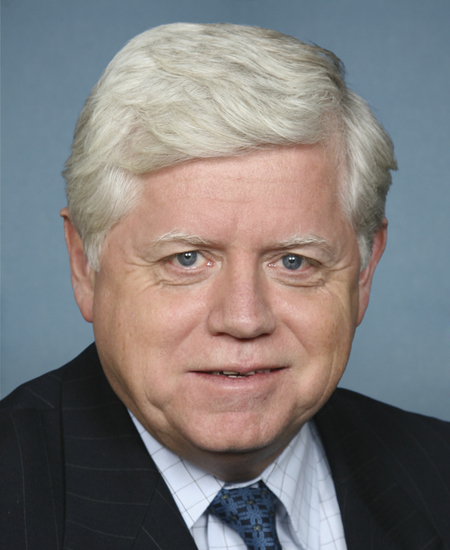
Rep. John B. Larson
Sponsored bills
Maddy summaryHRES 771 is a non-binding resolution expressing the U.S. House of Representatives' support for Israel following Hamas' October 7, 2023, attack. It condemns Hamas' actions, affirms Israel's right to self-defense, and calls for the immediate release of hostages. The resolution also urges enforcement of existing laws restricting aid to terrorists and sanctions against Iran for supporting Hamas. It does not create new policies or allocate funds, as it is a symbolic statement of congressional support.
Maddy summaryHRES 768 is a symbolic House Resolution expressing congressional support for Israel following Hamas' October 7, 2023 attacks. It condemns Hamas' actions, reaffirms Israel's right to self-defense, and calls for the immediate release of hostages. The resolution references the U.S. commitment to Israel's security through existing military aid programs, including the 2016 U.S.-Israel Memorandum of Understanding, and emphasizes enforcement of laws like the Taylor Force Act to prevent U.S. aid from reaching terrorist groups. As a symbolic resolution, it does not create new policy but serves as a statement of congressional support for Israel.
Maddy summaryThis bill authorizes a one-time $40,000 payment to former Air America employees who served at least five years during 1950-1976, or to their survivors (widows/widowers, dependents, or children). Additional $8,000 payments are provided for each full year of service beyond five years. The total funding is capped at $60 million, with claims due within two years of regulations being finalized. It does not create ongoing benefits or change Air America’s legal status, and payments are issued as a single lump sum.
Maddy summaryThis bill, HR 5920 (Student Loan Marriage Penalty Elimination Act of 2023), changes how married couples can deduct student loan interest on their federal taxes. It amends the tax code to allow each spouse to claim a separate $2,500 deduction limit for student loan interest, instead of a single combined limit for the couple. This directly affects married couples filing jointly who pay student loan interest and qualify for the deduction. The change applies to tax years beginning after December 31, 2022, and ensures the deduction aligns with the tax treatment for individual filers.
Maddy summaryHR 5820, the Technology for Energy Security Act, extends a federal tax credit for businesses installing qualified fuel cell technology. It amends the tax code to change the expiration date for this credit from January 1, 2025, to January 1, 2033. This extension provides businesses with a longer timeframe to claim the credit for eligible fuel cell property investments. The bill directly affects companies deploying fuel cell energy systems by making the tax incentive available for an additional decade.
Maddy summaryThe Alice Cogswell and Anne Sullivan Macy Act amends the Individuals with Disabilities Education Act to better serve children and youth who are deaf, hard of hearing, deafdisabled, blind, visually impaired, or deafblind. It requires states to identify and provide appropriate services to these students regardless of how they're classified in disability categories, ensures access to language instruction in the student's primary language (including American Sign Language), and mandates improved data collection about these students. The bill establishes the Anne Sullivan Macy Center on Visual Disability and Educational Excellence to support research, training, and program development for blind and visually impaired students. These changes aim to improve educational outcomes by addressing the unique language, communication, and learning needs of students with sensory disabilities through concrete policy changes to IDEA.
Maddy summaryThe WIC for Kids Act expands eligibility for the Special Supplemental Nutrition Program for Women, Infants, and Children (WIC) by adding new qualifying pathways. It allows children to qualify if they live in households where someone receives Head Start, Indian reservation food assistance, or Puerto Rico/Northern Mariana Islands nutrition block grants, and streamlines documentation by permitting states to use existing records. The bill extends certification periods for children from one to two years and automatically enrolls infants born to current WIC participants. This directly affects low-income families with children who qualify for related assistance programs but previously faced barriers to WIC access.
Maddy summaryThis bill amends the Internal Revenue Code to change how certain insurance companies account for debt instruments (like notes or bonds). It excludes these debts from being treated as "capital assets" for tax purposes, meaning gains or losses from selling them won't be taxed as capital gains. It applies only to specific insurance companies, excluding those with certain tax elections (like Section 831(b) companies) or foreign entities. The change affects tax calculations for these insurers but does not create new family-focused policies, despite the bill's misleading title. The amendment applies to dispositions after enactment, with transition rules for existing losses.
Maddy summaryThe REDUCE Act of 2023 imposes an excise tax on virgin plastic resin and certain single-use plastic products, starting at 10 cents per pound in 2024 and increasing to 20 cents per pound by 2026 (with annual inflation adjustments). The tax applies to manufacturers, producers, and importers of plastic products, with exemptions for small businesses producing less than 10 tons annually. Revenue from the tax will fund the Plastic Waste Reduction Fund, which will support recycling infrastructure, reuse systems, and marine debris cleanup efforts. The bill specifically excludes medical products, certain packaging, and hygiene items from the tax requirements.