

National Office of New Americans Act This bill establishes the National Office of New Americans (NONA) within the Executive Office of the President to promote and support the integration of immigrants and refugees into the social, cultural, economic, and civic life of the United States. The NONA shall also establish the Federal Initiative on New Americans. The initiative shall establish a coordinated federal program to respond effectively to immigrant and refugee integration issues such as language learning, adult education and workforce training, health care, and naturalization.
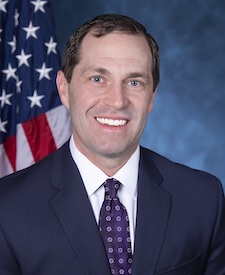
Rep. Jason Crow
Sponsored bills
This resolution expels Representative Marjorie Taylor Greene from the House of Representatives.
American Workforce Recovery Act This bill directs the Department of Labor to provide funding to states and local areas to expand their employment training programs for employed and unemployed individuals, displaced workers, and to meet particular employment needs of employers. Specifically, the bill gives states funding to broaden training options such as remote or virtual for employees and employers by eligible providers of training services. The bill also grants funds to local areas to establish a Pandemic Reskilling Fund for dislocated workers participating in specified training services and career services for adults and dislocated workers. Local areas may also establish individual training accounts to support on-the-job training and supportive services. These individual training accounts must pay for training provided by eligible entities. Any remaining funds in an individual's account may be paid in cash to the individual if such individual obtains full-time, unsubsidized employment within six weeks after completion of the training and has been so employed for six weeks. An individual who fails to meet these requirements must return such funds to the local government for redistribution. The Government Accountability Office must evaluate and report to Congress on (1) the flexibility provided through the individual training accounts; and (2) the overall effectiveness of the funds provided under this bill to promote the skill acquisition, employment, and retention of the individuals who were assisted with such funds, including individuals with barriers to employment.
Student Loan Disclosure Transparency Act of 2021 This bill requires lenders disbursing federal student loans to disclose additional information to borrowers and increase the frequency of such disclosures. Specifically, prior to disbursement, the lender making a loan must disclose (1) the principal amount, interest rate, and number of required monthly payments to be made on the loan; (2) the estimated balance owed by the borrower; and (3) the estimated aggregate amount the borrower will pay. Prior to repayment, the lender must disclose the projected total of interest charges that the borrower will pay on the loan, as well as projections of the borrower's monthly repayment amount. The bill also requires certain disclosures for the life of the loan. In particular, lenders must disclose information about loans on a monthly, rather than periodic, basis. Lenders must also provide borrowers who are not in a repayment status (e.g., a borrower who is in school or in a deferment period) with a monthly statement. The Department of Education must obtain feedback from borrowers and report on the usefulness and effectiveness of such disclosures.
Huntington's Disease Disability Insurance Access Act of 2021 This bill expedites payment of Social Security Disability Insurance (SSDI) benefits and eligibility for Medicare coverage for those with Huntington's disease. This is an inherited disorder that causes brain cells to die, including in areas of the brain that help to control voluntary movement. Specifically, the bill eliminates the 5-month waiting period for SSDI benefits and the subsequent 24-month waiting period for Medicare coverage for individuals with Huntington's disease. Under current law, individuals generally must wait five months after the onset of disability to begin receiving SSDI benefits and an additional 24 months to become eligible for Medicare.
Stop for School Buses Act of 20 21 This bill addresses safety measures and programs to prevent the illegal passing of school buses. Specifically, the Department of Transportation must conduct a review of existing state laws and programs regarding the illegal passing of school buses; create a nationwide public safety campaign to highlight the dangers of illegally passing school buses; review and evaluate the effectiveness of various technologies to enhance school bus safety; review driver education materials in states to determine how the illegal passing of school buses is addressed; and research the connections between the illegal passing of school buses and other safety issues, including distracted driving.
Medicare Multi-Cancer Early Detection Screening Coverage Act of 2021 This bill provides for Medicare coverage and payment for multi-cancer early detection screening tests that are approved by the Food and Drug Administration and that are used to screen for cancer across many cancer types.
This bill directs the Speaker of the House and the President pro tempore of the Senate to arrange for the award of three Congressional Gold Medals to the U.S. Capitol Police (USCP) and other law enforcement agencies that protected the U.S. Capitol on January 6, 2021. Following the award of these medals, one medal shall be given to the USCP, one medal shall be given to the Metropolitan Police Department of the District of Columbia, and one medal shall be given to the Smithsonian Institution and displayed with a plaque listing all law enforcement agencies that participated in protecting the Capitol on January 6, 2021.
Global War on Terrorism Memorial Location Act This bill authorizes the establishment of a National Global War on Terrorism Memorial in the area of the National Mall.
Equality Act This bill prohibits discrimination based on sex, sexual orientation, and gender identity in areas including public accommodations and facilities, education, federal funding, employment, housing, credit, and the jury system. Specifically, the bill defines and includes sex, sexual orientation, and gender identity among the prohibited categories of discrimination or segregation. The bill expands the definition of public accommodations to include places or establishments that provide (1) exhibitions, recreation, exercise, amusement, gatherings, or displays; (2) goods, services, or programs; and (3) transportation services. The bill allows the Department of Justice to intervene in equal protection actions in federal court on account of sexual orientation or gender identity. The bill prohibits an individual from being denied access to a shared facility, including a restroom, a locker room, and a dressing room, that is in accordance with the individual's gender identity.