

No Clearance for Terrorists Act This bill requires processes for vetting an individual for a security clearance to take into consideration whether that individual has been involved in terrorism. The Special Security Directorate of the National Counterintelligence and Security Center must ensure that the guidelines for adjudicating security clearances, when determining what conditions could raise a security concern or disqualify an applicant, include whether the applicant has been involved in or advocated domestic or international terrorism. The directorate must also ensure that guidelines and instructions to federal agencies relating to security clearances include screening an individual for possible involvement with domestic terrorism. The directorate and the Office of Personnel Management must ensure that certain forms related to public trust and national security positions include questions regarding whether the individual submitting the form has been involved in domestic terrorism.
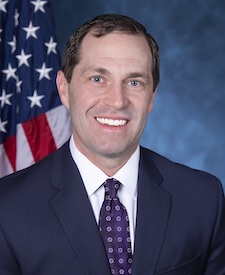
Rep. Jason Crow
Sponsored bills
This resolution condemns and denounces the actions of the Customs and Border Patrol agents who confronted Haitian migrants on horseback using their reins as lashes.
Military Suicide Prevention in the 21st Century Act This bill requires the Department of Defense to carry out a two-year pilot program to program suicide prevention resources onto smart devices issued to members of the Armed Forces and to provide training on these resources.
Temporary Responders for Immediate Aid in Grave Emergencies Act of 2021 or the TRIAGE Act of 2021 This bill provides statutory authority for the Provider Bridge Program, a technology platform funded by the Health Resources and Services Administration to facilitate the provision of health care services via telehealth during the COVID-19 pandemic and future public health emergencies. The bill also authorizes the Department of Health and Human Services to award grants to states for expediting the reactivation of expired licenses or the issuance of temporary authorizations for health care professionals who volunteer to provide services through the Provider Bridge Program.
This bill reauthorizes through FY2026 certain activities under the Impact Aid Program. The program provides funding to local educational agencies that have lost property tax revenue due to the presence of tax-exempt federal property or to those that have experienced increased expenditures due to enrollment of federally connected children (e.g., children living on Indian lands or military bases).
John R. Lewis Voting Rights Advancement Act of 2021 This bill establishes new criteria for determining which states and political subdivisions must obtain preclearance before changes to voting practices may take effect. Preclearance is the process of receiving preapproval from the Department of Justice (DOJ) or the U.S. District Court for the District of Columbia before making legal changes that would affect voting rights. A state and all of its political subdivisions shall be subject to preclearance of voting practice changes for a 10-year period if 15 or more voting rights violations occurred in the state during the previous 25 years; 10 or more violations occurred during the previous 25 years, at least 1 of which was committed by the state itself; or 3 or more violations occurred during the previous 25 years and the state administers the elections. A political subdivision as a separate unit shall also be subject to preclearance for a 10-year period if three or more voting rights violations occurred there during the previous 25 years. States and political subdivisions that meet certain thresholds regarding minority groups must preclear covered practices before implementation, such as changes to methods of election and redistricting. Further, states and political subdivisions must notify the public of changes to voting practices. Next, the bill authorizes DOJ to require states or political subdivisions to provide certain documents or answers to questions for enforcing voting rights. The bill also outlines factors courts must consider when hearing challenges to voting practices, such as the extent of any history of official voting discrimination in the state or political subdivision.
This resolution celebrates the contributions of small businesses in every U.S. community and supports the designation of National Small Business Week. Further, it supports efforts to provide small businesses with aid and assistance through certain programs and initiatives.
This resolution calls on all Americans to observe the 20th anniversary of the September 11 attacks and honor those who lost their lives.
Working Dog Commemorative Coin Act This bill directs the Department of the Treasury to mint and issue 50,000 $5 gold coins, 500,000 $1 silver coins, and 750,000 half-dollar clad coins in commemoration of the service that working dogs provide to society. The designs of the coins minted under this bill shall be emblematic of the contributions of working dogs to society, including in detection, military service, therapy and assistance. Treasury may issue coins only during the one-year period beginning on January 1, 2023. All sales of coins shall include a surcharge, which shall be paid to America's VetDogs for general expenses associated with the fulfillment of its mission.
Veterans' Prostate Cancer Treatment and Research Act This bill requires the Department of Veterans Affairs (VA) to establish in its National Surgery Office an interdisciplinary clinical pathway for all stages of prostate cancer. Clinical pathways are health care management tools designed around research and evidence-based practices that provide direction for the care and treatment of a specific condition. The clinical pathway must include specified elements, such as a diagnosis pathway and a treatment pathway. The VA must consult with and incorporate feedback from (1) veterans who have received prostate cancer care at its medical facilities, and (2) experts in multidisciplinary cancer care and clinical research. Additionally, the VA must publish the clinical pathway on a public VA website and annually update the pathway as needed based on medical literature and evidence-based guidelines. The bill also requires the VA to submit a plan to establish a prostate cancer program using the comprehensive prostate cancer clinical pathway.