

Maddy summaryHR 2394, the Protection from Abusive Passengers Act, creates a federal list of passengers who commit specific aviation security offenses, such as assaulting crew members, threatening flight safety, or tampering with security systems. Individuals added to this list are banned from boarding commercial flights until removed through established procedures. The bill requires the Transportation Security Administration (TSA) to develop clear policies for adding individuals to the list, handling appeals within 5 days for potential errors, and maintaining annual reports on the list's composition. These provisions directly affect passengers convicted of or penalized for the specified offenses, aiming to enhance safety by restricting repeat offenders from flying.
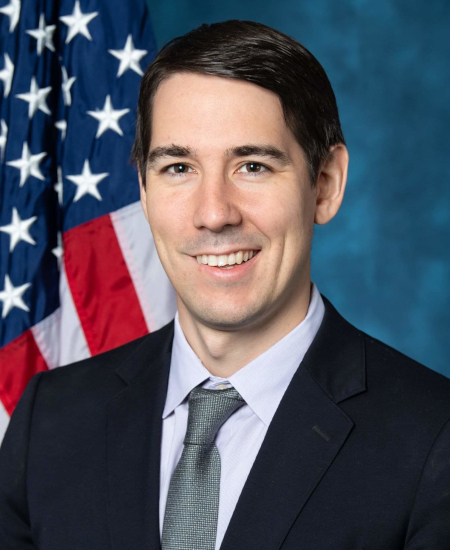
Rep. Josh Harder
Sponsored bills
Maddy summaryHR 1139, the GUARD VA Benefits Act, amends federal law to strengthen penalties for individuals or organizations charging veterans unauthorized fees when helping with VA benefit claims. It directly affects veterans seeking assistance with VA claims and the representatives (like advocates or attorneys) who might charge them fees. The bill adds a new provision making it a violation to solicit, charge, or receive any fee for preparing, presenting, or prosecuting VA claims, punishable by fines under Title 18. This change specifically targets unauthorized fee-charging while excluding fees covered under existing exceptions in sections 5904 or 1984 of the law.
Special Immigrant Visas for Afghan Fulbright Scholars Act of 2023 This bill authorizes special immigrant visas for qualifying citizens or nationals of Afghanistan who were selected for certain educational and cultural exchange programs. Specifically, a citizen or national of Afghanistan (and any accompanying spouse or child of such an individual) may be eligible for a special immigrant visa if the individual was selected between October 7, 2001, and August 31, 2023, to participate in a qualifying educational or cultural exchange program administered by the Department of State, including the J. William Fulbright Educational Exchange Program. Generally, such visas shall be subject to protections and requirements similar to those for special immigrant visas for citizens or nationals of Afghanistan who were employed by the United States in Afghanistan.
Maddy summaryHR 1818, the Aviation Workforce Development Act, expands tax-advantaged savings plans (529 plans) to cover costs for specific aviation training programs. It allows funds from these plans to pay for tuition, fees, and required materials at FAA-certified aviation maintenance technician schools (Part 147) or commercial pilot training programs (Part 61 or 141). This directly affects students pursuing careers as aircraft maintenance technicians or commercial pilots by making these training costs more affordable through existing tax-advantaged savings. The bill amends the tax code to include these programs under "qualified higher education expenses" for 529 plan distributions.
Maddy summaryHR 1831 would award Billie Jean King a Congressional Gold Medal to honor her lifelong advocacy for equal rights in sports and society. The bill directs the Secretary of the Treasury to strike the medal and have it presented by congressional leaders, recognizing her pivotal role in advancing women's equality through tennis (including founding the Women’s Tennis Association and securing equal prize money) and her broader impact on society through initiatives like Title IX advocacy.
Maddy summaryHR 1814, the FIRE STATION Act, creates a federal grant program to help fire departments and emergency medical services (EMS) organizations upgrade or build facilities. It directly affects career, volunteer, and combination fire departments, as well as fire training facilities and nonaffiliated EMS organizations (non-hospital-based EMS groups). The program allocates $750 million for fiscal year 2024, with grants covering facility construction/renovation, safety upgrades (like HVAC or mold remediation), and requiring compliance with current safety codes. Grants are capped at $7.5 million per recipient, must follow Davis-Bacon wage standards, and require annual reporting on fund usage and program effectiveness.
Maddy summaryHR 1794 authorizes the minting of commemorative coins to honor the 2028 Los Angeles Olympic and Paralympic Games. It specifies four coin types ($5 gold, $1 silver, half-dollar clad, and proof silver $1) with defined weights, sizes, and mintage limits (e.g., up to 100,000 gold coins). A surcharge is added to each coin sale (e.g., $35 for gold coins), with all surcharge funds directed to the U.S. Olympic and Paralympic Properties to support legacy programs and the Games' operations. The coins must be issued only during 2028 and are legal tender, though the bill focuses solely on commemorative coinage, not policy changes.
Maddy summaryHR 1637 establishes a Medicare pilot program called the Dementia Care Management Model to improve care for beneficiaries with Alzheimer's disease or related dementia. It requires participating providers to offer comprehensive services - including continuous monitoring, personalized care plans, medication management, and caregiver support - while excluding hospice care. Payments are made monthly based on patient needs (with pathways for uncomplicated vs. complex cases) and include quality-based bonuses, with no cost-sharing for beneficiaries. The model tests whether this approach improves health outcomes, care quality, and caregiver support while reducing Medicare spending, targeting Medicare beneficiaries not in nursing homes or hospice who meet specific diagnosis and enrollment criteria.
Ocean Shipping Antitrust Enforcement Act of 2023 This bill generally applies federal antitrust laws to ocean common carriers. It also provides statutory authority for the current exemption from such laws for assessment agreements involving collectively bargained fringe benefit obligations. The bill also authorizes the Federal Maritime Commission to formally comment on mergers and acquisitions of common carriers and marine terminal operators that are under review by the Department of Justice's Antitrust Division.
Maddy summaryHR 1716, the Global Aircraft Maintenance Safety Improvement Act, requires U.S. airlines to annually report detailed information about heavy maintenance work performed outside the U.S. on their aircraft, including locations, work descriptions, and any safety issues identified after maintenance. It prohibits U.S. airlines from entering new contracts for such maintenance with repair stations in countries classified by the FAA as "Category 2" due to safety deficiencies. The bill also mandates that mechanics and supervisors at foreign repair stations performing heavy maintenance on U.S. aircraft must hold appropriate FAA certifications. Additionally, it establishes a working group with international aviation authorities to review and recommend improvements for overseeing foreign repair stations.