Ritchie Boys Congressional Gold Medal Act This bill provides for the award of a Congressional Gold Medal to the military intelligence professionals at Camp Ritchie, commonly known as the "Ritchie Boys," in recognition of their contributions to the field of human intelligence and their service during World War II.
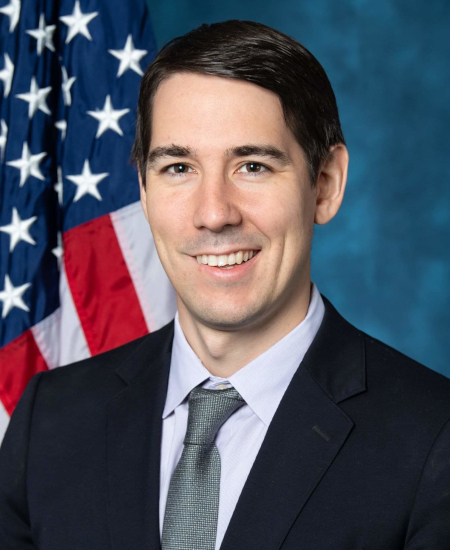
Rep. Josh Harder
Sponsored bills
Maddy summaryThe PATH to College Act (HR 3411) provides federal grants to public transit providers partnering with specific colleges to improve student transportation access. It targets community colleges, historically Black colleges (HBCUs), Tribal Colleges, and minority-serving institutions, prioritizing partnerships where over 25% of students receive Federal Pell Grants. The bill funds new transit routes, added stops, increased service frequency, or operating costs for routes connecting campuses to students’ neighborhoods or other cities. Funding starts at $2 million in 2025 and grows to $10 million annually from 2029 through 2031, with the federal government covering up to 80% of capital projects and 50% of operating costs. This directly supports students at eligible institutions by making public transit to campus more reliable and accessible.
Maddy summaryThis bill allows utility companies (like electricity, gas, and internet providers) and landlords to report payment history for essential services to credit bureaus, expanding credit reporting beyond traditional loans. It directly affects consumers who pay these bills regularly but may lack traditional credit history, potentially helping them build credit. Key provisions limit reporting to actual payment behavior (not usage data) and prevent utilities from reporting late payments if a consumer is on a valid payment plan. The bill also requires a government study to assess the impact of this reporting on consumers within two years.
Maddy summaryHR 3416, the Youth Workforce Readiness Act of 2023, funds after-school and summer programs for youth aged 6-18 (including those in underserved communities) to build job skills and career pathways. It requires grants to community-based organizations partnering with employers, schools, and local agencies to provide career exploration, mentorship, work-based learning, and job training aligned with local industry needs. The program must track outcomes like school attendance, skill development, and job placement, with $100 million authorized annually for 2024-2028. It directly affects youth, community organizations, and local workforce boards through structured, measurable workforce readiness services.
Enhancing COPS Hiring Program Grants for Local Law Enforcement Act This bill allows funds under the Community Oriented Policing Services grant program to be used to provide bonuses for the recruitment and retention of law enforcement officers or career law enforcement officers.
National Law Enforcement Officers Remembrance, Support and Community Outreach Act This bill directs the Department of Justice (DOJ) to establish a National Law Enforcement Officers Remembrance, Support, and Community Outreach Program. The bill further directs DOJ to award a grant under the program to the National Law Enforcement Officers Memorial Fund for the expenses associated with community outreach, public education, and officer safety and wellness programs operated by the of the National Law Enforcement Officers Memorial Fund and National Law Enforcement Museum.
Maddy summaryHRES 363 is a resolution expressing support for recognizing National Police Week, an annual observance established by law to honor law enforcement officers who have died in the line of duty. The resolution acknowledges 556 officers killed in the line of duty during 2022 and calls for ensuring law enforcement officers have necessary equipment, training, and resources to protect both themselves and the public. It encourages the American public to observe National Police Week by honoring law enforcement personnel and recognizing their essential mission in serving communities across the United States. This resolution does not create new law but formally expresses congressional support for an existing observance.
AANAPISI Opportunity Act This bill requires the Department of Agriculture (USDA) to establish a scholarship grant program for covered Asian American and Native American Pacific Islander-serving institutions (AANAPISIs) to provide scholarships in agriculture-related fields. Covered institutions include community colleges, colleges, or universities that (1) have a student body consisting of at least 10% Asian American or Native American Pacific Islander students; and (2) offer associate, bachelors, or other accredited degree programs in agriculture-related fields. USDA may only award the grants to AANAPISIs that have established a competitive scholarship awards process for individuals who intend to pursue a career in agriculture, including in the agricultural disciplines of business, engineering, technology, food science, forestry, home economics, nutrition, soil conservation, non-medical biological sciences, and computer science. This bill also allows USDA to provide competitive grants for up to five years for integrated agricultural research, education, and extension projects at covered AANAPISIs to address U.S. agriculture priorities. The project grants include a 50% matching funds requirement that USDA may waive if certain requirements are met.

Maddy summaryHR 2723 (Local Farms and Food Act of 2023) reforms the Local Agriculture Market Program to support local food systems. It extends funding periods to 2024-2028, increases annual funding to $75 million for program grants and $30 million for partnerships, and creates simplified application processes for projects under $100,000. The bill defines "food hub" to include businesses aggregating and distributing local food products, and adds new project categories like farmers market staff support and food safety equipment. It directly affects small local farms, food hubs, and rural communities by improving access to grants and reducing administrative barriers for market development.
Maddy summaryHRES 372 is a non-binding House resolution expressing support for designating May 2023 as "Mental Health Awareness Month." It does not create new laws or allocate funds but formally urges the nation to recognize mental health as a priority. The resolution supports reducing stigma around mental illness, expanding access to mental health services, and emphasizing that mental well-being is as important as physical health. It highlights the need for greater awareness and resources, particularly for youth, veterans, and communities of color facing mental health disparities, but does not mandate any specific policy changes.