

Maddy summaryHR 1086, the Agriculture Export Promotion Act of 2025, increases funding for two key U.S. Department of Agriculture export programs to boost agricultural trade. It raises the Market Access Program budget from $255 million to $489.5 million annually and doubles the Foreign Market Development Cooperator Program base funding from $200 million to $400 million, with cooperator funding increasing from $34.5 million to $69 million. These changes, effective through 2029, address years of stagnant funding while aiming to counter competitive disadvantages from foreign agricultural export programs. The bill directly supports U.S. agricultural producers - from apple growers to seafood exporters - by expanding access to international markets through these programs.
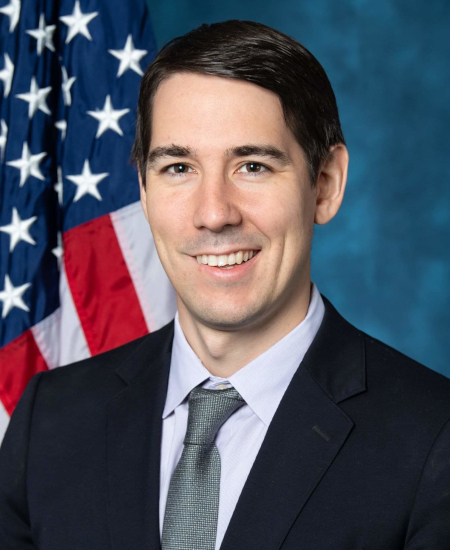
Rep. Josh Harder
Sponsored bills
Maddy summaryHR 1076, the WARN Act, requires the Comptroller General to study how well local, state, and federal emergency alert systems share timely weather emergency information during events like storms or power outages. The study will examine alert methods (including social media), the clarity of public messages, and outdoor siren systems, using feedback from emergency managers and community groups. It mandates a report to Congress within 18 months of enactment, focusing on identifying improvements to alert systems for public safety. The bill itself does not change existing policies but directs a review to inform future emergency communication strategies.
Maddy summaryThe CARGO Act of 2025 prohibits the National Institutes of Health (NIH) from funding any research involving live animals conducted outside the United States. It directly affects foreign organizations and researchers who previously received NIH grants for animal research abroad, including projects funded under the $2.2 billion in grants from 2011-2021. The key provision amends the Public Health Service Act to ban NIH support for such overseas research, requiring all animal research funded by the NIH to occur within the U.S. (including territories and the District of Columbia). This change aims to address concerns about inadequate oversight of animal welfare in foreign labs where self-reported data may be inaccurate.
Protect Our Letter Carriers Act of 2025 This bill requires or authorizes certain actions related to the U.S. Postal Service (USPS). The bill requires the Department of Justice to appoint an assistant U.S. attorney in each judicial district to coordinate and supervise the investigation and prosecution of various crimes related to postal services (for example, assault on a postal service employee, breaking into a post office, or obstruction of mails). The bill also requires the U.S. Sentencing Commission to amend sentencing guidelines to provide that the assault or robbery of a postal employee shall be treated the same as the assault of a law enforcement officer. Additionally, the bill authorizes appropriations for the USPS to install high security collection boxes and replace older versions of the universal mailbox key with electronic versions.
Maddy summaryHR 1046, the Marc Fischer Memorial Act, requires the Bureau of Prisons to implement digital mail scanning technology at all federal prisons to detect fentanyl and other synthetic drugs in inmate mail. It mandates a strategy within 90 days of an evaluation, including 100% scanning of all mail, digital copies of mail to inmates within 24 hours, and physical mail delivery within 30 days for non-contaminated items. The bill directly affects federal prison staff, inmates, and the Bureau of Prisons by aiming to reduce drug-related overdoses and alleviate staff workload tied to mail processing. Implementation must be completed within three years, with annual reports tracking detected drugs and strategy efficiency. The legislation focuses on concrete technological and procedural changes to enhance safety, referencing a successful pilot program at two facilities.
Maddy summaryThe Disaster Resiliency and Coverage Act of 2025 creates a federal program that provides grants to states and tribal governments to help homeowners in high-risk disaster areas make their homes more resilient. The program covers specific mitigation activities like reinforcing roofs, installing flood barriers, and creating fire-resistant features, with a $10,000 per household limit. Homeowners must have an adjusted gross income under $250,000 ($500,000 for joint returns) to qualify. The bill also includes tax benefits, allowing these grant amounts to be excluded from gross income and providing a 30% tax credit for qualifying mitigation expenditures.
Maddy summaryThe Scientific Integrity Act requires federal agencies that fund, conduct, or oversee scientific research to adopt policies preventing political interference in scientific work. These policies must prohibit suppressing, altering, or delaying the communication of scientific findings and ensure hiring and decisions are based on expertise - not politics. Agencies must appoint a Scientific Integrity Officer to enforce the policies, handle complaints, and submit annual reports to Congress and the Office of Science and Technology Policy. The bill directly affects scientists and staff in covered agencies by safeguarding their ability to share research freely and maintain ethical standards in scientific communication.
Maddy summaryHR 1054, the Educators Expense Deduction Modernization Act of 2025, increases the annual tax deduction available to eligible K-12 teachers for out-of-pocket classroom expenses. The bill raises the deduction limit from $250 to $1,000 per year for qualifying educators, applying to taxable years beginning December 31, 2025. It amends Internal Revenue Code sections 62(a)(2)(D) and 62(d)(3) to update the deduction amount and relevant tax year references. This change directly affects elementary and secondary school teachers who itemize deductions and incur eligible classroom costs. The bill makes no other policy changes beyond modernizing the deduction amount and effective date.
Maddy summaryThe CONSTRUCTS Act of 2025 creates a federal grant program to fund training programs at community colleges and career schools focused on residential construction careers. It targets rural areas and underserved populations - including veterans, low-income individuals, and groups with historically low representation in construction - to develop skills in trades like carpentry, plumbing, electrical work, and HVAC. Grants, totaling $20 million annually from 2026-2030, require flexible scheduling, partnerships with construction employers, and plans to increase affordable housing supply through workforce development. The bill directly affects community colleges in rural or underserved regions and their students seeking residential construction careers.
Maddy summaryHR 836, the Emergency Wildfire Fighting Technology Act of 2025, requires the Secretaries of Agriculture and the Interior to evaluate the container aerial firefighting system (CAFFS) for wildfire suppression. Within 90 days of enactment, they must assess CAFFS's potential to mitigate and suppress wildfires, and submit a report to relevant congressional committees within 120 days. This procedural bill directly affects federal wildfire response agencies and focuses solely on mandating an evaluation of this specific technology, with no new funding or policy changes proposed.