

Maddy summaryThis bill establishes a federal pilot program to increase wages for child care workers through competitive grants to states and tribes. It requires grant recipients to use funds directly to supplement wages for eligible workers in licensed child care centers or home-based settings, paid quarterly, with up to 10% of funds allowed for administrative costs. The program must track impacts on worker retention, well-being, care quality, and affordability, and report results to Congress within two years. It targets low-wage workers in underserved areas, including those serving infants, toddlers, children with disabilities, or during nontraditional hours.
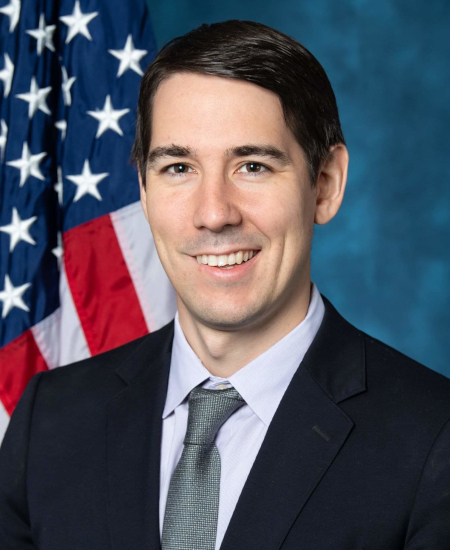
Rep. Josh Harder
Sponsored bills
Maddy summaryHR 1827, the Child Care Availability and Affordability Act, increases tax benefits for families with child care needs and employers providing child care. It raises the employer child care credit from 25% to 50% of expenses with a maximum credit of $500,000 (up from $150,000), and creates a new household and dependent care credit allowing families to claim up to 50% of eligible child care expenses, with the credit amount reduced as income increases, up to $8,000 for multiple children. The bill directly affects working parents with children under 13 or dependents needing care, as well as employers offering child care benefits. Key provisions include expanded credit amounts, new definitions for qualifying care, and special rules for small businesses.
Combat Veterans Pre-Enrollment Act of 2025 This bill requires the Department of Veterans Affairs (VA) to establish a program to carry out all activities necessary to permit certain members of the Armed Forces to elect to enroll in the VA health care system on the date of separation of such members from active service. Specifically, the program is for those who served on active duty in a theater of combat operations during a period of war after the Persian Gulf War or in combat against a hostile force during a period of hostilities after November 11, 1998. The VA must, in conjunction with the Department of Defense (DOD) and Department of Homeland Security, establish a mechanism to permit a member of the Armed Forces to elect to pre-enroll in the VA health care system during the 180-day period preceding the date of separation of the member from active service. The VA-DOD Joint Executive Committee must brief Congress on the efforts to implement such a mechanism under the program. The Government Accountability Office must report on the program and include recommendations with respect to methods to improve the program.
Maddy summaryThis bill permanently removes the expiration date for employer payments toward employee student loans under tax-exempt educational assistance programs. It amends the tax code to eliminate the previous deadline of January 1, 2026, making the tax exclusion for such payments permanent. The change directly affects employers offering student loan repayment benefits as part of their compensation packages, allowing them to continue providing this tax-advantaged benefit without future expiration. The key provision simply extends an existing tax exclusion indefinitely, with no new requirements or funding changes.
Maddy summaryThis bill sets specific maximum monthly milk allowances for participants in the WIC program (Women, Infants, and Children). It directly affects WIC recipients, including pregnant women, new mothers, infants, and children up to age 5, by establishing clear upper limits for milk distribution under different food packages. The key provision specifies that Food Package IV may not exceed 16 quarts of milk monthly, while Packages V, VI, and VII may not exceed 22, 22, and 24 quarts respectively. These limits apply to milk provided under the WIC food packages outlined in federal regulations. The change is a direct policy adjustment to the existing WIC nutrition program structure.
Maddy summaryHR 1787 authorizes the U.S. Mint to produce commemorative coins honoring baseball legend Roberto Clemente, including $5 gold, $1 silver, and half-dollar coins, with specific specifications for weight, size, and metal content. The bill requires the coins to feature Clemente's image and commemorative inscriptions, and mandates a surcharge ($35 for gold, $10 for silver, $5 for half-dollar) paid to the Roberto Clemente Foundation for its educational, youth sports, and disaster relief programs. All coins must be minted in 2027, sold at face value plus surcharge and production costs, and will be legal tender. The bill focuses solely on the coin program, not broader policy changes.
Maddy summaryHR 1786 amends the Robert T. Stafford Disaster Relief Act to explicitly include "algal blooms" as a qualifying event for federal disaster declarations. This change expands eligibility for federal disaster assistance to communities affected by harmful algal blooms, which can contaminate water and harm ecosystems. The bill modifies Section 102(2) of the Stafford Act (42 U.S.C. 5122) by adding "algal blooms" to the list of recognized disasters alongside drought. It is a procedural adjustment to the law's definition, not a new funding or program.
Safe Schools Improvement Act This bill requires states to direct their local educational agencies (LEAs) to establish policies that prevent and prohibit bullying and harassment of elementary and secondary school students. In particular, these policies must prohibit bullying and harassment based on race, color, national origin, disability, religion, or sex. Sex includes sexual orientation, gender identity, and sex characteristics (including intersex traits). Further, LEAs must provide (1) students, parents, and educational professionals with annual notice of the conduct prohibited in their disciplinary policies; (2) students and parents with grievance procedures that target such conduct; and (3) the public with annual data on the incidence and frequency of that conduct at the school and LEA level. The Department of Education must conduct and report on an independent biennial evaluation of programs and policies to combat bullying and harassment in elementary and secondary schools. The National Center for Education Statistics must collect state data to determine the incidence and frequency of the conduct prohibited by LEA disciplinary policies.
Maddy summaryHR 1383 extends the Secure Rural Schools program, which provides payments to counties and states with federal land (like national forests) to support local schools and services. It reauthorizes these payments through fiscal year 2026, adding specific rules to ensure counties don’t receive duplicate payments for 2024 and 2025. The bill also extends related authorities for special projects on federal land and county fund expenditures through 2028-2029. This directly affects rural communities adjacent to federal lands that rely on these payments for education and infrastructure.
Maddy summaryThe Headwaters Protection Act of 2025 reauthorizes and updates the Water Source Protection Program under the Healthy Forests Restoration Act. It expands eligible partners to include acequia associations, stormwater/wastewater entities, land-grant mercedes, and water-delivery private groups, while requiring landowner consent for projects on adjacent non-Federal land within the same watershed. The bill prioritizes projects addressing drought, wildfire, and climate resilience, mandates 10% of annual funding ($30 million per year from 2025-2033) for partner capacity-building, and ensures projects protect water supply systems and forest health. It explicitly states the law does not override state water rights or authorize federal land acquisition.