

Maddy summaryHRES 473 is a non-binding House resolution calling on the U.S. government to urgently use diplomatic efforts to ensure food and medical supplies reach civilians in Gaza. It directly addresses the needs of approximately 2.2 million Palestinians facing acute hunger, including 10,000 children identified with acute malnutrition, following a border blockade that blocked aid from March to May 2025. The resolution specifically urges the White House and State Department to secure "immediate and secure delivery and disbursement" of aid and a lasting end to the conflict, citing collapsed bakeries, exhausted food rations, and a near-total health system collapse.
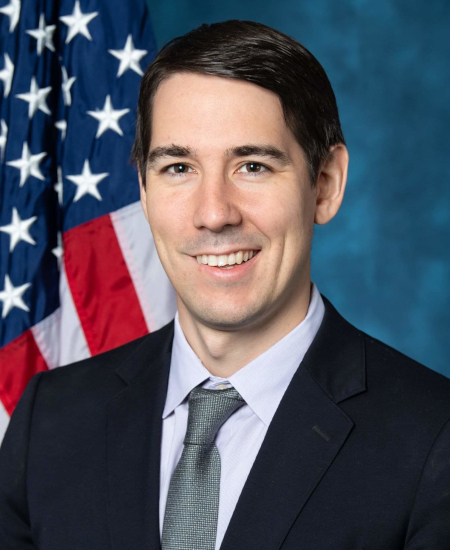
Rep. Josh Harder
Sponsored bills
Maddy summaryHR 3707, the NSF and USDA Interagency Research Act, requires the U.S. Department of Agriculture (USDA) and the National Science Foundation (NSF) to coordinate research efforts through formal agreements. It directs them to jointly fund collaborative projects focused on agricultural challenges, food security, rural economic development, and emerging technologies like AI and precision agriculture. The bill establishes mechanisms for awarding grants to universities, community colleges, and nonprofits to create centers for agricultural research and workforce development, while mandating annual reports to Congress on coordination progress. This legislation directly affects USDA, NSF, and institutions seeking federal research funding in agricultural science.
Maddy summaryThis bill repeals key provisions of the Protection of Lawful Commerce in Arms Act (PLCAA), which previously shielded gun manufacturers and dealers from civil lawsuits. It allows gun trace data from the federal Firearms Trace System to be used as evidence in civil court cases involving gun violence. Victims of gun violence (or their families) who sue gun manufacturers, dealers, or distributors in state or federal court can now access and rely on this trace information. The bill directly changes the legal landscape by removing a major barrier to holding gun industry entities accountable in civil cases. It does not alter criminal proceedings or affect gun ownership rights.
Maddy summaryHR 3694, the VALID Act of 2025, requires lenders to include specific information about VA loans in mortgage disclosures. It amends the National Housing Act to mandate that disclosures state the loan-to-value ratio and clarify that VA loans are available under Chapter 37 of Title 38 (veterans' benefits law), assuming prevailing interest rates. The bill also requires the Federal Housing Finance Agency to add a military service question to the Uniform Residential Loan Application form, placing it above the signature line within six months of enactment. This directly affects veterans and active-duty service members applying for VA-guaranteed mortgages, as well as the lenders processing those applications.
Maddy summaryThis bill updates federal housing law to explicitly prohibit discrimination based on sexual orientation and gender identity. It amends the Fair Housing Act to include these characteristics as protected classes alongside race, color, religion, sex, and other existing categories. The law now covers discrimination against individuals due to their own sexual orientation or gender identity, or because of their association with someone who has these characteristics. This applies to all housing providers, including landlords, real estate agents, and mortgage lenders, making it illegal to deny housing or services based on these factors.
Maddy summaryHR 3661, the Extreme Weather and Heat Response Modernization Act, requires FEMA to review and update how it defines "incident periods" (timeframes for disaster response) for extreme weather events. Within one year, FEMA must form an advisory panel with diverse emergency management representatives to assess current procedures, particularly for slow-onset, compound, or cascading disasters, and submit findings to Congress. The bill also mandates FEMA to issue new guidance on community cooling centers, resilience centers, and extreme heat/cold mitigation projects within a year, and conduct a study on impacts to vulnerable communities, infrastructure, and emergency alerts. These changes directly affect FEMA, state/local emergency managers, and communities facing extreme heat or cold events by modernizing response protocols and funding eligibility.
Maddy summaryThis bill requires colleges and universities to include suicide prevention contact information on student identification cards or their websites. Specifically, institutions must list the 988 Suicide and Crisis Lifeline, Crisis Text Line, and their campus mental health center on student IDs (or post the info online if IDs aren't issued). The requirement applies to all higher education institutions creating student ID cards after the bill's enactment, with a one-year implementation period. It directly affects students by ensuring immediate access to critical mental health resources through a routine campus tool.
Maddy summaryThis bill reorganizes collective bargaining rules for Veterans Health Administration (VHA) employees by removing existing subsections (b), (c), and (d) from Section 7422 of Title 38 and redesignating the current subsection (e) as (b). It directly affects VA health care employees by altering the structure of their collective bargaining framework. The bill explicitly states it does not change the Secretary of Veterans Affairs' existing authorities over incentive pay or expedited hiring under Section 706 of Title 38. The change is purely procedural, focusing on the internal organization of bargaining rules without introducing new employee benefits or obligations.
Maddy summaryHRES 446 is a symbolic House resolution supporting the designation of July 3-10, 2025, as "National Extreme Heat Awareness Week." It aims to raise public awareness about extreme heat dangers to health, infrastructure, agriculture, and safety through educational campaigns and community initiatives. The resolution encourages federal and local efforts to promote heat safety knowledge and preparedness, citing that extreme heat causes over 1,300 U.S. deaths annually. It does not create new laws or allocate funding but formally expresses congressional support for this awareness observance.
Maddy summaryHouse Resolution 442 is a symbolic measure recognizing California's public higher education systems (University of California, California State University, and community colleges) and reaffirming the U.S. commitment to supporting them. It highlights their economic impact - such as generating billions in state revenue and supporting hundreds of thousands of jobs - and their role in providing accessible education, particularly for low-income and underrepresented students. The resolution does not create new policies or funding but formally acknowledges these systems' contributions to California's economy and workforce development. It serves as a statement of support without altering existing programs or obligations.