

This bill extends by one year the deadline for completion of proposed management plans for the Appalachian Forest National Heritage Area in West Virginia and Maryland, the Maritime Washington National Heritage Area in Washington, the Mountains to Sound Greenway National Heritage Area in Washington, the Sacramento-San Joaquin Delta National Heritage Area in California, the Santa Cruz Valley National Heritage Area in Arizona, and the Susquehanna National Heritage Area in Pennsylvania.
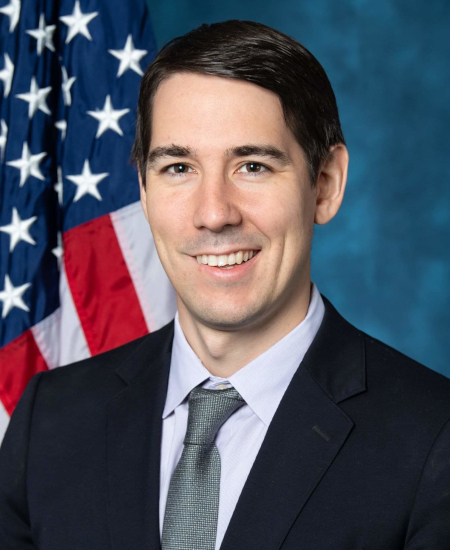
Rep. Josh Harder
Sponsored bills
Global Health Security Act of 2021 This bill directs the United States to implement a strategy to strengthen global health security, including by requiring the President to create the Global Health Security Agenda Interagency Review Council to implement the Global Health Security Agenda. The agenda is an initiative launched by nearly 30 nations to address global infectious disease threats. The council's responsibilities include (1) providing policy recommendations on agenda-related goals, objectives, implementation, and other international efforts to strengthen pandemic preparedness and response; (2) helping federal agencies with implementation; and (3) reviewing the progress and challenges in achieving U.S. commitments, including assistance to help other countries meet agenda targets. The bill also directs the federal agencies involved with the agenda to prioritize its implementation and to take certain steps to achieve that goal. The President shall coordinate a strategy for responding to global health security emergencies and submit a report on the implementation of this strategy. Additionally, the Department of State should seek to enter into negotiations with donors, relevant United Nations agencies, and other multilateral stakeholders to establish a Fund for Global Health Security and Pandemic Preparedness that (1) closes gaps in global health security and pandemic preparedness; and (2) builds capacity in eligible partner countries related to global health security, infectious disease control, and pandemic preparedness. The fund should provide grants, technical assistance, and innovative funding mechanisms to achieve its purposes.
Safe Schools Improvement Act of 2021 This bill requires states to direct their local educational agencies (LEAs) to establish policies that prevent and prohibit bullying and harassment of elementary and secondary school students. In particular, these policies must prohibit bullying and harassment based on race, color, national origin, sex, sexual orientation, gender identity, disability, or religion. Further, LEAs must provide (1) students, parents, and educational professionals with annual notice of the conduct prohibited in their disciplinary policies; (2) students and parents with grievance procedures that target such conduct; and (3) the public with annual data on the incidence and frequency of that conduct at the school and LEA level. The Department of Education must conduct and report on an independent biennial evaluation of programs and policies to combat bullying and harassment in elementary and secondary schools. The National Center for Education Statistics must collect state data to determine the incidence and frequency of the conduct prohibited by LEA disciplinary policies.
Wildfire Emergency Act of 2021 This bill provides for programs and activities in support of forest restoration, wildfire mitigation, and energy resilience. The Department of Agriculture (USDA) shall select landscape-scale forest restoration projects to implement on National Forest System land and on land adjoining National Forest System land. USDA shall establish a pilot program under which USDA may enter into conservation finance agreements with public or private persons to implement and monitor such projects. The Department of Energy shall establish a program to support critical infrastructure and microgrids, including by improving the energy resilience and power needs of critical facilities (e.g., hospitals) through the use of microgrids, renewable energy, energy efficiency, reduced electricity demand, and on-site storage. USDA and the Department of the Interior shall establish one or more centers in western states to train individuals in methods relevant to the mitigation of wildfire risk. USDA shall establish a competitive grant program to support workforce development in forestry and fire management.
This resolution supports the designation of a National Warrior Call Day to encourage Americans to talk with members of the Armed Forces and veterans to connect them with support.
Federal Retirement Fairness Act This bill modifies the federal civilian service that is creditable service under the Federal Employees Retirement System (FERS). Specifically, it expands the nondeduction service that may be creditable under FERS. Nondeduction service is federal service where an employee's pay is not subject to retirement deductions (e.g., service under a temporary appointment). Currently, nondeduction service performed before January 1, 1989, is creditable under FERS so long as a deposit is made into the retirement fund to cover the period of nondeduction service. This bill allows nondeduction service performed on or after January 1, 1989, to be creditable under FERS so long as a deposit is made into the retirement fund.
Sgt. Ketchum Rural Veterans Mental Health Act of 2021 This bill requires the Department of Veterans Affairs (VA), during FY2022, to establish and maintain three new centers of the Rural Access Network for Growth Enhancement (RANGE) Program in areas with interest from personnel and a need for additional mental health care for rural veterans. The RANGE Program serves veterans in rural areas who are experiencing mental illness. The bill requires the Government Accountability Office to conduct a study and report on whether the VA has sufficient resources to serve rural veterans who need mental health care that is more intensive than traditional outpatient therapy.
Low-Income Water Customer Assistance Programs Act of 2021 This bill directs the Environmental Protection Agency (EPA) to establish grant programs to assist low-income households in maintaining access to drinking water and wastewater services. Specifically, the EPA must establish a program to assist such households with paying drinking water bills. States and community water systems may apply for grants. In addition, the EPA must establish a program to assist such households with paying wastewater utility bills. States may apply for grants for small community-serving wastewater facilities. Certain municipalities may apply for grants for (1) treatment works for municipal waste, or (2) municipal separate storm sewer systems.
Pandemic Unemployment Assistance Fraud Protection Act This bill creates several requirements for states to address fraudulent claims for Pandemic Unemployment Assistance (PUA), temporarily increases penalties for fraud related to PUA, and requires each state to establish a hotline for victims of unemployment fraud. Specifically, the bill requires states to cross reference PUA claims with federal and state prison records and E-Verify to ensure that claimants are eligible for PUA, submit to the Department of Labor plans to recover fraudulently obtained PUA, develop an anti-fraud task force to investigate and recover fraudulently obtained PUA, make restitution to Labor for the amount of any overpayment of PUA made by the state, and establish a hotline designed to encourage individuals who are victims of unemployment fraud and have received an incorrect statement of unemployment compensation to report that fraud. The bill also temporarily enhances the maximum penalty for fraud related to PUA through December 31, 2021, so that the offense is classified as fraud in relation to a presidentially declared major disaster or emergency and punishable by up to 30 years imprisonment, a fine of up to $1,000,000, or both.
Better Care Better Jobs Act This bill establishes programs and provides funds for state Medicaid programs to improve home- and community-based services (HCBS), such as home health care, personal care, case management, and rehabilitative services. Specifically, the bill provides funds for the Centers for Medicare & Medicaid Services to award planning grants, develop quality measures, and provide technical assistance to states regarding specified HCBS improvements, particularly with respect to access, utilization, and the associated workforce. The bill also increases the Federal Medical Assistance Percentage (i.e., federal matching rate) for HCBS in states that develop plans and meet specified benchmarks for improvements. The bill also makes permanent (1) the Money Follows the Person Rebalancing Demonstration Program (a grant program to help states increase the use of HCBS for long-term care and decrease the use of institutional care), and (2) certain provisions regarding Medicaid eligibility that protect against spousal impoverishment for recipients of HCBS.