Maddy summaryHRES 952 is a resolution expressing the U.S. House of Representatives' support for designating February 28, 2022, as "Rare Disease Day." It recognizes that rare diseases affect fewer than 200,000 people in the U.S. and that over 7,000 such conditions impact approximately 1 in 10 Americans. The resolution calls for improved awareness, earlier diagnosis, and support for developing treatments, diagnostics, and cures for rare diseases. As a symbolic gesture, it does not create new laws, funding, or direct policy changes but aims to highlight challenges faced by individuals with rare diseases and their families.
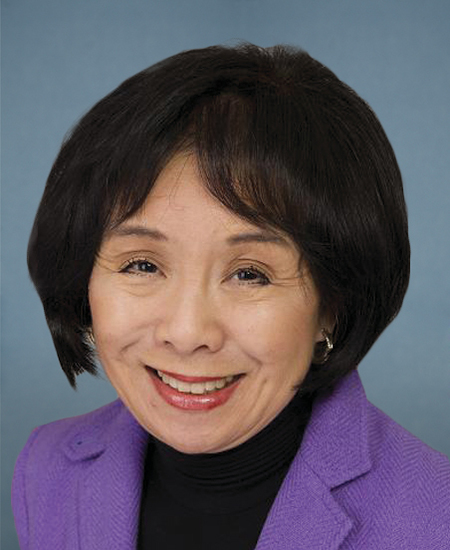
Rep. Doris O. Matsui
Sponsored bills
Women's Health Protection Act of 2021 This bill prohibits governmental restrictions on the provision of, and access to, abortion services. Specifically, governments may not limit a provider's ability to prescribe certain drugs, offer abortion services via telemedicine, or immediately provide abortion services when the provider determines a delay risks the patient's health. Furthermore, governments may not require a provider to perform unnecessary medical procedures, provide medically inaccurate information, comply with credentialing or other conditions that do not apply to providers whose services are medically comparable to abortions, or carry out all services connected to an abortion. In addition, governments may not (1) require patients to make medically unnecessary in-person visits before receiving abortion services or disclose their reasons for obtaining such services, or (2) prohibit abortion services before fetal viability or after fetal viability when a provider determines the pregnancy risks the patient's life or health. The bill also prohibits other governmental measures that are similar to the bill's specified restrictions or that otherwise single out and impede access to abortion services, unless a government demonstrates that the measure significantly advances the safety of abortion services or health of patients and cannot be achieved through less restrictive means. The Department of Justice, individuals, or providers may bring a lawsuit to enforce this bill, and states are not immune from suits for violations. The bill applies to restrictions imposed both prior and subsequent to the bill's enactment.

Environmental Justice Air Quality Monitoring Act of 2022 This bill requires the Environmental Protection Agency to implement a pilot program to award, on a competitive basis, grants or contracts to state, local, and tribal air agencies to carry out specified projects for hyperlocal air quality monitoring systems in environmental justice communities (i.e., communities with significant representation of communities of color, low income communities, or tribal and indigenous communities that experience, or are at risk of experiencing, higher or more adverse human health or environmental effects). A project carried out using a grant or contract awarded under the pilot program may not exceed five years in duration.
Autism Family Caregivers Act of 2022 This bill establishes a pilot program to provide training for caregivers on improving health and other outcomes for children with autism spectrum disorder and other developmental disabilities or delays. To carry out the program, the Health Resources and Services Administration (HRSA) must award grants to, among other eligible entities, health systems and nonprofits to provide the training. HRSA must also establish a national center to provide technical assistance to grant recipients and to evaluate the program.
Electric Vehicles for All Act or the EVs for All Act This bill requires the Department of Energy to provide grants to eligible entities (i.e., public housing agencies, local governments, and certain non-profit organizations) to facilitate electric vehicle sharing services operated at public housing projects.
Stop Unfair Medicaid Recoveries Act of 2022 This bill prohibits state Medicaid programs from using estate recovery to recoup the costs of benefits. States must withdraw property liens within 90 days of the bill's enactment.
This resolution extends collective bargaining rights prescribed in the Congressional Accountability Act of 1995 to employees of the House of Representatives.
Global Respect Act This bill imposes visa-blocking sanctions on foreign persons responsible for or complicit in violating the human rights of individuals due to actual or perceived sexual orientation, gender identity, or sex characteristics. The President must report and periodically update a list of foreign persons responsible for such human rights violations and apply sanctions accordingly. The Department of State must designate at least one senior officer who shall be responsible for tracking violence and discrimination against individuals based on actual or perceived sexual orientation, gender identity, or sex characteristics in foreign countries.
Designates the facility of the United States Postal Service located at 120 4th Street in Petaluma, California, as the "Lynn C. Woolsey Post Office Building."
Keeping School Meals Flexible Act This bill extends authority through June 30, 2023, for the Department of Agriculture (USDA) to waive certain requirements for the school meal programs to address COVID-19. The bill extends the authority for USDA to issue a single waiver of child nutrition program requirements to all states under the National School Lunch Program for purposes of providing meals and snacks with appropriate safety measures with respect to COVID-19; grant waivers of requirements to allow non-congregate feeding in the Child and Adult Care Food Program for purposes of providing meals and snacks with appropriate safety measures with respect to COVID-19; and grant waivers related to the nutritional content of meals served in child nutrition programs if it determines the waiver is necessary to provide meals and snacks, and there is a food supply chain disruption due to COVID-19.