

Washington, D.C. Admission Act This bill provides for the establishment of the State of Washington, Douglass Commonwealth, and its admission into the United States. The state is composed of most of the territory of the District of Columbia (DC), excluding a specified area that encompasses the U.S. Capitol, the White House, the U.S. Supreme Court building, federal monuments, and federal office buildings adjacent to the National Mall and the U.S. Capitol. The excluded territory shall be known as the Capital and serve as the seat of the government of the United States, as provided for in Article I of the Constitution. The state may not impose taxes on federal property except as Congress permits. The bill provides for the DC Mayor to issue a proclamation for the first elections to Congress of two Senators and one Representative of the state. The bill eliminates the office of Delegate to the House of Representatives. The bill applies current DC laws to the state. DC judicial proceedings and contractual obligations shall continue under the state’s authority. The bill also provides for specified federal obligations to transfer to the state upon its certification that it has funds and laws in place to assume the obligations. These include maintaining a retirement fund for judges and operating public defender services. The bill establishes a commission that is generally comprised of members who are appointed by DC and federal government officials to advise on an orderly transition to statehood.
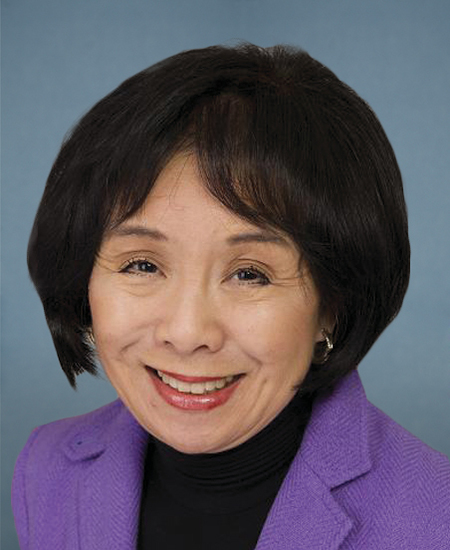
Rep. Doris O. Matsui
Sponsored bills
Maddy summaryThis bill (HR 1555, Public Law 118-211) designates the U.S. Postal Service facility at 2300 Sylvan Avenue in Modesto, California, as the "Corporal Michael D. Anderson Jr. Post Office Building." It directly affects the postal facility and all official references to it, requiring future documents to use the new name. The bill has no policy provisions - its sole purpose is to honor Corporal Michael D. Anderson Jr. through this commemorative naming. It was passed by Congress and signed into law on January 2, 2025.
Maddy summaryThe Treat and Reduce Obesity Act of 2023 expands Medicare coverage for obesity treatment by allowing a wider range of healthcare providers - including nurse practitioners, dietitians, psychologists, and community-based counseling programs - to deliver intensive behavioral therapy for obesity, provided they coordinate with primary care providers. It also adds Medicare Part D coverage for medications used to treat obesity or for weight loss management in overweight individuals with related health conditions like diabetes or high blood pressure. These changes directly affect Medicare beneficiaries, particularly older adults (65+), who face higher obesity rates and associated costs, including $50 billion annually in Medicare spending for obesity-related care. The bill requires annual reports to Congress on implementation to improve coordination of obesity care across federal health programs.
Maddy summaryThe Autism CARES Act of 2024 reauthorizes and enhances federal programs supporting individuals with autism spectrum disorder. It requires the National Institutes of Health to expand research to include more fields like gerontology and psychiatry, and to ensure research reflects the full range of needs of people with autism, including those with co-occurring conditions. The bill mandates regular reports to Congress on progress, mental health needs, and transition services for young adults with autism, while increasing funding for autism-related programs from fiscal year 2025 through 2029. This legislation directly affects individuals with autism, their families, caregivers, and healthcare providers by improving access to evidence-based services and research.
Maddy summaryThis bill, HR 1097 (Everett Alvarez, Jr. Congressional Gold Medal Act of 2023), authorizes the award of a Congressional Gold Medal to Everett Alvarez, Jr., in recognition of his service as a U.S. Navy pilot and Vietnam War prisoner of war. It directly honors Alvarez, who was the first U.S. pilot shot down in the Vietnam War, spent over 8.5 years in captivity, and later served in the Peace Corps and Veterans Administration. The bill’s key mechanism is directing the U.S. Mint to strike a gold medal bearing his name and image, with bronze duplicates available for sale to cover costs. It does not create new policies or affect any group beyond the honoree.
Maddy summaryThe Blue Carbon Protection Act establishes a federal program to conserve and restore coastal ecosystems (like mangroves, marshes, and seagrasses) that store carbon long-term, directly affecting these habitats and communities relying on them for flood protection and fisheries. It creates a database of carbon stocks, explores market-based financing like blue carbon credits, and funds a $300 million grant program to protect or restore 1.5 million acres of these ecosystems over 10 years, prioritizing projects benefiting vulnerable communities. The bill designates "blue carbon areas of significance" where federal projects must avoid harming carbon storage, requiring agencies to seek alternatives or implement offsets if impacts occur. It mandates annual reporting on restored acres and carbon storage, with $16 million annually authorized for the program’s implementation.
Maddy summaryThis bill allows the current owner of specific Sacramento, California, land (approximately 8.43 acres under Bureau of Land Management jurisdiction) to purchase the U.S. government's future ownership interest (reversionary interest) in that land. The Secretary of the Interior must offer this interest to the owner within two years of a request, after determining fair market value through a federal appraisal process. The buyer pays the appraised value plus all related costs (surveys, appraisals), and proceeds go into a federal land disposal account. It does not affect existing railroad rights or validate claims based on adverse possession.
Maddy summaryThis bill allows electrical utilities operating on National Forest System land to clear trees and vegetation near power lines without needing a separate timber sale, as long as the work follows existing land management plans and environmental laws. It directly affects utilities managing power infrastructure on federal forest land by streamlining vegetation management to reduce wildfire risks. Utilities must share any money earned from selling cleared vegetation (minus transportation costs) with the Forest Service, though they aren’t required to sell the material. The law focuses on improving safety through routine maintenance while ensuring revenue from vegetation removal benefits federal land management.
Maddy summaryThis bill amends existing federal laws to authorize the USDA Forest Service to fund native seed and seedling programs. It allows the agency to provide contracts, grants, or agreements to state forestry agencies, local nonprofits, and universities for collecting native seeds and producing seedlings. These funds will support habitat restoration projects by enabling the collection of native seeds and the production of seedlings for replanting degraded lands. The key mechanism is creating a formal process within current law to streamline these conservation activities, directly affecting state and local conservation groups working on ecosystem recovery.
Maddy summaryThe International Maritime Pollution Accountability Act of 2024 requires operators of large cargo vessels (10,000+ gross tons) to report detailed emissions and voyage data starting January 1, 2025. It establishes fees for carbon dioxide-equivalent emissions ($150 per metric ton, adjusted for inflation) and for criteria air pollutants like nitrogen oxides and sulfur dioxide. The fees collected fund specific programs including modernizing U.S. shipping vessels to use low-carbon fuels, developing clean maritime technologies, workforce training, and port air monitoring. The bill targets emissions from the marine shipping industry, which accounts for nearly 3% of global carbon dioxide emissions and contributes to poor air quality near port communities. The law includes provisions to recognize foreign pollution fees and sunset provisions when international standards meet or exceed U.S. requirements.