

Maddy summaryHRES 636 is a non-binding House resolution condemning China's implementation of the Hong Kong national security law and related actions undermining Hong Kong's autonomy. It specifically criticizes the law's use to arrest over 200 people - including activists like the "Hong Kong 47" and media figure Jimmy Lai - and alleges it has eroded Hong Kong's independent judiciary, freedoms of speech and assembly, and its status as a separate financial hub. The resolution urges governments to hold China accountable, calls for dropping all national security law charges against detained activists, and questions Hong Kong's continued separate voting rights at international organizations. As a symbolic statement, it does not create new legal requirements but aligns with the existing Hong Kong Human Rights and Democracy Act by advocating for accountability measures.
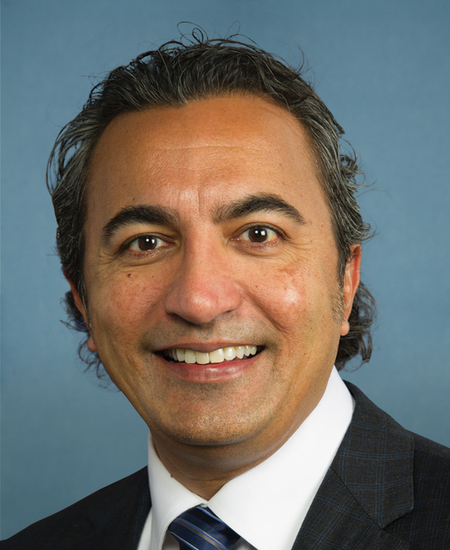
Rep. Ami Bera
Sponsored bills
Maddy summary# Summary of the "Protecting Our Democracy Act" This comprehensive legislation aims to strengthen democratic processes, increase government transparency, and prevent foreign interference in elections. Key provisions include: ## Ethics and Transparency - **Ethics Pledge**: Requires all appointees to sign an ethics pledge committing to: - Ban on gifts from registered lobbyists - 2-year revolving door ban (prohibiting participation in matters related to former employers) - Golden parachute ban (no special payments from former employers) - Commitment to decision-making based on public interest - **Tax Transparency**: Requires presidential and vice presidential candidates to disclose 10 years of tax returns, with sitting presidents submitting returns within 30 days of enactment ## Campaign Finance and Foreign Interference - **Foreign Contact Reporting**: Requires political committees to report any contact with "covered foreign nationals" within 1 week - **Enhanced Penalties**: Criminal penalties of up to $1 million and 5 years in prison for violations - **Online Advertising Rules** ("Honest Ads Act"): - Requires clear disclosure of who paid for political ads online - Mandates machine-readable public databases of political ads - Requires visible sponsor identification that remains when ads are shared - Defines "qualified political advertisements" to include various online formats ## Preventing Patronage Systems - Limits exceptions to competitive service for federal positions - Restricts transferring positions between competitive and excepted service - Requires employee consent for position transfers ## Use of Federal Property - Prohibits holding national political conventions on federal property - Requires publicly available visitor records at White House and other official locations (with privacy exceptions) The legislation establishes detailed definitions, reporting requirements, and enforcement mechanisms across multiple agencies, with the goal of increasing transparency, preventing foreign interference, and ensuring ethical conduct in government service.
Maddy summaryHR 4914, the South Asian Heart Health Awareness and Research Act of 2023, provides $2 million annually from 2024-2028 to fund grants for states to address heart disease disparities in communities disproportionately affected by it, specifically targeting South Asian populations in the U.S. The grants require states to develop culturally tailored heart health materials (like nutrition and exercise programs), support community organizations serving these groups, improve research methodologies to better include South Asian participants, and conduct studies on cardiovascular disease and type 2 diabetes in at-risk communities. States must report on these activities and heart disease data to Congress within two years of the bill's enactment. The legislation directly affects South Asian communities by aiming to reduce health disparities through targeted awareness, community support, and inclusive research.
Maddy summaryThe Break the Cycle of Violence Act establishes federal grants to fund community-based violence intervention programs in areas disproportionately affected by gun violence, particularly communities of color. It authorizes $300 million for 2024, increasing to $700 million annually through 2031, for evidence-informed strategies including trauma-responsive care, violence interruption, and economic opportunities for opportunity youth (ages 16-25 not in school or employment). The bill requires grantees to implement culturally competent services targeting individuals at high risk of violence or victimization, with a focus on reducing gun violence without contributing to mass incarceration. It creates a National Community Violence Response Center to coordinate data collection, research, and best practices for community violence prevention. The legislation also includes provisions for job training and workforce development programs through the Department of Labor to connect opportunity youth with in-demand occupations.
Maddy summaryHR 4965, the Kimberly Vaughan Firearm Safe Storage Act, requires the Attorney General to create voluntary best practices for safe firearm storage in homes, businesses, vehicles, and other locations within 180 days of enactment, with public input. Starting January 1, 2025, firearm manufacturers must include a "SAFE STORAGE SAVES LIVES" notice with each new handgun, rifle, or shotgun, directing buyers to the public website with these guidelines. The bill also establishes a $10 million annual grant program for states and tribes to fund public programs distributing safe firearm storage devices (like locked containers) and requires grantees to use at least 75% of funds for these programs. It does not mandate storage for individuals but provides resources and information to promote safer practices.
Maddy summaryHRES 578 is a non-binding House resolution calling for the immediate release of Eyvin Hernandez, a U.S. citizen and Los Angeles County public defender wrongfully detained by Venezuela since March 2022. The resolution urges U.S. officials, including the President and Secretary of State, to press Venezuela for his release and condemns Venezuela’s practice of detaining U.S. citizens for political purposes. It specifically references Hernandez’s wrongful detention without evidence or fair trial, noting his status as a Department of State-designated wrongfully detained individual. The resolution expresses support for Hernandez and other Americans detained abroad, without creating new legal requirements or funding.
Maddy summaryHR 4942 extends and modifies the Conrad State 30 program, which allows states to sponsor foreign medical graduates to work in medically underserved areas in exchange for a commitment to practice for three years. The bill directly affects foreign medical graduates seeking to work in the U.S., states that sponsor them, and health facilities in underserved communities. Key provisions include creating mechanisms for physicians to change employers or states if they face issues with their current employment, adding requirements for employment agreements (including prohibitions on non-compete clauses), and establishing exceptions to the three-year work requirement under certain circumstances. The bill also creates a process for states to recapture waiver slots when physicians leave their employment and requires annual reporting on the program's usage. These changes aim to improve physician retention in underserved areas by providing more flexibility and protections for foreign medical graduates.
Maddy summaryHR 1776, the End Tuberculosis Now Act of 2023, would amend U.S. foreign assistance law to strengthen global tuberculosis (TB) programs. The bill requires U.S. assistance to align with the World Health Organization's End TB Strategy, aiming to reduce TB deaths by 95% and incidence by 90% by 2035. It mandates annual reporting on TB diagnosis and treatment progress, prioritizes research for new diagnostics and treatments, and emphasizes integrating TB services into primary health care. The legislation affects U.S. government agencies, global health partners, and countries with high TB burdens, particularly focusing on low- and middle-income nations.
Maddy summaryHR 1176, the Taiwan International Solidarity Act, amends the TAIPEI Act of 2019 to clarify that UN Resolution 2758 does not address Taiwan's representation or sovereignty in international organizations. The bill directs U.S. representatives in international bodies to resist China's efforts to distort policies regarding Taiwan and encourages U.S. allies to oppose China's attempts to undermine Taiwan's diplomatic relationships. It also requires the U.S. government to report on China's initiatives promoting its "One China" position. These changes aim to strengthen Taiwan's international engagement through U.S. advocacy and policy coordination.
Maddy summaryHR 4893, the Scientific Integrity Act, requires federal agencies that fund, conduct, or oversee scientific research to adopt policies preventing political interference in science. The bill mandates these agencies to prohibit suppression or distortion of research findings, establish Scientific Integrity Officers to enforce policies, and implement training and reporting systems. It directly affects scientists and engineers employed by or contracted with covered agencies (like the EPA or NIH), ensuring their work remains free from political pressure. Key mechanisms include annual public reporting on misconduct complaints, whistleblower protections, and requiring scientific conclusions to be based on evidence, not ideology.