

Maddy summaryHR 1502 authorizes the creation of a Congressional Gold Medal to honor the volunteers and communities (primarily from Nebraska, Colorado, and Kansas) who supported the North Platte Canteen during World War II. The bill directs the Treasury Secretary to design and strike the medal, which will be presented to the individuals who contributed to the canteen’s operations and then permanently displayed at the Lincoln County Historical Museum in North Platte, Nebraska. It also permits the sale of bronze duplicates to cover production costs, with proceeds going to the U.S. Mint. This is a commemorative measure recognizing historical service, not a policy change affecting current laws or programs.
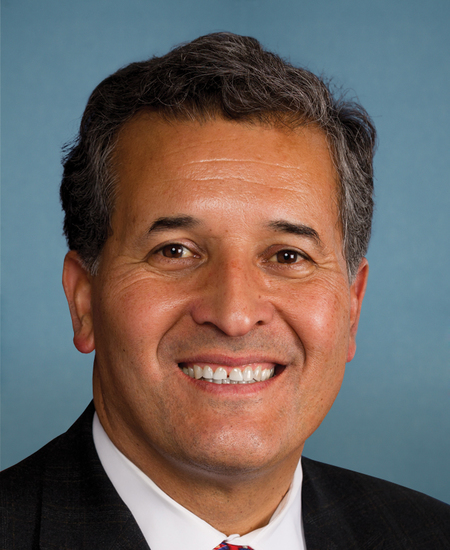
Rep. Juan Vargas
Sponsored bills
Maddy summaryHR 1390, the Ocean Pollution Reduction Act II, sets new pollution limits for the City of San Diego's Point Loma Wastewater Treatment Plant. It requires the plant to maintain a deep ocean outfall (300 feet deep, 4 miles from shore) and limits annual total suspended solids discharges to 12,000 metric tons starting in 2024, decreasing to 9,942 tons by 2031. The bill mandates strict removal standards (80% monthly for suspended solids) and requires 10 years of ocean monitoring data before permits are issued, plus a target of 83 million gallons per day of reusable water by 2039. These provisions directly affect the Point Loma Plant's wastewater discharge into marine waters.
Maddy summaryThe Food Deserts Act (HR 484) creates a federal grant program to help establish grocery stores in underserved communities by providing capitalization grants to states. States would use these grants to build revolving funds that make low-interest loans to grocery stores meeting specific criteria, such as offering unprocessed foods, affordable pricing, and local hiring. The program prioritizes stores that source from local farms, provide nutrition education, and commit to keeping healthy foods in stock, while requiring applicants to contribute 20% of loan costs from non-federal funds. It authorizes $150 million for fiscal year 2026 to support these loans, which must be repaid over up to 30 years to replenish the revolving fund for future use.
Maddy summaryHR 1330 establishes the Smithsonian National Museum of the American Latino, authorizing its location within the National Mall's "Reserve" area. The bill requires the Smithsonian Board to coordinate with federal agencies managing potential museum sites, including notifying relevant congressional committees before land transfers. It mandates that the museum's exhibits and programs accurately represent the diverse cultures, histories, and viewpoints of Hispanic and Latino communities in the U.S., seeking input from a broad range of community experts. The Smithsonian must also submit regular reports to Congress detailing compliance with these representation requirements.
More Homes on the Market Act This bill increases the amount of gain from the sale of a principal residence that an individual may exclude from gross income (for federal tax purposes). Under the bill, an individual may exclude from gross income gain from the sale of a principal residence of up to $500,000 (currently $250,000), and taxpayers who are married and file a joint federal income tax return may exclude up to $1 million (currently $500.000). The bill also requires these amounts to be adjusted annually for inflation.
Maddy summaryHR 1321, the "Ending DOGE Conflicts Act," requires special government employees (like officials overseeing federal contracts) who own, control, or lead companies doing business with the government to file financial disclosure reports with the Office of Government Ethics. These employees must now comply with the same financial disclosure rules as other government officials under Title 5 of the U.S. Code. Until their initial report is certified as compliant by the Office of Government Ethics, these employees are prohibited from performing any official duties related to federal contracting. The bill directly affects high-level government officials with direct financial ties to federal contractors.
Maddy summaryThe Office of Gun Violence Prevention Act of 2025 would create a new office within the Department of Justice to coordinate federal efforts on reducing gun violence. The office, led by a Director appointed by the Attorney General, would integrate existing DOJ programs, evaluate data gaps, and develop evidence-based recommendations for Congress and the President. It would also establish an advisory council including survivors of gun violence, public health officials, and community representatives to guide its work. The office would produce annual reports detailing gun violence trends and policy proposals, while collaborating with agencies like Health and Human Services and the FBI.
Maddy summaryHR 1251, the All Access Act of 2025, requires Members of Congress (House members and Senators) to present official identification to enter federal public buildings during regular business hours. For access outside these hours, Members must notify the building head at least 12 hours in advance. The bill establishes clear, procedural access rules for congressional members but does not create new policies or affect the public. It is a straightforward procedural measure governing Member access to federal facilities.
Maddy summaryThis bill proposes a constitutional amendment stating that only "natural persons" (living humans) have rights protected by the U.S. Constitution, explicitly denying constitutional rights to corporations, LLCs, and other artificial entities. It would require governments to regulate campaign contributions and spending to prevent money from influencing elections, banning the view that spending to influence elections constitutes protected speech under the First Amendment. The amendment would not affect the constitutional right to a free press. This change would directly impact how corporations and other non-human entities can legally challenge laws or regulations in court.
Maddy summaryHR 1196 prohibits using federal funds to eliminate the U.S. Agency for International Development (USAID) as an independent agency, as defined by law. It requires the Secretary of State to certify annual compliance with this restriction to the House Foreign Affairs and Senate Foreign Relations committees. The bill directly affects USAID's operational status and U.S. foreign aid programs by preventing congressional or executive actions that would dismantle or merge the agency, maintaining its role in U.S. international development efforts.