

Maddy summaryThis bill modifies the Family and Medical Leave Act (FMLA) to extend eligibility to school support staff, including paraprofessionals, cafeteria workers, bus drivers, and clerical staff. It allows these employees to qualify for FMLA leave if they work 60% of their expected monthly hours (instead of the standard 1,250 hours), based on their school’s assigned schedule. Employers must maintain records of expected hours for each staff member. The change directly benefits part-time and seasonal education support staff who previously faced barriers to FMLA coverage.
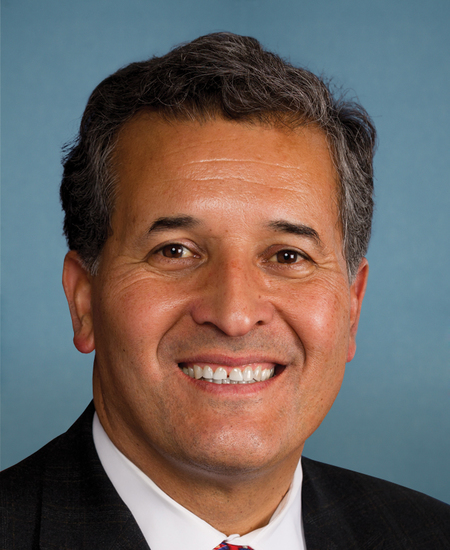
Rep. Juan Vargas
Sponsored bills
Maddy summaryThis bill amends the Social Security Act to remove a payment limitation for certain Medicaid Home and Community-Based Services (HCBS) waivers. Specifically, it strikes a provision (subparagraph (C) of Section 1915(c)(11)) that restricted how states could fund these waivers under Medicaid. The change directly affects state Medicaid programs that use HCBS waivers to provide home and community care for people with disabilities or elderly individuals. By removing this restriction, states gain more flexibility in allocating Medicaid funds for these services, without altering eligibility or service requirements.
Maddy summaryThe Quiet Communities Act of 2025 reestablishes the Environmental Protection Agency’s Office of Noise Abatement and Control, which was defunded in 1982. This office will provide grants to states for local noise control programs, conduct national research on noise health impacts, develop public education materials, and create regional technical assistance centers. The bill authorizes $25 million annually (2026-2030) to fund these activities, directly supporting communities affected by noise pollution - particularly the estimated 28 million U.S. residents with hearing impairments linked to noise exposure. It emphasizes state/local solutions, market incentives, and coordination with other agencies to address noise from aircraft, traffic, and other sources.
Maddy summaryThis bill requires the EPA to establish guidelines for indoor air contaminants like radon, formaldehyde, and carbon monoxide that affect schools and childcare facilities. It mandates a national assessment of indoor air quality in these buildings, with updates every five years, and provides technical assistance to schools and childcare providers to implement air quality improvements. The EPA must publish science-based guidelines with recommended concentration limits for key contaminants and support voluntary building certifications for healthier indoor environments. These provisions directly impact local schools, childcare centers, and state/local governments responsible for building maintenance and health standards.
Maddy summaryHR 5098, the Strengthening Our Workforce Act of 2025, creates a pathway to conditional lawful permanent residency for certain undocumented workers. It directly affects immigrants who have been continuously present in the U.S. since January 1, 2024, without lawful status, or with deferred action (like DACA), and who have worked at least 100 days in one of 24 designated essential professions (e.g., healthcare, agriculture, construction, domestic care, or disaster recovery work). To qualify, applicants must pay a fee, meet employment requirements (100 days annually for two years), and avoid specific criminal inadmissibility grounds (with limited waivers). After two years of conditional status, the residency automatically converts to permanent without visa caps, provided they pay a fee and pass a background check. The bill targets workers in critical sectors to address labor shortages while establishing a defined adjustment process.
Maddy summaryHR 5018, the Naomi Schwartz and Susan Rose Safe Parking Act of 2025, adds "safe parking" as an eligible activity under the federal Emergency Solutions Grant Program. It directly affects homeless individuals living in vehicles, including motor homes, by making funding available for programs that provide them with safe overnight parking and supportive services to transition to stable housing. The bill defines "safe parking" as activities offering a secure place to park vehicles overnight while connecting residents to re-housing support. This change allows communities to use federal grants to establish and operate such parking programs, which were previously ineligible under the program's rules.
Maddy summaryHRES 657 is a non-binding House resolution affirming that the retirement age for Social Security and Medicare should not be raised, referencing President Trump’s 2024 pledge. It states the House’s position that current eligibility ages must be preserved, rejecting proposals to delay access to benefits for seniors. The resolution highlights that raising retirement ages would disproportionately impact workers in physically demanding jobs and lower-income communities who rely on these programs for income and healthcare. As a symbolic statement - not a law - it expresses support for maintaining existing benefits but does not change policy or create new obligations.
This bill designates the facility of the United States Postal Service located at 1444 Main Street in Ramona, California, as the "Archie Moore Post Office Building".
Maddy summaryThis bill extends the expiration date for a provision allowing certain vehicles to use High Occupancy Vehicle (HOV) lanes without meeting standard occupancy requirements. Specifically, it amends federal law to change the deadline from September 30, 2025, to September 30, 2031. The change directly affects drivers and vehicle operators who currently qualify for this exemption under existing rules. It is a procedural reauthorization, not a policy change, maintaining the current HOV lane exemption rules for an additional six years.
Maddy summaryThis bill amends the Food and Nutrition Act to clarify that Social Security benefits (income under Title II of the Social Security Act) are not counted when determining eligibility for SNAP (Supplemental Nutrition Assistance Program) benefits. It directly affects seniors receiving Social Security who rely on SNAP for food assistance, ensuring their Social Security payments do not reduce their SNAP benefits. The key change adds Social Security income to the list of non-countable resources under SNAP rules. The amendment takes effect 90 days after the bill is enacted.