

Extreme Risk Protection Order Act of 2021 This bill establishes grants to support the implementation of extreme risk protection order laws at the state and local levels, extends federal firearms restrictions to individuals who are subject to extreme risk protection orders, and expands related data collection. Extreme risk protection order laws, or red flag laws, generally allow certain individuals (e.g., law enforcement officers or family members) to petition a court for a temporary order that prohibits an at-risk individual from purchasing and possessing firearms. Among its provisions, the bill directs the Office of Community Oriented Policing Services within the Department of Justice to establish a grant program to help states, local governments, Indian tribes, and other entities implement extreme risk protection order laws; extends federal restrictions on the receipt, possession, shipment, and transportation of firearms and ammunition to individuals who are subject to extreme risk protection orders; and requires the Federal Bureau of Investigation to compile (and later destroy) records from federal, tribal, and state courts and other agencies that identify individuals who are subject to extreme risk protection orders.
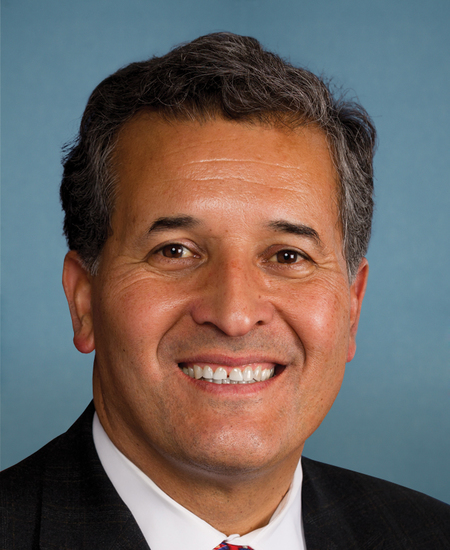
Rep. Juan Vargas
Sponsored bills
This resolution expresses the House of Representatives' support for the goals and ideals of National Veterans Small Business Week, celebrates the millions of people in the United States—especially veterans and their spouses—who benefit from Small Business Administration programs, and expresses appreciation for the continued service to the United States by the nation's veterans through small business ownership and entrepreneurship.
This resolution recognizes Filipino American History Month as a testament to the advancement of Filipino Americans and a time to renew efforts toward researching and examining the history of Filipino Americans to give all people of the United States an opportunity to learn about their contributions.
Original National Domestic Violence Awareness Month Resolution of 2022 This resolution supports the goals and ideals of National Domestic Violence Awareness Month. Further, it expresses the sense of the House of Representatives that Congress should continue to raise awareness of and support programs to end domestic violence.
Major Richard Star Act This bill provides that combat-disabled uniformed services retirees with fewer than 20 years of creditable service may concurrently receive, without reduction, veterans' disability compensation and retired pay or combat-related special compensation.
Keep Americans Safe Act This bill establishes a new criminal offense for the import, sale, manufacture, transfer, or possession of a large capacity ammunition feeding device (LCAFD). The bill does not prohibit certain conduct with respect to an LCAFD, including the following: importation, sale, manufacture, transfer, or possession related to certain law enforcement efforts, or authorized tests or experiments; importation, sale, transfer, or possession related to securing nuclear materials; and possession by a retired law enforcement officer. The bill permits continued possession of, but prohibits sale or transfer of, a grandfathered LCAFD. Newly manufactured LCAFDs must display serial number identification and the date of manufacture. Additionally, the bill allows a state or local government to use Edward Byrne Memorial Justice Assistance Grant Program funds to compensate individuals who surrender an LCAFD under a buy-back program.
Strained Partnership Act This bill requires the removal of all U.S. Armed Forces and equipment from Saudi Arabia. Certain equipment, specifically Patriot missile batteries and the Terminal High Altitude Area Defense system, shall be relocated to other locations in the Middle East, to the extent practicable.
John Lewis Civil Rights Fellowship Act of 2022 This bill establishes the John Lewis Civil Rights Fellowship Program within the J. William Fulbright Educational Exchange Program (commonly referred to as the Fulbright Program). The fellowship program shall honor the legacy of Representative John Lewis and advance U.S. foreign policy priorities by promoting studies, research, and international exchange in the subject of nonviolent civil rights movements around the world. The Fulbright Foreign Scholarship Board shall annually select qualified individuals to serve as fellows in the fellowship program. The Bureau of Educational and Cultural Affairs may determine the number of fellows for each year, with at least 25 fellows each year whenever feasible. Each fellow shall (1) work in an internship or research position with an approved organization in a country with an operational Fulbright U.S. Student Program, and (2) receive an award sufficient to cover the fellow's reasonable costs during the fellowship period and certain travel and lodging expenses related to the program.
Millennium Challenge Corporation Eligibility Expansion Act This bill modifies income-related eligibility requirements for assistance from the Millennium Challenge Corporation (MCC), a program that provides assistance through a competitive selection process to eligible developing countries based on various factors, including a country's level of economic freedom and effectiveness of government. Currently, to be a candidate to receive MCC assistance, a country must, among other requirements, must (1) fit the World Bank's income-based criteria for a low- or lower-middle-income country, or (2) be among the 75 lowest per capita income countries according to the World Bank. Under this bill, a candidate country must have a gross national income per capita no higher than the 125th poorest country as identified by the World Bank for the fiscal year.
This act designates the outpatient clinic of the Department of Veterans Affairs in Ventura, California, as the Captain Rosemary Bryant Mariner Outpatient Clinic.