This act designates the facility of the United States Postal Service located at 1400 N Kraemer Blvd. in Placentia, California, as the PFC Jang Ho Kim Post Office Building.
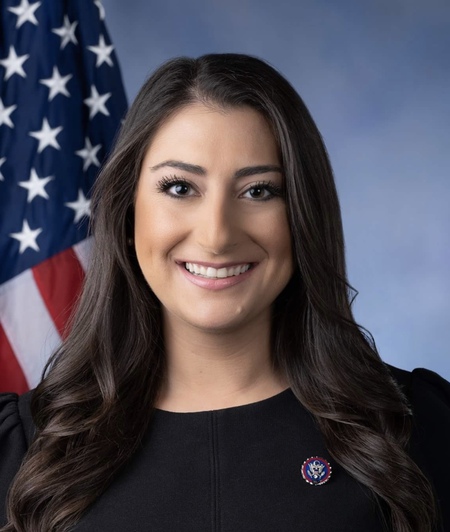
Rep. Sara Jacobs
Sponsored bills
This act designates the facility of the United States Postal Service located at 2016 East 1st Street in Los Angeles, California, as the Marine Corps Reserve PVT Jacob Cruz Post Office.
This act designates the facility of the United States Postal Service located at 1961 North C Street in Oxnard, California, as the John R. Hatcher III Post Office Building.
21st Century President Act This act revises the definition of immediate family for purposes of a criminal offense involving a threat to kill, kidnap, or inflict bodily harm on a former President or a member of the immediate family of a former President. Specifically, it replaces gender-specific references to a former President's wife and widow with the gender-neutral terms spouse and surviving spouse .
This act designates the facility of the United States Postal Service located at 101 South Willowbrook Avenue in Compton, California, as the PFC James Anderson, Jr., Post Office Building.
This resolution condemns the actions of a White supremacist mob that drove Black residents out of Atlanta, Georgia in 1906 and supports the designation of a national day of remembrance for the victims of forced migrations of Black Americans.
Refugee Protection Act of 2022 This bill modifies provisions related to asylum seekers and addresses related issues. For example, the bill (1) eliminates the statutory time limit for applying for asylum (currently one year after arriving in the United States), (2) establishes stateless protected status for individuals who are not considered a national by any country under that country’s law, and (3) requires the goal for refugee admissions for any given fiscal year to be no fewer than 125,000.
Uyghur Forced Labor Prevention Act This bill imposes various restrictions related to China's Xinjiang Uyghur Autonomous Region, including by prohibiting certain imports from Xinjiang and imposing sanctions on those responsible for human rights violations there. Goods manufactured or produced in Xinjiang shall not be entitled to entry into the United States unless U.S. Customs and Border Protection (1) determines that the goods were not manufactured by convict labor, forced labor, or indentured labor under penal sanctions; and (2) reports such a determination to Congress and to the public. The President shall periodically report to Congress a list of foreign entities and individuals knowingly facilitating (1) the forced labor of Uyghurs, Kazakhs, Kyrgyz, and members of other Muslim minority groups in Xinjiang; and (2) efforts to contravene U.S. laws regarding the importation of forced labor goods from Xinjiang. The President shall impose property-blocking sanctions on the listed individuals and entities and impose visa-blocking sanctions on the listed individuals. Securities issuers required to file annual or quarterly reports with the Securities Exchange Commission shall disclose in such reports instances in which the issuer knowingly engaged in certain activities related to Xinjiang, such as working with an entity building detention facilities or surveillance systems there. After such a disclosure, the President shall determine whether to investigate if sanctions or criminal charges are warranted. The Forced Labor Enforcement Task Force and the Department of State shall report to Congress strategies to address forced labor in Xinjiang or any other part of China. The State Department shall also report to Congress a determination of whether the treatment of Muslim groups in Xinjiang constitutes crimes against humanity or genocide under U.S. law.

This resolution affirms that there is well-established authority for the Food and Drug Administration to approve, license, and otherwise regulate reproductive health products under the Federal Food, Drug, and Cosmetic Act and the Public Health Service Act. The resolution also affirms that (1) such federal laws preempt (i.e., supersede conflicting state or local laws) any state or local laws that prohibit or limit access to or use of any reproductive health product, and (2) the Department of Justice has authority to enforce the preemptive effect of such federal laws by suing any state or political subdivision of a state that prohibits or limits access to or use of any reproductive health product.
Expanding the Voluntary Opportunities for Translations in Elections Act or the Expanding the VOTE Act This bill expands access to voting materials for individuals with limited proficiency in the English language, including by establishing incentive grants for states and political subdivisions to provide translated voting materials. Additionally, the bill directs the Government Accountability Office to study the impact of (1) reducing the threshold requirement under Section 203 of the Voting Rights Act of 1965, and (2) expanding the definition of language minorities to include native speakers of additional languages.