

Maddy summaryThis bill increases military pay rates for all service members across pay grades and years of service, effective January 1, 2025, with specific rate adjustments detailed in the legislation. It expands eligibility for the basic needs allowance to 200% of current rates and authorizes $1.2 billion for housing allowances in fiscal year 2025. The bill also improves child care access by requiring competitive pay for military child care staff, reducing fees for children of child care employees, and mandating regular reports on child care services. Additionally, it enhances health care access by waiving referral requirements for certain services in military medical facilities and establishes a permanent program to support military spouses' employment.
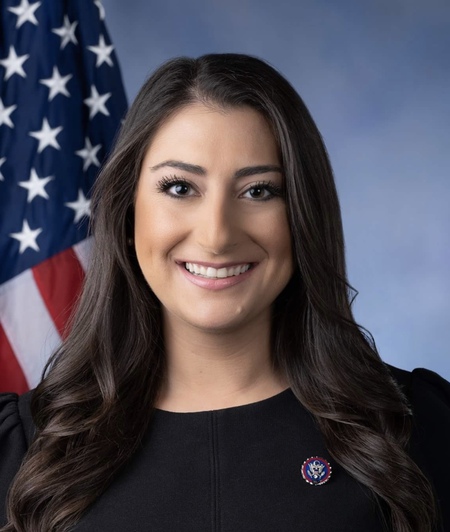
Rep. Sara Jacobs
Sponsored bills
Maddy summaryHRES 1332 is a symbolic resolution recognizing June as LGBTQIA+ Pride Month. It encourages the celebration of Pride Month to honor the historical struggles and achievements of LGBTQIA+ people in the United States, while acknowledging the ongoing challenges they face. This resolution does not create new laws or policies, but serves as a formal recognition of LGBTQIA+ rights as human rights and highlights their integral role in American history. The resolution was introduced by multiple members of Congress and passed by the House of Representatives.
Maddy summaryHR 8867, the REAL ID Gender Requirement Reform Act, amends federal ID standards to give states flexibility on gender fields for driver's licenses and ID cards. States may choose whether to include a gender/sex field, and if they do, individuals can select "unspecified" or "other" without needing medical documentation like a doctor's note. This directly affects people applying for or renewing state-issued IDs, particularly transgender and non-binary individuals who previously faced barriers. The bill removes the prior requirement for additional documentation when selecting non-binary gender options, allowing states to implement this change through their own policies.
Maddy summaryThis bill creates a federal framework for "extreme risk protection orders" (ERPOs) that temporarily remove firearms from individuals who pose a risk of harming themselves or others. Family members or law enforcement officers can petition a federal court for a temporary order (up to 14 days) based on probable cause, followed by a hearing within 72 hours to determine if a longer-term order (up to 180 days) is warranted. The bill requires clear and convincing evidence of risk at the hearing and mandates respondents to surrender firearms to law enforcement within 48 hours. It also includes provisions for reporting, training law enforcement on ERPOs, and a federal grant program to support state ERPO implementation, without preempting state laws.
Maddy summaryThis resolution, introduced around World Refugee Day, expresses congressional support for U.S. efforts to protect refugees and displaced persons globally and within the United States. It highlights that over 117 million people are displaced worldwide, references the U.S. resettling 60,000 refugees in fiscal year 2024, and calls on federal agencies to maintain the Refugee Admissions Program, uphold asylum protections, and support host countries. The resolution does not create new laws but reaffirms existing commitments to refugee resettlement, safety, and integration through current programs.
Maddy summaryThis resolution (HRES 1309) calls for federal recognition and support of freedmen's settlements - historical Black communities established by formerly enslaved people after emancipation - by preserving their history and investing in their revitalization. It specifically targets communities like Sand Branch, Texas (facing water contamination and poverty) and Africatown, Alabama (struggling with industrial pollution), which have endured systemic disinvestment and environmental hazards. Key provisions include urging federal agencies (like the EPA and HUD) to coordinate funding for historic preservation, economic justice initiatives, and infrastructure improvements, while prioritizing community-led efforts to protect against gentrification and pollution. The resolution does not create new laws but sets a framework for collaboration to address long-standing inequities in these historically marginalized communities.
Maddy summaryHR 8782 extends the deadline for using funds allocated under the American Rescue Plan Act (ARP) to support homeless children and youth. It allows recipients of these funds - such as local governments, nonprofits, and service providers - to use the money for authorized purposes through September 30, 2025, instead of the original deadline. This change directly affects organizations currently managing ARP funds for homeless youth programs, giving them more time to spend the money without needing new appropriations. The bill does not create new funding or alter program requirements, only adjusts the timeline for existing funds. (Bill: HR 8782, Section 2001(b)(1) of ARP Act)
Maddy summaryHR 8732, the Domestic Workers Bill of Rights Act, would establish new labor protections for domestic workers including nannies, housekeepers, and caregivers who work in private homes. The bill requires written agreements between employers and domestic employees, provides earned sick days, ensures fair scheduling practices, and prohibits unfair wage deductions for cash shortages or communications. It also creates a Domestic Employee Standards Board to recommend workplace standards and establishes a National Domestic Employee Hotline for assistance. The bill specifically targets domestic workers who have historically been excluded from labor protections under the Fair Labor Standards Act and Civil Rights Act, benefiting an estimated 2.2 million domestic workers in the U.S. who are disproportionately women of color and immigrants.
Maddy summaryHR 8673 establishes the Foundation for Standards and Metrology, a nonprofit entity to support the National Institute of Standards and Technology (NIST) in advancing measurement science, technical standards, and technology development. The Foundation will foster collaboration between NIST, researchers, industry, educational institutions, and nonprofits to accelerate the commercialization of federally funded research and provide direct support like fellowships and grants to NIST associates. Governed by a Board of Directors and required to become financially self-sustaining within five years, the Foundation must submit annual reports to Congress detailing its activities, finances, and progress toward strategic goals. The bill authorizes $1.5 million annually for NIST to fund the Foundation’s operations from 2025 through 2029.
Maddy summaryHR 8712 would create a permanent Negotiations Support Unit within the U.S. Department of State. The unit would serve as a central resource for negotiation expertise, advising diplomats and officials on strategy, supporting U.S. policy development for peace processes, and providing specialized training for Foreign Service Officers. It would directly affect State Department operations and U.S. diplomatic engagement in complex negotiations worldwide. The bill authorizes $5 million for the unit's establishment, with functions including knowledge management, advising senior officials, and coordinating with international partners on peace processes.