Exposing Discrimination in Higher Education Act This bill requires the Department of Education's Office for Civil Rights to publish prominently on its website the names of the institutions of higher education (IHEs) that request, and the names of the IHEs that receive, religious exemptions from the prohibition on sex discrimination in federally funded education programs and activities. It also requires an IHE that requests, receives, exercises, or intends to exercise such a religious exemption to publish prominently on its website certain information with respect to such exemption.
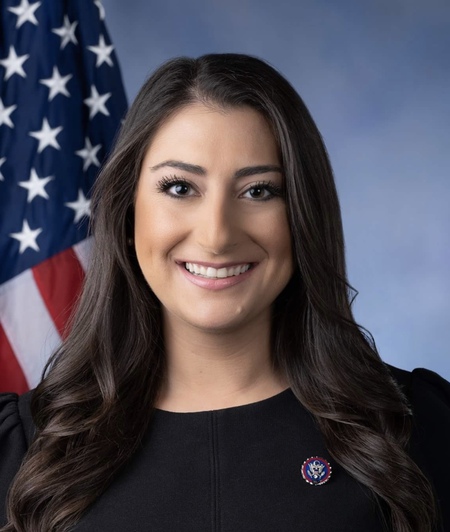
Rep. Sara Jacobs
Sponsored bills
United States Commitment to Peacekeeping Act of 2021 This bill repeals a limit on U.S. funding for, details U.S. policy objectives for, and revises reporting requirements related to United Nations (U.N.) peacekeeping operations. Under current law, the United States may contribute no more than 25% of the assessed costs for a U.N. peacekeeping operation; the bill eliminates that funding restriction. The Department of State must instruct the U.S. Permanent Representative to the United Nations to advance the U.S. policy objectives outlined in the bill for standardizing performance assessments of, diversifying the funding base for, and other aspects of U.N. peacekeeping operations. The bill modifies annual reports about U.S. participation in U.N. activities by eliminating a requirement to report on costs of U.N. peacekeeping operations in the prior fiscal year and by adding a requirement to report on U.S. efforts to implement reforms of U.N. peacekeeping. Additionally, the State Department must report on (1) strengthening the role of conflict prevention in U.N. missions, and (2) transitioning U.N. peacekeeping operations to host-country security forces.
Closing the Meal Gap Act of 202 1 This bill revises the requirements for calculating Supplemental Nutrition Assistance Program (SNAP) benefits. The bill increases the minimum SNAP benefit and requires benefits to be calculated using the value of a low-cost food plan. The Department of Agriculture (USDA) must determine the requirements for the low-cost food plan, which is the diet required to feed a family of four, consisting of a man and a woman 19-50 years of age, a child 6-8 years of age, and a child 9-11 years of age. USDA must (1) reevaluate and publish the market baskets of the plan by January 1, 2027, and every five years thereafter, based on current food prices, food composition data, consumption patterns, and dietary guidance; and (2) make adjustments to the plan to account for household size, changes in the cost of the diet, and the costs of food in specified areas. The bill modifies the requirements for calculating household income to determine SNAP eligibility by (1) authorizing a standard medical expense deduction for households containing an elderly or disabled member, and (2) eliminating the cap on the excess shelter expense deduction. The bill eliminates certain work requirements for SNAP. The requirements apply to able-bodied adults who are ages 18-49 and have no dependent children. The bill allows Puerto Rico, American Samoa, and the Northern Mariana Islands to participate in SNAP. Currently, the three territories receive block grants instead of participating in SNAP.

Averting Loss of Life and Injury by Expediting SIVs Act of 2021 or the Allies Act of 2021 This bill increases the number of special immigrant visas available to qualified Afghan nationals who worked for the U.S. government or the North Atlantic Treaty Organization (NATO) missions in Afghanistan. The bill also relaxes certain qualifications for such visas. Specifically, this bill makes available an additional 8,000 visas for principal aliens under this special visa program, to be available until all such visas have been issued. (The numerical limitations in this program apply only to the principal alien who applies for the visa, not to any accompanying spouse or child.) Under this bill, an alien may qualify based on a credible basis for concern about the possibility of an ongoing serious threat in Afghanistan due to their work with the U.S. government or a NATO mission, where currently the alien must have experienced such a threat. The bill also eliminates a requirement for each applicant to submit a credible sworn statement describing that threat. Furthermore, for an applicant qualifying for a visa by performing duties for U.S. military personnel stationed with a NATO mission, this bill eliminates a requirement that the duties performed qualify as sensitive and trusted duties. If an alien submits a visa application that included an accompanying spouse or child but the alien passes away before the application is granted, the surviving spouse or child shall remain eligible to receive a visa under that application. Currently, a surviving spouse or child retains eligibility only if the application was approved before the alien passed away.
Universal School Meals Program Act of 2021 This bill revises requirements under the food and nutrition programs of the Department of Agriculture, such as the school lunch and breakfast programs. For example, the bill permanently provides free meals to all school children regardless of income. The bill increases the reimbursement rate for school food authorities participating in the food and nutrition programs. The bill also prohibits school food authorities from (1) physically segregating or otherwise discriminating against any child participating in the free breakfast program, or (2) overtly identifying a child participating in the program with a special token or announcement. Additionally, the bill expands the summer food service program by making all children eligible for participation in the program. Further, the bill revises eligibility determinations for measuring poverty to include runaway or homeless youth, foster children, migratory children, and children participating in specified programs (e.g., Head Start).
This resolution calls on the United States and North Korea to begin the process of reuniting Korean Americans with their immediate relatives in North Korea. (Many families were divided after the signing of the Korean War Armistice Agreement, which divided the Korean Peninsula into North and South Korea.)
This bill makes changes to enrollment processes and other aspects of the Special Supplemental Nutrition Program for Women, Infants, and Children (WIC). Under current law, an individual who participates in Medicaid and other specified means-tested programs automatically meets applicable income eligibility for WIC. The bill extends this automatic income eligibility to participants in Head Start programs, certain nutrition programs (e.g., the Food Distribution Program on Indian Reservations), and the Children's Health Insurance Program. It also extends income eligibility to individuals who reside in a household in which a member receives assistance from such a program. Other changes in the bill include (1) allowing states to certify a child's eligibility for WIC for up to two years, and (2) requiring states to address benefits for infants and children under the care of kinship families in WIC plans.
Military Sexual Trauma Retirement Equity Act This bill extends certain special compensation to specified retired survivors of military sexual trauma.
Veterans Preventive Health Coverage Fairness Act This bill eliminates veterans' copayments for medication, hospital care, and medical services related to preventive health services provided by the Department of Veterans Affairs. The bill expands the definition of preventive health services to include (1) evidence-based items or services that have an A or B rating in the recommendations of the United States Preventive Services Task Force; (2) immunizations that have a recommendation from the Advisory Committee on Immunization Practices of the Centers for Disease Control and Prevention with respect to the individual involved; and (3) with respect to women, the preventive care and screenings provided for in the Health Resources and Services Administration Preventive Services Guidelines in effect as of January 1, 2017.
Daniel J. Harvey Jr. and Adam Lambert Improving Servicemember Transition to Reduce Veteran Suicide Act This bill requires the Department of Defense (DOD) and the Department of Veterans Affairs (VA) to jointly implement a five-year pilot program to assess the feasibility and advisability of providing specified counseling and services as part of the Transition Assistance Program for members of the Armed Forces as a means of reducing the incidence of suicide among veterans. Specifically, the pilot program would involve a three-hour counseling module and the provision of contact information for a counseling or similar facility in the locality where the veteran intends to reside. Additionally, the participating veterans must submit medical records in connection with their service in the Armed Forces, regardless of whether they intend to file a claim for benefits for a service-connected disability. Under the program, a social worker or behavioral health coordinator from the VA must contact the veteran within 90 days after the member is discharged or released from service to schedule a follow-up appointment. At least 10 DOD Transition Assistance Centers must be jointly selected to carry out the pilot program.