

California Clean Coast Act of 2023 This bill prohibits oil and gas exploration and leasing in areas of the outer Continental Shelf located off the coast of California.
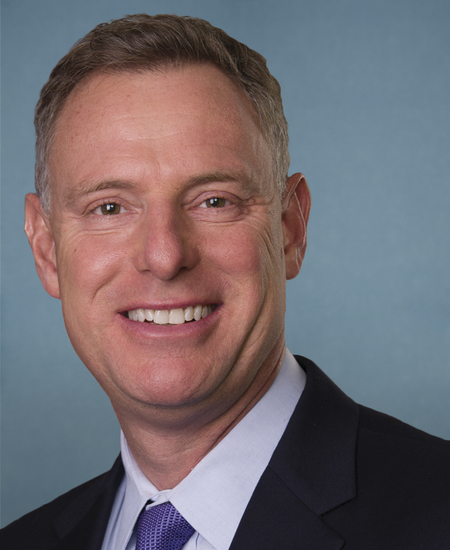
Rep. Scott H. Peters
Sponsored bills
This resolution expresses support for the goals and ideals of Endometriosis Awareness Month. Endometriosis is a painful condition in which the tissue that normally lines the inside of the uterus grows outside the uterus.
Maddy summaryThis bill reauthorizes federal funding for opioid recovery centers through 2028, extending the current program's timeline. It directly affects existing opioid recovery centers and their partner organizations, such as mental health and substance use treatment providers. Key changes include allowing centers to use letters of intent from partners instead of full documentation to prove service coordination, and clarifying that centers may deliver services through third-party contracts or referrals while maintaining oversight. The bill streamlines administrative requirements without altering core service delivery standards.
Maddy summaryHR 1503, the Prescription Information Modernization Act of 2023, allows drug manufacturers to provide FDA-approved prescribing information exclusively via digital means (like email or online portals) to doctors and pharmacists, while requiring them to still offer paper copies upon request at no extra cost. The bill directly affects drug manufacturers and distributors, who must implement this change by 2025 (or when regulations take effect), and ensures prescribers and dispensers can choose their preferred format. Key provisions include mandating manufacturers to honor paper requests promptly without additional fees and requiring the Health Secretary to issue implementing regulations within one year. The law aims to modernize how medical information is shared while maintaining accessibility for healthcare providers.
Maddy summaryThis bill amends the Federal Power Act to strengthen security for defense-related electricity infrastructure. It updates definitions (like replacing "48 contiguous States" with "any State") and adds a new provision (§215A(g)) authorizing the Secretary to contract with external energy providers. These contracts aim to improve resilience - meaning the ability to withstand disruptions - and reduce vulnerabilities for critical defense facilities that rely on electricity. The bill directly affects defense installations and their electric supply chains by creating a new process for enhancing infrastructure security.
Maddy summaryHR 1591 amends the Elementary and Secondary Education Act to increase annual federal funding for impact aid programs that support school districts near military bases, national parks, and other federal properties. It authorizes specific, rising funding levels for four key areas: payments for federal land acquisitions ($90 million in 2024, growing to $150 million by 2029), basic payments to heavily impacted school districts ($1.6 billion in 2024, growing to $2.45 billion by 2029), payments for students with disabilities ($60 million in 2024, growing to $120 million by 2029), and school construction projects ($22.9 million in 2024, growing to $45.4 million by 2029). These appropriations represent incremental steps toward full federal funding for these aid programs, as specified in the bill's text. The bill directly affects school districts located near federal land, providing predictable annual funding increases for their operational and infrastructure needs.
Maddy summaryThis bill authorizes a Congressional Gold Medal to honor the "Hello Girls" - female telephone operators who served in the Army Signal Corps during World War I. They provided critical battlefield communications in France (connecting 26 million calls), wore military uniforms, and faced combat risks, but were denied veteran benefits for 60 years due to being classified as civilian contractors. The medal recognizes their pioneering service, devotion, and the decades-long struggle to gain military recognition. The award follows similar recognition for other WWII women veterans and aims to correct the historical injustice they faced.
Maddy summaryThe Paycheck Fairness Act (HR 17) strengthens equal pay protections by amending the Fair Labor Standards Act. It prohibits pay discrimination based on sex, pregnancy, childbirth, sexual orientation, gender identity, and sex characteristics. The bill modifies employer defenses for pay differences to require demonstration that any disparity is job-related, consistent with business necessity, and accounts for the entire pay differential. It also prohibits employers from relying on wage history when making hiring decisions or setting pay, enhances penalties for violations, and requires the EEOC to collect compensation data disaggregated by sex, race, and national origin.
Maddy summaryHCONRES 22 is a symbolic resolution recognizing the persistent gender pay gap in the U.S., documenting that women earn significantly less than men across racial groups (e.g., Black women earn 67 cents for every dollar earned by White men). It highlights the economic impact of this disparity, noting women lose over $958 billion annually in wages and face barriers like occupational segregation and workplace harassment. The resolution does not create new laws or policies but formally acknowledges the issue and reaffirms Congress’s commitment to addressing the gap. It references specific Equal Pay Days (e.g., March 14 for all women) to underscore the time women must work to earn what men did the previous year.
Maddy summaryHRES 215 is a symbolic resolution recognizing Nowruz, the ancient Persian New Year celebrated by over 300 million people worldwide, including Iranian Americans. It acknowledges Nowruz’s 3,000-year cultural history, its themes of renewal and human rights, and expresses appreciation for Iranian Americans’ contributions to U.S. society. The resolution has no binding policy impact but formally supports the holiday’s observance and the values of freedom and tolerance it embodies.