

Maddy summaryThis bill (HR 2365, Public Law 118-66) directs the U.S. Department of Health and Human Services (HHS) to establish the National Parkinson’s Project. It requires HHS to create and update a coordinated national plan for preventing, diagnosing, treating, and researching Parkinson’s disease and related disorders (including multiple system atrophy and progressive supranuclear palsy), while coordinating federal research and care efforts across agencies like the NIH, CDC, and VA. The law mandates annual progress assessments, an advisory council with patient advocates and diverse experts, and annual reports to Congress on federal Parkinson’s programs and recommendations for improvement. It affects federal agencies managing Parkinson’s-related programs and aims to improve care coordination and research efficiency for patients and caregivers, with the law sunsetting in 2035.
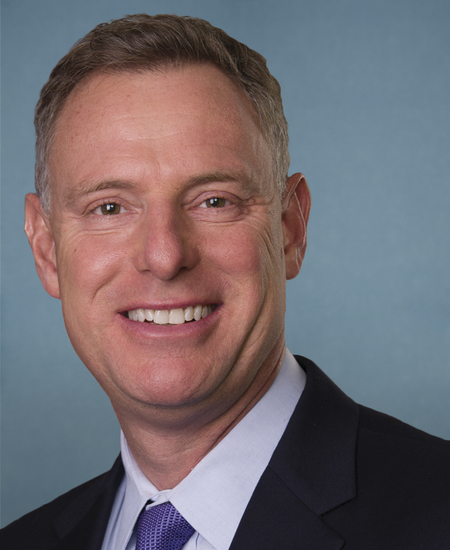
Rep. Scott H. Peters
Sponsored bills
Maddy summaryHRES 1332 is a symbolic resolution recognizing June as LGBTQIA+ Pride Month. It encourages the celebration of Pride Month to honor the historical struggles and achievements of LGBTQIA+ people in the United States, while acknowledging the ongoing challenges they face. This resolution does not create new laws or policies, but serves as a formal recognition of LGBTQIA+ rights as human rights and highlights their integral role in American history. The resolution was introduced by multiple members of Congress and passed by the House of Representatives.
Maddy summaryHR 8901, the Cannabis Research Act, directs the National Institutes of Health (NIH) to create a national research agenda on cannabis within one year of enactment. This agenda will examine medical benefits (like pain management and epilepsy treatment), effects on vulnerable groups (children, pregnant people, older adults), public safety concerns (youth access, impaired driving), and optimal dosing. The bill also establishes federally funded "Centers of Excellence in Cannabis Research" at universities, authorizing $50 million annually (2026-2030) for these institutions to conduct interdisciplinary research and clinical trials. Additionally, it modifies federal law to allow research institutions to legally test cannabis products under state law for research purposes, without triggering Controlled Substances Act penalties.
Maddy summaryThis bill strengthens the HUD-VASH program, which provides housing vouchers and case management to homeless veterans. It requires the VA to prioritize vulnerable homeless veterans - especially those with disabilities - for case managers and mandates annual reports tracking program effectiveness, staffing ratios, and veteran outcomes. The law also prohibits revoking housing assistance solely because a veteran refuses case management and protects veterans from eviction for this reason. Additionally, it directs a GAO report assessing veterans' housing stability, case manager recruitment, and program demographics.
Maddy summaryThis bill creates a federal framework for "extreme risk protection orders" (ERPOs) that temporarily remove firearms from individuals who pose a risk of harming themselves or others. Family members or law enforcement officers can petition a federal court for a temporary order (up to 14 days) based on probable cause, followed by a hearing within 72 hours to determine if a longer-term order (up to 180 days) is warranted. The bill requires clear and convincing evidence of risk at the hearing and mandates respondents to surrender firearms to law enforcement within 48 hours. It also includes provisions for reporting, training law enforcement on ERPOs, and a federal grant program to support state ERPO implementation, without preempting state laws.
Maddy summaryThis resolution expresses the U.S. House of Representatives' support for designating June 28, 2024, as "Stonewall Day" to commemorate the anniversary of the 1969 Stonewall Uprising in New York City, a pivotal event in LGBTQ+ rights history. It recognizes the significance of the uprising in sparking the modern LGBTQ+ civil rights movement and acknowledges the upcoming opening of the Stonewall National Monument Visitor Center on Christopher Street. The resolution does not create new laws or policies but formally supports the commemorative designation and the Visitor Center's role in honoring this history. It directly affects no individuals or groups, as it is a symbolic gesture of recognition. The resolution was introduced by multiple House members and referred to the Judiciary Committee.
Maddy summaryHRES 901 is a U.S. House resolution expressing support for democracy and human rights in Pakistan. It calls on the U.S. President and Secretary of State to collaborate with Pakistan to uphold democratic processes, human rights, and the rule of law. The resolution urges Pakistan to protect freedoms of speech, assembly, and press, and to avoid arbitrary detention or suppression of political participation. It also condemns efforts to undermine Pakistan's electoral or judicial systems, including harassment of citizens during protests or interference with elections.
Maddy summaryHRES 1310 is a resolution expressing support for designating June 2024 as "National Post-Traumatic Stress Awareness Month" and June 27, 2024, as "National Post-Traumatic Stress Awareness Day." It aims to raise public awareness about post-traumatic stress disorder (PTSD), particularly among military veterans and active-duty service members, and reduce stigma around seeking mental health treatment. The resolution encourages government agencies like the Department of Veterans Affairs and Department of Defense to continue efforts in educating the public and improving access to PTSD care. As a symbolic gesture, it does not create new laws, allocate funding, or directly change policies.
Maddy summaryHRES 1306 is a non-binding resolution expressing congressional support for designating June 21, 2024, as National ASK (Asking Saves Kids) Day. It encourages parents to ask visitors' homes, "Is there a gun in your house?" and "Is it locked and unloaded?" to promote safe gun storage around children. The resolution specifically supports the ASK Campaign, a national initiative run by the Brady Campaign since 2000 that focuses on preventing accidental child firearm injuries through simple safety conversations. This resolution does not create new laws but formally endorses an existing public health awareness effort.
Maddy summaryHR 8764, the Clean Hands Firearm Procurement Act, prohibits federal agencies from entering contracts with gun dealers who are identified as "covered firearms dealers" based on firearm tracing data. A dealer becomes "covered" if 25 or more firearms traced to them were recovered within 3 years of a crime during two of the past three calendar years. Federal agencies must then avoid contracting with such dealers for the current year and the two preceding years, with a 180-day implementation period. The law includes a national security waiver for the Defense or Homeland Security Secretaries, requiring immediate notification to congressional judiciary committees. This directly affects federal procurement decisions and gun dealers meeting the specified tracing thresholds.