

Maddy summaryThis bill allows the U.S. section of the International Boundary and Water Commission (IBWC) to accept funding from federal or non-federal sources - including grants - to support wastewater treatment and flood control projects along the U.S.-Mexico border. It specifies that funds received must be deposited into a designated Treasury account and used solely for studying, building, operating, and maintaining these specific infrastructure works. The bill directly affects the IBWC’s ability to secure external funding for border water management, benefiting communities and ecosystems in border regions reliant on these systems. It does not change existing policies but streamlines the Commission’s process for managing such projects.
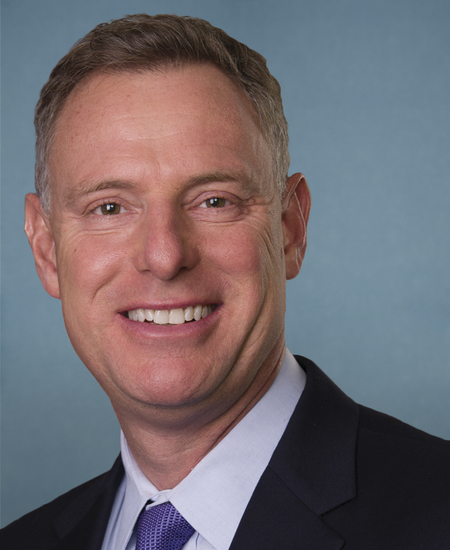
Rep. Scott H. Peters
Sponsored bills
Maddy summaryThis bill names the U.S. Postal Service building at 333 West Broadway in Anaheim, California, as the "Dr. William I. 'Bill' Kott Post Office Building." It requires all federal documents, maps, and references to update the building's official name to honor Dr. Kott, a former Anaheim physician and community leader. The change applies immediately to all government records and communications involving the facility.
Maddy summaryThis bill designates the U.S. Postal Service facility at 517 Seagaze Drive in Oceanside, California, as the "Charlesetta Reece Allen Post Office Building." It updates all federal references in laws, maps, regulations, and documents to use this new name for the facility. The bill has no policy impact beyond renaming the building and altering official references. It was signed into law on November 25, 2024.
Maddy summaryThis bill designates the United States Postal Service facility at 28081 Marguerite Parkway in Mission Viejo, California, as the "Major Megan McClung Post Office Building." It changes all official references to this specific post office location to the new name. The bill directly affects the USPS facility and any government documents or records referencing it. This is a procedural naming resolution with no policy changes or financial impact.
Maddy summaryHR 1060 designates the United States Postal Service facility at 1663 East Date Place in San Bernardino, California, as the "Dr. Margaret B. Hill Post Office Building." The bill updates all federal references - such as in laws, maps, regulations, and official documents - to use this new name for the building. This is a procedural designation with no policy changes or direct impact on residents or services. The bill was passed by Congress and signed into law on November 25, 2024.
Maddy summaryThe Working Dog Commemorative Coin Act (HR 807) directs the U.S. Treasury to mint three types of commemorative coins honoring working dogs' service: $5 gold coins, $1 silver coins, and half-dollar coins with specific weight and composition requirements. Each coin will carry a surcharge ($35 for $5 coins, $10 for $1 coins, $5 for half-dollars) that will be paid directly to America's VetDogs to support their programs providing service dogs for veterans, the disabled, and others. The coins will be issued in 2027 with designs reflecting working dogs' roles in military, detection, therapy, and assistance work. The legislation specifies that all surcharge revenue must fund America's VetDogs' operations without creating new government programs. This is a commemorative measure focused on honoring working dogs' contributions through coin sales, with all surcharge funds going to a specific nonprofit organization.
Maddy summaryThis bill redesignates a United States Postal Service facility at 3500 West 6th Street, Suite 103 in Los Angeles, California, as the "Dosan Ahn Chang Ho Post Office." It directly affects the postal service location by changing its official name to honor Dosan Ahn Chang Ho, a Korean independence activist and community leader. The bill amends prior legislation to update references to the facility’s address and name in all federal records and documents. This is a ceremonial naming resolution with no policy changes to postal services or operations.
Maddy summaryHR 10199, the Childhood Diabetes Reduction Act of 2024, requires new health warning labels on sugar-sweetened beverages, foods containing non-sugar sweeteners, ultra-processed foods, and foods high in nutrients like added sugar or sodium. These warnings must be prominently displayed on product packaging using specific formatting requirements, including a 5% minimum area on the front of containers. The bill also restricts advertising of these foods to children and establishes a public education campaign to help families understand the warnings and make healthier choices. The law would directly affect food manufacturers, advertisers, and families with children, while authorizing research on nutrition science through the National Institutes of Health.
Maddy summaryThis bill establishes a Coordinator within the State Department to manage the relocation and resettlement of eligible Afghan allies and to assist U.S. citizens and lawful permanent residents in Afghanistan who seek U.S. support to leave the country. The Coordinator can hire temporary staff (preferring Foreign Service appointments), enter contracts, and coordinate with other federal agencies to use their funds for these efforts. The Coordinator must notify relevant congressional committees 15 days before transferring funds between agencies. The position and its authorities will expire three years after the bill becomes law.
Maddy summaryHRES 1588 is a House resolution supporting Transgender Day of Remembrance (TDoR) by recognizing the epidemic of violence against transgender people and memorializing those killed between October 1, 2023, and September 30, 2024. It specifically honors 38 transgender or gender-nonconforming individuals whose lives were lost to violence during that period, highlighting that transgender women of color face disproportionate risks. The resolution acknowledges systemic issues like underreporting, barriers to healthcare, and higher rates of homelessness and suicide within the community. It calls for the U.S. government to prioritize solutions to this violence while affirming transgender people's right to dignity and safety. As a symbolic resolution, it does not create new laws or policies but formally recognizes these issues for congressional record.