

Maddy summaryThe Responsible Budgeting Act (HR 1092) changes how the U.S. debt ceiling can be raised. It requires Congress to adopt a budget resolution that reduces the projected debt-to-GDP ratio by at least 5 percentage points over 10 years to automatically increase the debt ceiling. If Congress fails to adopt such a resolution by a deadline, the President can submit a debt reduction proposal meeting this target, triggering an automatic debt ceiling increase after 30 days unless Congress passes a joint resolution disapproving it within that timeframe. The bill establishes expedited procedures for Congress to consider and vote on debt reduction proposals, with strict requirements for any proposal to meet the required debt reduction target.
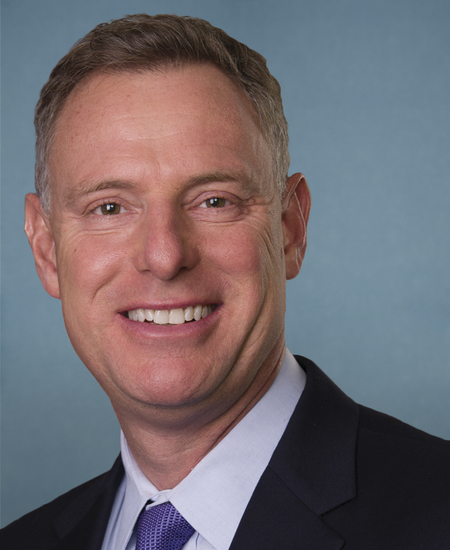
Rep. Scott H. Peters
Sponsored bills
Maddy summaryThe Project Turnkey Act establishes a $1 billion annual federal program to fund affordable housing for vulnerable populations. It provides grants to states, local governments, nonprofits, and community housing organizations to develop or convert properties (like hotels or vacant buildings) into housing for homeless individuals, those at risk of homelessness, domestic violence survivors, and youth experiencing homelessness. Key provisions include limiting administrative costs to 15% of funds, allowing up to 5% for supporting community housing organizations, and waiving certain existing housing program requirements to accelerate project development. Funds must supplement - never replace - state or local housing investments and remain available until 2035.
Maddy summaryHR 1090, the Truth in Tuition Act of 2025, requires colleges and universities receiving federal financial aid to provide clearer tuition cost information to students. Specifically, institutions must offer either a multi-year tuition and fee schedule or a single-year schedule plus a nonbinding estimate of total costs after financial aid for the full program duration, showing year-by-year costs. The bill mandates that estimates include historical accuracy data on past projections versus actual costs. This applies directly to students enrolling in undergraduate or graduate programs at participating institutions, aiming to improve cost transparency for financial planning.
Maddy summaryHR 1102 establishes a commission to study the feasibility of creating a National Museum of Italian American History and Culture in Washington, D.C. The commission, composed of 8 members appointed by congressional leaders, will examine factors like location options, costs, fundraising potential, and impacts on existing museums, and must report back within 18 months. It will not create the museum itself but will develop recommendations for Congress on whether to proceed, with all funding coming from private sources - no federal funds may be used for the commission’s work. The bill focuses solely on the study process, not on building or operating the museum.
Maddy summaryThe ORPHAN Cures Act (HR 946) adjusts how the government calculates approval timelines for certain rare disease treatments under the Drug Price Negotiation Program. It clarifies that periods when a drug was previously designated as an "orphan drug" (for rare diseases) won't count toward the timeline for price negotiations. The bill also broadens the definition of "rare disease" to cover multiple conditions simultaneously, aligning with existing federal law. This directly affects manufacturers of orphan drugs by potentially extending their exclusivity periods before price negotiations begin.
Maddy summaryHR 211, the Equal Access to Contraception for Veterans Act, eliminates out-of-pocket costs for specific contraceptives for veterans using VA healthcare. It amends Section 1722A of Title 38 to prohibit the VA from charging veterans copayments for contraceptive items that must be covered without cost-sharing under federal law (as required by Section 2713(a)(4) of the Public Health Service Act). This means veterans will not pay any amount for contraceptives covered by the federal mandate, such as birth control pills or IUDs, when obtained through the VA system. The bill directly affects veterans enrolled in VA healthcare seeking contraceptive services, ensuring no additional costs beyond what is already mandated for these items.
Maddy summaryHRES 116 is a non-binding House resolution condemning pardons granted to individuals convicted of assaulting Capitol Police officers. It expresses the House's disapproval of such pardons but does not alter any laws or affect legal proceedings. The resolution has no legal force and serves only as a formal statement of disapproval by the sponsoring lawmakers. It directly addresses the pardons of specific individuals found guilty in criminal cases related to the January 6, 2021, Capitol breach.
Maddy summaryHR 1012, the Spent Fuel Prioritization Act of 2025, amends the Nuclear Waste Policy Act to change how the federal government prioritizes accepting spent nuclear fuel and high-level radioactive waste from civilian power plants. The bill requires the Secretary to prioritize waste based on four specific factors: whether the reactor is decommissioned (highest priority), the population size of the surrounding area, the earthquake hazard level in the area, and national security risks related to local storage. This directly affects nuclear power plant operators and communities near reactors, as waste from plants meeting these criteria would be processed faster for disposal or storage. The law does not create new waste generation but changes the order in which existing waste is managed.
Maddy summaryThis bill establishes a federal right to access contraception, protecting individuals' ability to obtain contraceptives and health care providers' ability to offer them without government interference. It prohibits states from banning or restricting contraceptive services, products, or information, including laws that force providers to deny care based on personal beliefs or limit access to specific methods. The law immediately overrides conflicting state regulations and ensures that contraception remains available regardless of factors like race, income, disability, or location. It applies to all individuals and providers, building on existing federal protections like the Affordable Care Act's coverage requirements.
This resolution supports federal investment in public K-12 schools, affirms that the Department of Education (ED) plays a vital role in the public education system, and states that public education funding should not be diverted (e.g., through the use of vouchers) to privately run K-12 schools. The resolution also rejects any claim that the executive branch has the legal authority to (1) dismantle or relocate ED or any of its major offices; or (2) reduce federal funding for public education, block federal grants for education, or transfer funding burdens for education to state and local governments.