

Maddy summaryHR 2848, the Stop Arctic Ocean Drilling Act of 2025, prohibits the federal government from issuing new oil and gas leases in Arctic federal waters. It amends the Outer Continental Shelf Lands Act to ban the Secretary of the Interior from authorizing exploration, development, or production of oil, natural gas, or minerals in designated Arctic areas, overriding all other federal laws. The bill defines "Arctic" using the 1984 Arctic Research Act, focusing on federal waters off Alaska. This directly affects federal leasing decisions and prevents new drilling permits in the region.
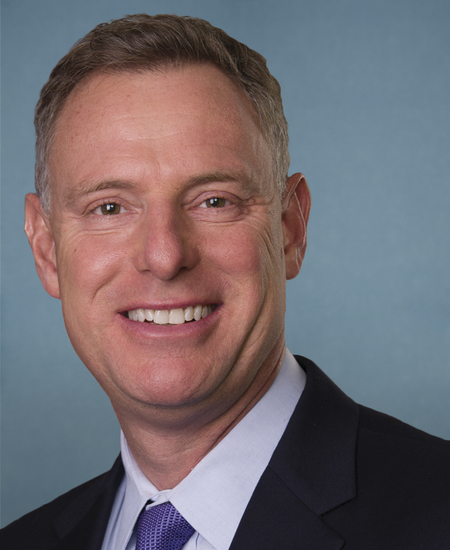
Rep. Scott H. Peters
Sponsored bills
Maddy summaryThis bill amends federal law (18 U.S.C. § 1362) to explicitly include broadband internet access service infrastructure under protections against destruction. It directly affects entities that operate or damage broadband facilities, such as internet service providers, infrastructure owners, and individuals who might intentionally destroy such infrastructure. Key changes expand the definition of protected "means of communication" to specifically cover broadband facilities and broaden liability to include "any other person or entity" beyond government-controlled systems. The amendment removes the prior exemption for infrastructure used in "military or civil defense functions," ensuring all broadband infrastructure receives equal legal protection. This strengthens existing penalties for damaging broadband networks but does not create new regulatory requirements for service providers.
Maddy summaryHR 2767, the BRAIN Act, aims to advance brain tumor research and improve patient care by requiring the NIH to create a public database of tumor samples collected with federal funding. It authorizes $50 million annually for a Glioblastoma Therapeutics Network to accelerate treatment development and $10 million for cellular immunotherapy research (including CAR-T therapies) targeting brain tumors. The bill also mandates a national awareness campaign to increase understanding of cancer clinical trials and biomarker testing, plus $5 million yearly for pilot programs studying survivor care coordination and follow-up services. Additionally, it directs the FDA to issue guidance ensuring brain tumor patients can access clinical trials. These provisions directly affect patients, researchers, and healthcare providers focused on brain tumors and rare cancers.
Maddy summaryThe American Family Act (HR 2763) establishes a new refundable child tax credit that provides monthly payments to eligible families with children. It would pay $300 per month for each child under age 6 and $360 per month (120% of $300) for each child age 6 or older, with income limits of $150,000 for joint filers and $112,500 for other filers. The bill creates a "period of presumptive eligibility" to determine eligibility for monthly payments, allowing families to receive advance payments based on information from previous tax returns. This would directly affect millions of families with children who meet the income requirements, providing more consistent financial support throughout the year rather than an annual tax credit.
Maddy summaryHR 2799, the Closing the Bump Stock Loophole Act of 2025, prohibits the sale, possession, and modification of devices that increase the firing rate of semi-automatic firearms to mimic machine guns (commonly called "bump stocks"). It specifically bans manual, power-driven, or electronic devices designed to speed up firing, as well as modified firearms that achieve this effect. Owners of pre-existing modified firearms must register them within 120 days of the law's enactment, with exemptions for government entities and firearms already lawfully modified and registered before the bill passes. The bill does not restrict standard semi-automatic firearms or require registration of unmodified guns.
Maddy summaryHR 2710, the People Over Parking Act of 2025, removes requirements for developers to provide a set number of parking spots for new or substantially rebuilt residential, retail, commercial, or industrial buildings located within 0.5 miles of a qualifying public transit point. It directly affects property owners and local governments by giving developers sole discretion over parking provision in these areas, overriding conflicting state or local parking mandates. The bill defines "covered public transit points" as fixed guideway access (like train stations) or bus stops with two or more frequent routes (15-minute peak interval), excluding most standard bus stops. This policy change aims to reduce parking requirements near transit, potentially lowering development costs and land use for parking.
Maddy summaryThis bill establishes federal minimum standards for collective bargaining rights for public employees and supervisors. The Federal Labor Relations Authority would determine if state laws provide these rights, and if not, would establish them for affected employees. The bill guarantees public employees the right to form unions, bargain collectively, and engage in concerted activities, while requiring public employers to recognize unions and put agreements in writing. It also prohibits strikes or lockouts that would disrupt emergency services. This would apply to public employees in states that don't meet the federal standards for collective bargaining rights.
Maddy summaryHR 2703, the Advancing GETs Act of 2025, creates a shared savings program for developers who install grid-enhancing technologies (GETs) on existing or new transmission infrastructure. Developers can receive 10-25% of the savings from these technologies over three years, provided the savings exceed four times the installation cost. The bill also requires transmission operators to report annual congestion costs and creates a public map of grid constraints, while directing the Energy Secretary to establish an annual guide for utilities on implementing GETs. This directly affects utilities, developers, and grid operators by incentivizing infrastructure upgrades that boost grid efficiency, reliability, and capacity.
Maddy summaryThe Affordable Housing Credit Improvement Act of 2025 would reform the Low-Income Housing Credit program, which provides tax credits to developers of affordable housing. It would increase state allocations based on population with annual cost-of-living adjustments, modify tenant eligibility rules to allow higher income limits for some residents, and add protections for domestic violence victims in housing. The bill would simplify rules for rural and Native American housing projects, clarify credit eligibility requirements, and require greater transparency in program administration. These changes would directly affect developers, property owners, and low-income tenants in housing projects that receive LIHC tax credits.
Maddy summaryHR 2729, the "Carnivals are Real Entertainment Act," creates a new temporary work visa category for carnival and circus workers. It directly affects mobile entertainment providers (like traveling carnivals, circuses, and affiliated food/game concession services) and their workers who perform essential tasks such as transporting, assembling, operating, and maintaining rides and equipment at seasonal fairs and festivals. The bill amends immigration law to define "mobile entertainment workers" as those entering temporarily for functions integral to these operations, subject to labor program requirements similar to other temporary work visas. It requires the Departments of Homeland Security and Labor to issue implementing rules within one year of enactment.