

Maddy summaryHR 5443, the Fair Housing Improvement Act of 2025, expands federal housing anti-discrimination protections to include "source of income," "veteran status," and "military status." It defines "source of income" broadly to cover housing vouchers, Social Security benefits, child support, and other lawful income sources like savings or gifts. The bill adds these categories to all existing anti-discrimination provisions in the Fair Housing Act, prohibiting housing providers from refusing to rent or sell based on these factors. This directly affects renters and homeowners using housing assistance, veterans, active military members, and individuals receiving non-wage income.
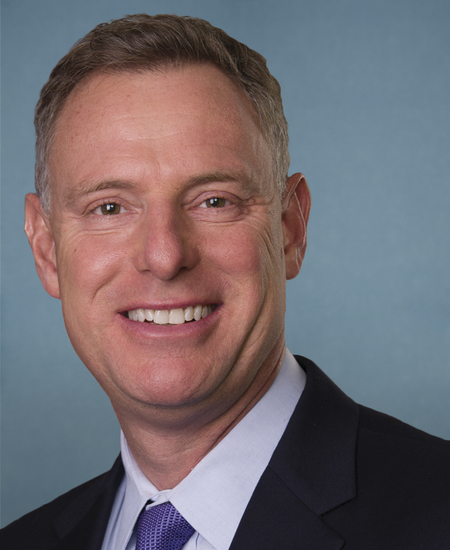
Rep. Scott H. Peters
Sponsored bills
Maddy summaryThis bill ensures Medicare coverage for new medical devices designated as "breakthrough devices" during a 4-year period after FDA approval. To qualify, devices must meet specific criteria, including FDA priority review, clinical data from Medicare beneficiaries, and a safety review showing benefits outweigh risks. Medicare must finalize coverage decisions within 6 months of manufacturer applications and before the 4-year period ends. The law appropriates $10 million annually (2025-2030) for Medicare to administer this process.
Maddy summaryHR 5401, the Pay Our Troops Act of 2026, ensures military personnel, civilian Defense workers, and supporting contractors receive pay during government funding gaps in fiscal year 2026. It appropriates emergency funds for active-duty service members, reserves, and their supporting personnel (including Coast Guard staff under DHS) if regular appropriations aren't enacted by the end of the fiscal year. The bill provides necessary pay and allowances during any period when full-year funding is unavailable, covering both active service and support roles. Funding expires when regular appropriations are passed, a funding resolution is enacted, or January 1, 2027, whichever comes first. This is a procedural measure to prevent pay delays for military and support staff during fiscal year 2026 funding lapses.
Maddy summaryHR 5100 extends the Small Business Innovation Research (SBIR) and Small Business Technology Transfer (STTR) programs through fiscal year 2026, instead of ending on September 30, 2025. This bill directly affects small businesses and research institutions that rely on federal funding for research and development through these programs. The key mechanism is updating expiration dates across multiple program provisions in the Small Business Act to maintain funding authority and program operations for one additional year. The extension does not alter program eligibility, funding levels, or core requirements.
Maddy summaryThe George Floyd Justice in Policing Act of 2025 would establish a National Police Misconduct Registry to track officer complaints, disciplinary actions, and misconduct records across all law enforcement agencies. It would require law enforcement agencies to implement body-worn camera programs with specific recording and retention policies, ban chokeholds and no-knock warrants in drug cases, and reform qualified immunity to make it easier to hold officers accountable for misconduct. The bill mandates comprehensive data collection on use of force incidents, requiring agencies to report detailed information about stops, searches, and force used, disaggregated by race, ethnicity, gender, and other demographics. These provisions would directly affect all Federal, State, and local law enforcement agencies that receive federal grant funding, with requirements for policy changes, training, and data reporting.
Maddy summaryThe Azerbaijan Sanctions Review Act of 2025 requires the President to review within 180 days whether 53 specific Azerbaijani officials meet criteria for sanctions under the Global Magnitsky Human Rights Accountability Act. These officials include military commanders, security service heads, and judges implicated in human rights violations related to the Nagorno-Karabakh conflict. The review must include a detailed justification and determine if sanctions should be imposed on individuals linked to alleged war crimes, arbitrary detention, and torture of Armenians. The bill mandates this assessment without imposing new sanctions, focusing instead on evaluating existing legal authority for action.
Maddy summaryThe FAIR Act of 2025 would prohibit companies from requiring pre-dispute arbitration agreements or waivers that prevent individuals from joining class or collective lawsuits in employment, consumer, antitrust, or civil rights cases. This directly affects workers, consumers, and small businesses who currently face forced arbitration for issues like workplace discrimination, product defects, or unfair business practices. The bill makes such agreements unenforceable while allowing voluntary arbitration after disputes arise and leaving collective bargaining agreements unaffected. It applies to all disputes occurring after the law takes effect, without changing how voluntary arbitration works post-dispute.
Maddy summaryThis bill establishes advance funding for key tribal programs starting in fiscal year 2026. It requires the Department of the Interior and Indian Health Service to include in each year's budget request sufficient funding for the *next* fiscal year's operations, specifically for accounts like "Operation of Indian Programs," "Contract Support Costs," and "Indian Health Services." The bill mandates annual reports by July 31 each year, assessing resource sufficiency and including workload estimates for the following fiscal year. These changes directly affect tribal programs administered by the Bureau of Indian Affairs, Bureau of Indian Education, and Indian Health Service, ensuring funding for future needs is planned and requested in advance.
Maddy summaryHR 5321 extends the deadline for allowing low-emission and energy-efficient vehicles to use high-occupancy vehicle (HOV) lanes from September 30, 2025, to December 31, 2026. It also requires the Transportation Secretary to conduct a study within 180 days of enactment on whether electric vehicle exemptions in HOV lanes reduce traffic congestion, with results reported to Congress. The bill directly affects state and local transportation agencies managing HOV facilities and the Department of Transportation. Key provisions include the deadline extension and the mandated study, with no changes to vehicle eligibility rules.
Maddy summaryThe RESULTS Act (HR 5269) changes how Medicare calculates payment rates for clinical diagnostic laboratory tests. It requires Medicare to collect data on private payor rates for widely available non-Advanced Diagnostic Laboratory Tests (non-ADLTs) from a qualifying independent claims data entity (a national nonprofit organization meeting specific criteria) rather than relying on data reported directly by laboratories. For tests where data is unavailable, the bill establishes default payment rates based on previous years' rates adjusted for inflation. The law also requires Medicare to publicly explain payment rates with supporting data, affecting Medicare beneficiaries, clinical laboratories, and private payors that provide services covered by Medicare.