

Preventing Future Pandemics Act of 2021 This bill establishes measures to address global public health risks posed by wildlife markets, which are commercial markets that sell or slaughter wildlife for human consumption as food or medicine in communities where alternative nutritional or protein sources are available. Specifically, the bill prohibits importing, exporting, purchasing, or selling live wild animals in the United States for human consumption as food or medicine. The Department of the Interior must hire, train, and deploy at least 50 new U.S. Fish and Wildlife Service law enforcement attachés around the world, and the U.S. Agency for International Development must increase specified activities to address the threats and causes of zoonotic (animal-to-human transmission) disease outbreaks. Additionally, the United States must work with other United Nations member states to urge a global ban on commercial wildlife markets and enforcement of laws to end wildlife trafficking. Further, the President may impose sanctions against a foreign country or foreign nationals that the Department of State has determined are taking certain actions that enable or facilitate commercial wildlife markets. Among other reports required by the bill, the National Academies of Sciences, Engineering, and Medicine must conduct a study and submit a report that includes an evaluation of (1) the impact that consumption of terrestrial wildlife as food or medicine has on the transmission of novel viral and other pathogens, (2) the role of consuming terrestrial wildlife as food or medicine in the transmission of microbes from animals to humans, and (3) the conditions at live wildlife markets that lead to this transmission.
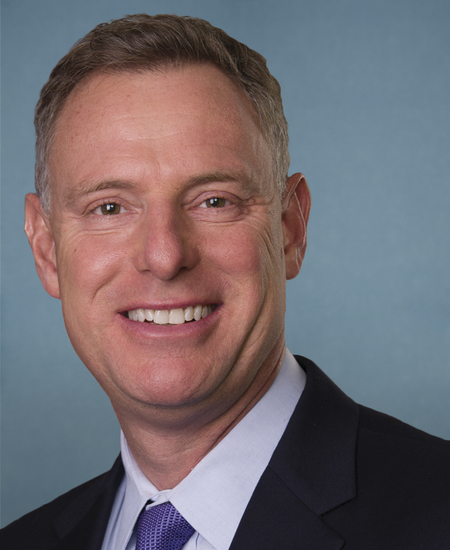
Rep. Scott H. Peters
Sponsored bills
Build America's Libraries Act This bill establishes and provides funds through FY2024 for the Build America's Libraries Fund, from which the Institute of Museum and Library Services (IMLS) must allocate funding to states and, through them, need-based grants to libraries to make long-term improvements to library facilities. The IMLS must also award grants to Indian tribes and organizations that primarily serve and represent Native Hawaiians. Specifically, the bill requires each state that receives an allocation, and each library that receives a grant, to carry out certain activities to improve library facilities. These activities include constructing and renovating library facilities, investing in infrastructure projects to improve internet access and connectivity, improving indoor air quality, and making facilities accessible to individuals with disabilities. The bill also outlines administrative and oversight provisions, including by requiring library projects to use iron and steel products that are produced in the United States.
Prevent Outages With Energy Resilient Options Nationwide Act or the POWER ON Act This bill revises requirements governing the designation of a national interest electric transmission corridor. Currently, the Department of Energy (DOE) may designate any geographic area experiencing electric energy transmission capacity constraints or congestion that adversely affects consumers. The bill expands the list of considerations DOE may use to select and designate a corridor. Specifically, DOE may consider whether the designation would (1) enhance the ability of facilities that generate or transmit renewable energy, low-emission energy, or emission-free energy to connect to the electric grid; (2) promote electrification of other sectors, including the transportation sector; or (3) facilitate other public policies to decarbonize the grid. DOE may also consider whether the designation maximizes existing rights-of-way, avoids sensitive environmental areas and cultural heritage sites, and would lower the cost of electricity for consumers. The bill also revises the authority (i.e., backstop authority) of the Federal Energy Regulatory Commission (FERC) to issue a permit for interstate transmission projects in such corridors when states and local governments fail to do so, including by specifying the timing for when FERC may issue such permits. In addition, the bill requires permit holders to make good faith efforts to engage landowners and other stakeholders early before exercising the right of eminent domain to purchase property needed to complete permit projects. Finally, the bill requires DOE to provide technical assistance to regional transmission siting agencies.
Open Back Better Act of 2021 This bill directs the Department of Energy (DOE) to provide grants to federal and state agencies and tribal organizations to implement building projects that increase resiliency, energy efficiency, renewable energy, and grid integration. It also provides grants for projects that may have combined heat and power and energy storage as project components. States must use at least 40% of grant funds to implement projects in environmental justice communities or low-income communities that have been adversely impacted by the COVID-19 (i.e., coronavirus disease 2019) pandemic.
Research Investment to Spark the Economy Act of 2021 or the RISE Act of 2021 This bill authorizes the Departments of Agriculture, Commerce, Defense, Education, Energy, the Interior, Health and Human Services, and Transportation, National Aeronautics and Space Administration (NASA), National Science Foundation, and Environmental Protection Agency to provide support for research regarding COVID-19 (i.e., coronavirus disease 2019) or research disrupted by the COVID-19 pandemic. Support may be used to provide supplemental funding to extend the duration of a grant to a research institution, national laboratory, or individual that was awarded prior to the enactment of this bill, or to expand the purposes of such a grant as specified; issue awards to research the effects of the current pandemic and potential future pandemics; and provide flexibility on awards to account for facility closures or other limitations during the COVID-19 public health emergency. Agencies must provide the support as rapidly as possible. Provided funds shall remain available through FY2021.
COVID-19 Emergency Telehealth Impact Reporting Act of 2021 This bill requires the Department of Health and Human Services (HHS) to analyze the impact of expanded Medicare telehealth services that were authorized through emergency waivers related to the COVID-19 (i.e., coronavirus disease 2019) pandemic. In developing this analysis, HHS must seek input from the Medicare Payment Advisory Commission, the Medicaid and CHIP Payment and Access Commission, and other stakeholders. Additionally, the final report of the analysis must include conclusions about the impact of telehealth on health care delivery and estimates for Medicare spending on telehealth during the COVID-19 emergency.
Coronavirus Medicaid Response Act This bill increases the Medicaid federal matching rate, also known as the Federal Medical Assistance Percentage (FMAP), for states and U.S. territories that experience economic downturns (i.e., high unemployment) beginning on or after January 1, 2020, in accordance with specified requirements and limitations. The bill's increase is in addition to previously enacted FMAP increases relating to COVID-19 (i.e., coronavirus disease 2019) but may not result in an FMAP greater than 95%.
Workforce Mobility Act of 2021 This bill prohibits the use of noncompete agreements in the context of commercial enterprises except under certain circumstances. The first exception is that the seller of the entirety of a business interest may enter an agreement to refrain from engaging in a similar business in the geographic areas where the business being sold has conducted business prior to the agreement. This exception extends to agreements by senior executive officials who have a severance agreement as part of the conditions of sale (i.e., a buyout provision). Second, a partner of an enterprise, in anticipation of the dissolution of the partnership or disassociation of a partner, may enter an agreement to refrain from engaging in a similar business in the geographic areas where the partnership has conducted business prior to the agreement. Commercial enterprises must post notice of this prohibition in the workplace. The Federal Trade Commission or the Department of Labor shall investigate or enforce the provisions of this bill.
This bill provides for the presentation of a Congressional Gold Medal to the Freedom Riders, in recognition of their contribution to civil rights by fighting for equality in interstate travel.
New Markets Tax Credit Extension Act of 2021 This bill makes the new markets tax credit permanent. It also modifies the credit to (1) provide for an inflation adjustment to the limitation amount for the credit after 2021, and (2) allow an offset against the alternative minimum tax for the credit (determined with respect to qualified equity investments initially made after 2020).