This bill directs the Speaker of the House and the President pro tempore of the Senate to arrange for the award of three Congressional Gold Medals to the U.S. Capitol Police (USCP) and other law enforcement agencies that protected the U.S. Capitol on January 6, 2021. Following the award of these medals, one medal shall be given to the USCP, one medal shall be given to the Metropolitan Police Department of the District of Columbia, and one medal shall be given to the Smithsonian Institution and displayed with a plaque listing all law enforcement agencies that participated in protecting the Capitol on January 6, 2021.
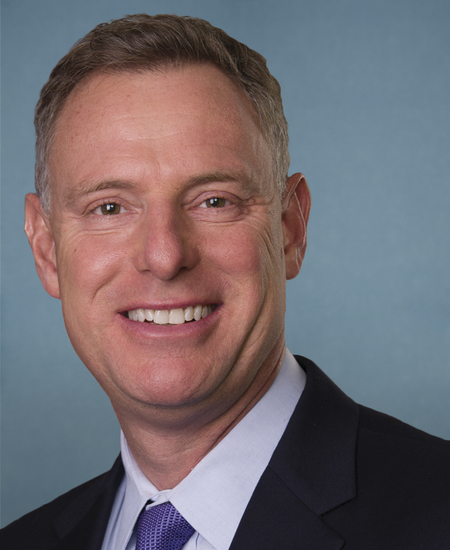
Rep. Scott H. Peters
Sponsored bills
Global War on Terrorism Memorial Location Act This bill authorizes the establishment of a National Global War on Terrorism Memorial in the area of the National Mall.
Equality Act This bill prohibits discrimination based on sex, sexual orientation, and gender identity in areas including public accommodations and facilities, education, federal funding, employment, housing, credit, and the jury system. Specifically, the bill defines and includes sex, sexual orientation, and gender identity among the prohibited categories of discrimination or segregation. The bill expands the definition of public accommodations to include places or establishments that provide (1) exhibitions, recreation, exercise, amusement, gatherings, or displays; (2) goods, services, or programs; and (3) transportation services. The bill allows the Department of Justice to intervene in equal protection actions in federal court on account of sexual orientation or gender identity. The bill prohibits an individual from being denied access to a shared facility, including a restroom, a locker room, and a dressing room, that is in accordance with the individual's gender identity.
Advancing Education on Biosimilars Act of 2021 This bill requires the Food and Drug Administration (FDA) to advance education and awareness among health care providers about biological products as appropriate, including by developing or improving continuing education programs that address the prescribing of biological products and biosimilars. (A biosimilar is a biological product that is highly similar to an FDA-approved reference biological product and has no clinically meaningful differences from that reference product.) The FDA may also maintain and operate a website to provide educational materials about biological products.
State Health Care Premium Reduction Act of 2021 This bill establishes and provides funding for the Improve Health Insurance Affordability Fund. States must use allocated funds to (1) issue reinsurance payments to health insurers (i.e., reimbursements to protect insurers against exceedingly high claims) for individual health insurance coverage, or (2) provide other assistance to reduce out-of-pocket costs (e.g., copayments, coinsurance, and deductibles) for qualified health plans offered in the individual market through an exchange. Reinsurance payments using such funds may not be applied to (1) grandfathered health plans in place on March 23, 2010, (2) non-grandfathered transitional plans meeting specified requirements identified by the Centers for Medicare & Medicaid Services (CMS), or (3) student health insurance plans provided by institutions of higher education. The bill appropriates $10 billion per year for the fund, which the CMS must distribute to states in accordance with a specified methodology based on the estimated amount of reinsurance payments for individuals in a state during the given year, subject to specified deductions. Additionally, states must submit applications explaining how they will use such funds. In the event that a state does not submit an application, the bill directs the CMS to allocate the calculated funding amount to reinsurance programs in that state.
American High-Speed Rail Act This bill addresses high-speed rail corridor development in the United States, including by providing additional funding for high-speed rail corridor planning, and developing comprehensive, performance-based safety regulations and standards for all high-speed rail projects. The federal share of a project financed under this bill may be up to 100%. The Department of Transportation must prioritize financing capital projects in high-speed rail corridors with respect to which at least 20% of the project cost is funded through specified financial sources.
Energizing American Shipbuilding Act of 2021 This bill directs (1) the Federal Energy Regulatory Commission (FERC) to require specified percentages of liquefied natural gas exports to be transported on vessels built or retrofitted in the United States and documented under its laws, and (2) the President to require specified percentages of crude oil exports to be transported on vessels built or retrofitted in the United States and documented under its laws. FERC and the President may waive these requirements under specified circumstances. The Energy Information Administration must collect and publish information on exports of natural gas and crude oil by vessels, including forecasts and data on those exports.
Funding for Aviation Screeners and Threat Elimination Restoration Act or the FASTER Act This bill repeals the requirement that a portion of aviation security service fees collected from passengers be credited as offsetting receipts and deposited in the general fund of the Treasury. It requires such fees to be deposited into a separate account in the Treasury for expenditure to pay only the costs of activities and services for which the fee is imposed (i.e., aviation security screening).
For the People Act of 2021 This bill addresses voter access, election integrity and security, campaign finance, and ethics for the three branches of government. Specifically, the bill expands voter registration (e.g., automatic and same-day registration) and voting access (e.g., vote-by-mail and early voting). It also limits removing voters from voter rolls. The bill requires states to establish independent redistricting commissions to carry out congressional redistricting. Additionally, the bill sets forth provisions related to election security, including sharing intelligence information with state election officials, supporting states in securing their election systems, developing a national strategy to protect U.S. democratic institutions, establishing in the legislative branch the National Commission to Protect United States Democratic Institutions, and other provisions to improve the cybersecurity of election systems. Further, the bill addresses campaign finance, including by expanding the prohibition on campaign spending by foreign nationals, requiring additional disclosure of campaign-related fundraising and spending, requiring additional disclaimers regarding certain political advertising, and establishing an alternative campaign funding system for certain federal offices. The bill addresses ethics in all three branches of government, including by requiring a code of conduct for Supreme Court Justices, prohibiting Members of the House from serving on the board of a for-profit entity, and establishing additional conflict-of-interest and ethics provisions for federal employees and the White House. The bill requires the President, the Vice President, and certain candidates for those offices to disclose 10 years of tax returns.

This resolution expresses the sense of the House of Representatives that Iran's decision to enrich uranium to 20% purity (a point from which it is quicker to develop weapons-grade uranium) is escalatory and that Iran should immediately reverse this decision and abandon its pursuit of a nuclear weapon.