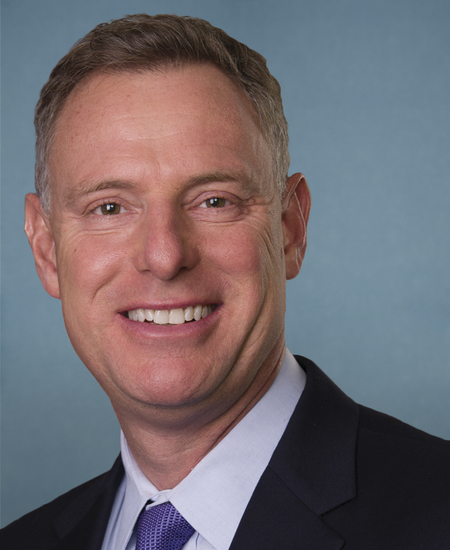
Photo of Scott H. Peters
D United States House · District 50 · California On the 2026 ballot

Rep. Scott H. Peters

Compare
Total votes
2,837
all sessions
Attendance
98%
47 missed
Near the chamber average
With party
96%
of cast votes
Near the chamber average
Bipartisan score
2%
crosses aisle rarely
Near the chamber average
Sponsored
1,570
bills & resolutions
Higher than 81% of chamber peers
Committees
5
assignments
1,570 bills and resolutions

Sponsored bills

Total
1,570
Primary
99
Co-sponsor
1,471
This page
1,570
matching current filters
Co-sponsor HR 2841
In committee · Indiana House · Co-sponsor
Student Athlete Level Playing Field Act

Student Athlete Level Playing Field Act This bill generally prohibits an institution of higher education or a covered athletic organization (e.g., an athletic association, a conference, or an organization with authority over intercollegiate athletics) from restricting the ability of a student athlete to enter into an endorsement or agency contract, with exceptions. It also provides for enforcement by the Federal Trade Commission, preempts state laws relating to endorsement or agency contracts, and establishes the Covered Athletic Organization Commission.

In committee Apr 27, 2021 1 co-sponsor
Primary HR 2801
In committee · Indiana House · Lead sponsor
METHANE Act of 2021

Methane Emissions Technology to Help Achieve Net-zero Emissions Act of 2021 or the METHANE Act of 2021 This bill requires the Environmental Protection Agency (EPA) to establish standards and related requirements to reduce methane emissions from certain oil and gas facilities. Specifically, the EPA must establish methane intensity standards that become increasingly stringent over time. Initial standards must be established within four years. For purposes of establishing the standards, the EPA must categorize the facilities and base the standards on the types of methane emissions from those categories. As part of the process of establishing methane intensity standards, the EPA must establish regulations that prohibit routine flaring of natural gas from the facilities such that greenhouse gas emission from nationwide routine flaring are (1) reduced by at least 80% below 2017 levels by 2028, and (2) eliminated by 2030. In addition, the EPA must determine whether commercially available detection and measurement technologies are sufficiently robust to provide the frequency and accuracy of methane emissions monitoring, detection, and measurement to support a tradable methane intensity credit program. If the EPA determines the technologies are sufficient, then it must establish such a program. Under the program, facilities that emit more than the standards may obtain (e.g., purchase) emission credits from those that emit less. Finally, the EPA must set forth requirements concerning efforts to measure and verify the emission reductions.

In committee Apr 23, 2021 0 co-sponsors
Co-sponsor HR 2803
In committee · Indiana House · Co-sponsor
Agriculture Resilience Act

Agriculture Resilience Act This bill establishes, expands, and revises multiple programs and activities of the Department of Agriculture (USDA) primarily to reduce carbon emissions from the agriculture sector. Specifically, USDA must finalize and implement a plan to achieve net-zero emissions from the sector by 2040. USDA must periodically review and revise the plan, as necessary, and annually report on its implementation. Additionally, the bill expands the scope of various USDA research, extension, and education programs; conservation programs; and livestock programs to incorporate climate change adaption and mitigation. Expanded activities include efforts to improve soil health and preserve farmland and grassland. Further, the bill changes programs that support renewable energy in rural areas to address carbon emissions in the agriculture sector. Among these changes, the bill provides statutory authority for a program for reducing methane emissions from livestock waste that is carried out by the Environmental Protection Agency and transitions the program to USDA. The bill also addresses food waste, for example, by (1) standardizing the voluntary labels used by food producers to indicate the date by which food should be used or discarded, and (2) making composting activities eligible for support through USDA conservation programs. Moreover, the bill establishes grants to reduce and prevent food waste in landfills and in schools.

In committee Apr 23, 2021 1 co-sponsor
Co-sponsor HR 977
In committee · Indiana House · Co-sponsor
Lady Liberty Act of 2021

Lady Liberty Act of 2021 This bill sets a floor of 125,000 for the maximum number of refugees who may be admitted into the United States each fiscal year. Under current law, the President sets the annual cap on refugee admissions at the beginning of each fiscal year. (The cap for FY2021 is 15,000, and the cap for FY2020 was 18,000.)

In committee Apr 23, 2021 1 co-sponsor
Co-sponsor HR 2820
In committee · Indiana House · Co-sponsor
Growing Climate Solutions Act of 2021

Growing Climate Solutions Act of 2021 This bill authorizes the Department of Agriculture (USDA) to establish a voluntary Greenhouse Gas Technical Assistance Provider and Third-Party Verifier Certification Program to help reduce entry barriers into voluntary environmental credit markets for farmers, ranchers, and private forest landowners. A voluntary environmental credit market is a market through which agriculture and forestry credits may be bought or sold. Entities eligible to participate in the program are (1) providers of technical assistance to farmers, ranchers, or private forest landowners in carrying out sustainable land use management practices that prevent, reduce, or mitigate greenhouse gas emissions, or sequester carbon; or (2) third-party verifiers that conduct the verification of the processes described in the protocols for voluntary environmental credit markets. Among other requirements, USDA must publish (1) a list of protocols and qualifications for eligible entities; (2) information describing how entities may self-certify under the program; (3) information describing how entities may obtain the expertise to meet the protocols and qualifications; and (4) instructions and suggestions to assist farmers, ranchers, and private forest landowners in facilitating the development of agriculture or forestry credits and accessing voluntary environmental credit markets. USDA must also establish an advisory council to make recommendations regarding the list of protocols and qualifications, best practices, and voluntary environmental credit markets. The bill also rescinds certain funds provided in the American Rescue Plan Act of 2021 and makes the funds available for the certification program.

In committee Apr 22, 2021 1 co-sponsor
Co-sponsor HR 2721
In committee Apr 22, 2021 1 co-sponsor
Co-sponsor HR 1333
Passed · Indiana House · Co-sponsor
NO BAN Act

National Origin-Based Antidiscrimination for Nonimmigrants Act or the NO BAN Act This bill imposes limitations on the President's authority to suspend or restrict aliens from entering the United States. It also prohibits religious discrimination in various immigration-related decisions, such as whether to issue an immigrant or nonimmigrant visa, unless there is a statutory basis for such discrimination. The President may temporarily restrict the entry of any aliens or class of aliens after the Department of State determines that the restriction would address specific and credible facts that threaten U.S. interests such as security or public safety. The bill also imposes limitations on such restrictions, such as requiring the President, State Department, and the Department of Homeland Security (DHS) to (1) only issue a restriction when required to address a compelling government interest, and (2) narrowly tailor the suspension to use the least restrictive means to achieve such an interest. Before imposing a restriction, the State Department and DHS shall consult with Congress. The State Department and DHS shall report to Congress about the restriction within 48 hours of the restriction's imposition. If such a report is not made, the restriction shall immediately terminate. Individuals or entities present in the United States and unlawfully harmed by such a restriction may sue in federal court. DHS may suspend the entry of aliens traveling to the United States on a commercial airline that failed to comply with regulations related to detecting fraudulent travel documents.

Passed Apr 22, 2021 1 co-sponsor
Co-sponsor HR 51
Passed · Indiana House · Co-sponsor
Washington, D.C. Admission Act

Washington, D.C. Admission Act This bill provides for admission into the United States of the state of Washington, Douglass Commonwealth, composed of most of the territory of the District of Columbia. The commonwealth shall be admitted to the Union on an equal footing with the other states. The Mayor of the District of Columbia shall issue a proclamation for the first elections to Congress of two Senators and one Representative of the commonwealth. The bill applies current District laws to the commonwealth and continues pending judicial proceedings. The commonwealth (1) shall consist of all District territory, with specified exclusions for federal buildings and monuments, including the principal federal monuments, the White House, the Capitol Building, the U.S. Supreme Court Building, and the federal executive, legislative, and judicial office buildings located adjacent to the Mall and the Capitol Building; and (2) may not impose taxes on federal property except as Congress permits. District territory excluded from the commonwealth shall be known as the Capital and shall be the seat of the federal government. The bill maintains the federal government's authority over military lands and specified other property. The bill provides for expedited consideration of a joint resolution repealing the Twenty-third Amendment to the Constitution, which provides for the appointment of electors of the President and Vice President. The bill continues certain federal authorities and responsibilities, including regarding employee benefits, agencies, courts, and college tuition assistance, until the commonwealth certifies that it is prepared to take over the authorities and responsibilities. The bill establishes the Statehood Transition Commission to advise the President, Congress, and District and commonwealth leaders on the transition.


Passed Apr 22, 2021 1 co-sponsor
Co-sponsor HRES 338
In committee Apr 21, 2021 1 co-sponsor
Co-sponsor HR 2709
In committee · Indiana House · Co-sponsor
Access to Contraception for Servicemembers and Dependents Act of 2021

Access to Contraception for Servicemembers and Dependents Act of 2021 This bill addresses Department of Defense (DOD) contraceptive care and family planning services. Specifically, the bill prohibits cost-sharing with respect to TRICARE beneficiaries for specified prescription contraceptives. Additionally, the bill prohibits cost-sharing for TRICARE Select and TRICARE Prime beneficiaries in relation to any in-network method of contraception or contraceptive care (including with respect to insertion, removal, and follow-up), any sterilization procedure, or any related patient education or counseling service. The bill requires DOD to provide information on all methods of emergency contraception and care to sexual assault survivors at its medical treatment facilities. Upon request by a sexual assault survivor, DOD must provide such emergency contraception or a prescription for emergency contraception. Finally, DOD must establish a uniform standard curriculum for education programs on family planning for all members of the Armed Forces. Such education programs must be provided to service members during their first year of service and at other appropriate times, as determined by each military department.

In committee Apr 20, 2021 1 co-sponsor
Showing 1,431 to 1,440 of 1,570 bills