

Wildland Firefighter Fair Pay Act This bill exempts federal wildland firefighters in the Department of the Interior, the Department of Agriculture (USDA), and the Department of Commerce from certain premium pay limitations for work relating to wildfire emergencies. The bill applies retroactively to January 1, 2020. Interior and USDA must each separately submit a report to specified congressional committees on the resources, policies, personnel or structural changes, and other investments necessary to support an expanded full-time, year-round firefighting workforce.
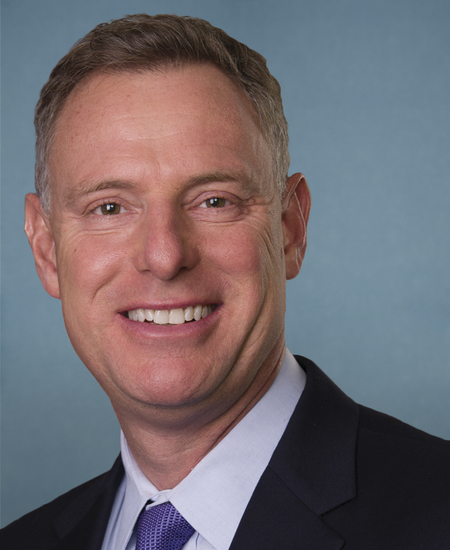
Rep. Scott H. Peters
Sponsored bills
Public Service Freedom to Negotiate Act of 20 21 This bill provides minimum collective bargaining rights and procedures for public employees and prohibits strikes by certain public safety workers. The Federal Labor Relations Authority (FLRA) shall determine for each state whether the laws of such state substantially provide for each of the minimum standard collective bargaining rights and procedures specified by this bill, including the right of public employees and supervisory employees to self-organize, form or join a labor organization, or collectively bargain. The FLRA must issue rules and take actions to establish and administer bargaining rights and procedures for those states that do not substantially provide for them. No employers, emergency services employees, or law enforcement officers may engage in a lockout, strike, or any other organized job action that is likely to result in a measurable disruption of the delivery of emergency or public safety services. Furthermore, no labor organization may be the cause of a violation of such prohibition.
State, Local, Tribal, and Territorial Fiscal Recovery, Infrastructure, and Disaster Relief Flexibility Act This bill allows states, tribes, territories, and localities to use certain COVID-19 relief funds for new categories of spending, including for natural disasters and infrastructure projects. It also makes changes to expenditure deadlines and other aspects of this funding. Specifically, recipients may use funds for emergency relief from natural disasters and associated negative economic impacts of natural disasters. In addition, recipients may use a portion of their COVID-19 relief funds for designated infrastructure projects, such as nationally significant freight and highway projects. Furthermore, the bill allows recipients to expend COVID-19 relief funds on these types of infrastructure projects until September 30, 2026. Under current law, recipients must expend the funds by December 31, 2024. Other changes in the bill include (1) modifying eligibility and allocation requirements for funding set aside for counties and Indian tribes that are near public lands, (2) allowing Indian tribes an additional year to expend their COVID-19 relief funds, and (3) establishing a process for government entities to decline COVID-19 relief funds and requiring any declined funds to be used to reduce the federal deficit.
Jerry Lewis VA Clinic Act This bill designates the community-based outpatient clinic of the Department of Veterans Affairs in Redlands, California, as the Jerry Lewis Department of Veterans Affairs Clinic or the Jerry Lewis VA Clinic.
Caring for Survivors Act of 2021 This bill increases the monthly rate of dependency and indemnity compensation payable to surviving spouses through the Department of Veterans Affairs. The bill also adjusts the amount payable to surviving spouses and children of veterans who were rated as totally disabled for a period of less than 10 years before their death.
EB-5 Reform and Integrity Act of 2021 This bill reauthorizes the EB-5 Regional Center program through FY2026 and makes various changes to the program, such as imposing various oversight requirements. (EB-5 visas provide permanent resident status to qualified alien investors. A regional center allows EB-5 aliens to pool investments to meet various investment and job creation requirements.) Oversight-related provisions include requiring each center to (1) notify the Department of Homeland Security (DHS) of proposed changes to the center's structure, (2) maintain certain records and make such records available to DHS for audits, (3) obtain approval for each particular investment offering, and (4) annually report to DHS. The bill prohibits certain individuals and entities from involvement in a center, such as (1) a person who had committed a violation involving fraud in the previous 10 years, (2) a non-U.S. national not admitted for permanent residence, or (3) a foreign government official. DHS shall deny petitions, such as a petition to certify a regional center or to classify an alien as an alien investor, if approval would threaten U.S. national interest. The bill provides various enforcement authority to DHS and U.S. Citizenship and Immigration Services, including the ability to permanently bar an individual from participating in the regional center program. The bill establishes the EB-5 Integrity Fund to fund program enforcement activities. The bill contains various provisions related to EB-5 petitions, such as a provision authorizing DHS to extend an alien's conditional permanent residence status.
Honoring Our Fallen TSA Officers Act This bill extends public safety officers' death benefits to Transportation Security Administration employees performing official duties related to protecting the nation's transportation systems.
Gay and Trans Panic Defense Prohibition Act of 2021 This bill generally prohibits a federal criminal defendant from asserting, as a defense, that the nonviolent sexual advance of an individual or a perception or belief of the gender, gender identify or expression, or sexual orientation of an individual excuses or justifies conduct or mitigates the severity of an offense.
Keep Americans Safe Act This bill establishes a new criminal offense for the import, sale, manufacture, transfer, or possession of a large capacity ammunition feeding device (LCAFD). The bill does not prohibit certain conduct with respect to an LCAFD, including the following: importation, sale, manufacture, transfer, or possession related to certain law enforcement efforts, or authorized tests or experiments; importation, sale, transfer, or possession related to securing nuclear materials; and possession by a retired law enforcement officer. The bill permits continued possession of, but prohibits sale or transfer of, a grandfathered LCAFD. Newly manufactured LCAFDs must display serial number identification and the date of manufacture. Additionally, the bill allows a state or local government to use Edward Byrne Memorial Justice Assistance Grant Program funds to compensate individuals who surrender an LCAFD under a buy-back program.
Khalid Jabara and Heather Heyer National Opposition to Hate, Assault, and Threats to Equality Act of 2021 or the Jabara-Heyer NO HATE Act of 2021 This bill creates grants for state and local governments to combat hate crimes. It also authorizes additional penalties for hate crime offenses. Specifically, it establishes grants for states to create state-run hate crimes reporting hotlines. It also authorizes grants for states and local governments to implement the National Incident-Based Reporting System and to conduct law enforcement activities or crime reduction programs to prevent, address, or respond to hate crimes. Finally, in the case of an individual convicted of a hate crime offense and placed on supervised release, the bill allows a court to order that the individual participate in educational classes or community service as a condition of supervised release.