

Maddy summaryThe HEAL Act (HR 603) requires the U.S. Holocaust Memorial Museum Director to study how public elementary and secondary schools teach about the Holocaust and related antisemitism. The study will examine curriculum requirements, teaching methods (like project-based learning), instructional materials, and assessment approaches across states and school districts. It specifically analyzes whether Holocaust education is mandatory, optional, or integrated across subjects, and how schools address antisemitism and genocide prevention. The resulting report, due within 180 days of the study or three years after enactment, will inform Congress but does not change current school policies. This is a data-gathering measure, not a policy mandate.
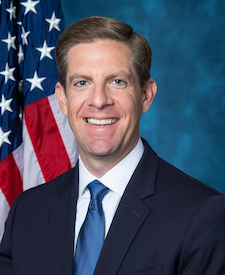
Rep. Mike Levin
Sponsored bills
Maddy summaryHCONRES 7 is a symbolic resolution passed by the U.S. House of Representatives that commends Iranian protesters - particularly women - who have risked safety to demonstrate against the Iranian regime's human rights abuses, including the mandatory hijab law and violent crackdowns following Mahsa Amini's death. It condemns the regime's use of violence (reportedly killing over 450 protesters) and detention of activists, while urging the Biden Administration to impose additional human rights sanctions on officials involved in repression and support internet freedom tools to bypass Iranian censorship. The resolution makes no binding policy changes but formally expresses congressional support for protesters' demands for freedom, justice, and an end to discriminatory laws targeting women. It does not directly affect any U.S. laws or policies but serves as a statement of U.S. position.
Maddy summaryHR 472, the Fighting Post-Traumatic Stress Disorder Act of 2023, requires the Attorney General to develop a report within 150 days of enactment on programs to provide specialized mental health services for public safety officers (including police, firefighters, EMTs, and 911 dispatchers) and telecommunicators. The report must propose evidence-based trauma care, peer support, and family services to address job-related PTSD and acute stress disorder, while ensuring confidentiality for those seeking help. It will also outline efficient implementation plans using in-person and telehealth options across state, tribal, territorial, and local levels, plus draft legislative language and funding estimates. The bill directly targets public safety workers facing significantly higher PTSD rates (30% vs. 20% general population) and elevated suicide risks, including an estimated 125-300 annual police suicides.
Maddy summaryThis bill creates a 20% tax credit for property owners who convert older office buildings (at least 25 years old) to residential, retail, or other commercial uses. To qualify, conversions must meet specific requirements, including that for residential conversions, at least 20% of units must be rent-restricted for low-income residents (earning 80% or less of area median income). The credit applies to qualified conversion costs incurred after the bill's enactment and aims to encourage revitalizing downtown areas with excess office space. This policy change directly affects commercial property owners and developers who convert eligible buildings.
Maddy summaryHR 286, the Health Care Providers Safety Act of 2023, provides federal grants to healthcare providers to improve security at their facilities. The bill authorizes the Secretary to fund security services and physical/cyber security enhancements, including video surveillance, data privacy measures, and structural improvements. These grants directly help healthcare facilities, personnel, and patients by addressing safety concerns. The law specifies that funds must be used for necessary security costs to ensure safe access to healthcare services. It does not create new mandates but offers financial support for security upgrades.
Maddy summaryThis bill prohibits the export or sale of petroleum products drawn from the U.S. Strategic Petroleum Reserve to specific countries and entities, including China, Russia, North Korea, Iran, and any nation under U.S. sanctions. It also bans exports to entities owned or controlled by these countries or the Chinese Communist Party. The Secretary of Energy must enforce this ban, though they may issue a national security waiver for specific exports. The bill requires the Secretary to issue implementing rules within 60 days of enactment. It directly affects the Secretary of Energy, oil exporters seeking to use the Strategic Petroleum Reserve, and the listed countries/entities.
Maddy summaryHR 396, the Closing the Bump Stock Loophole Act of 2023, defines "bump stock" as any device or modification that increases the firing rate of a semi-automatic weapon to mimic a machine gun. The bill amends federal tax and firearms laws to classify bump stocks as prohibited devices under the National Firearms Act, requiring existing owners to register them within one year of enactment. It directly affects individuals who currently own bump stocks by mandating registration to avoid future possession prohibitions. The law takes effect immediately for new sales but provides a one-year grace period for existing owners to comply with registration requirements.
Maddy summaryHR 345, the TRUST in Congress Act, requires Members of Congress, their spouses, and dependent children to place certain investments into a "blind trust" within 90 days of taking office or after the bill's enactment. It directly affects current and future lawmakers and their immediate family members by mandating that covered investments - such as stocks, commodities, or derivatives (excluding Treasury bonds and some mutual funds) - be placed in a trust they cannot manage. Members must certify the trust setup to House or Senate officials within 15 days, and trusts cannot be dissolved until 180 days after leaving office. The law excludes investments providing primary income (e.g., from a spouse's job) but requires transparency through public website disclosures of certifications.
Maddy summaryThis bill requires colleges to notify students receiving federal work-study aid about their potential eligibility for the Supplemental Nutrition Assistance Program (SNAP). It mandates that institutions send electronic notifications (via email or other digital means) to these students, explaining SNAP eligibility requirements, state-specific application processes, and including a document confirming their work-study status to satisfy SNAP eligibility rules. The bill directly affects undergraduate and graduate students participating in federal work-study programs who may qualify for food assistance but lack awareness of SNAP. The key mechanism is the standardized notification developed by the Education and Agriculture Departments, designed to streamline access to nutrition benefits for students facing food insecurity.
This resolution condemns all acts of political violence, as well as attacks on health care facilities, health care personnel, and patients. The resolution also states that all people have the freedom to access reproductive health care services and medical advice without fear of violence, intimidation, or harassment. Finally, the resolution calls on the Biden Administration to use all appropriate authorities to uphold public safety, protect health care facilities, and safeguard health care personnel and patients.