

Maddy summaryHR 669, the "Restricting First Use of Nuclear Weapons Act of 2025," requires Congress to declare war before the U.S. can conduct a first-use nuclear strike. It directly affects the President (who currently has sole authority to authorize such strikes), military commanders, and Congress by mandating that federal funds cannot be used for a first-use attack without a congressional declaration of war. The bill defines a "first-use nuclear strike" as an attack launched without prior confirmation that the U.S., its territories, or allies were first hit with nuclear weapons. This law changes policy by creating a constitutional check on presidential nuclear authority, requiring explicit congressional approval for the initial use of nuclear weapons.
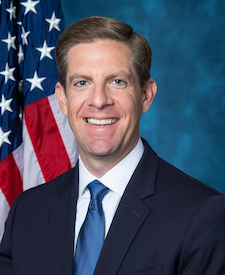
Rep. Mike Levin
Sponsored bills
Maddy summaryThis bill amends the Harmful Algal Bloom and Hypoxia Research and Control Act of 1998 to strengthen federal efforts addressing harmful algal blooms (HABs) and hypoxia events. It requires a federal Task Force to develop a comprehensive Action Strategy every five years examining causes, ecological impacts, and economic consequences of HABs across marine, estuarine, and freshwater systems, including the Great Lakes and coastal waters. The bill establishes a National-Level Incubator Program to fund innovative prevention and control strategies, with priority given to solutions protecting public health, biodiversity, and vulnerable communities. It mandates enhanced coordination among federal agencies, states, Indian tribes, and local communities to improve monitoring, forecasting, and response capabilities for HAB events. The bill authorizes $19.5 million annually for NOAA and $8 million annually for EPA to implement these provisions from 2026-2030.
Maddy summaryHR 609, the Assuring Medicare's Promise Act of 2025, directs revenue from the net investment income tax (currently applied to investment income) into the Medicare Hospital Insurance Trust Fund. It expands the tax base to include certain business income for high-income individuals with modified adjusted gross income exceeding $400,000 ($500,000 for joint filers), with a phase-in to limit the tax increase. The bill ensures this tax revenue directly supports Medicare's hospital insurance program, applying to taxable years beginning after December 31, 2025. The changes do not alter the tax rate but broaden the income types subject to the tax for high earners.
Beaches Environmental Assessment and Coastal Health Act of 2025 or the BEACH Act of 2025 This bill reauthorizes through FY2029 and expands an existing program of the Environmental Protection Agency (EPA) that awards grants to states and local governments to (1) monitor the water quality of coastal recreational waters adjacent to beaches or similar points of access that are used by the public; and (2) notify the public, local governments, and the EPA when the water is not safe for recreational activities. Specifically, the bill expands the program to allow the EPA to award grants for identifying sources of contamination (i.e., pathogens) for coastal recreation waters. It also allows grants to be used for monitoring and notification of contamination in (1) shallow waters upstream from recreational waters, and (2) recreational waters on beaches.
Boundary Waters Wilderness Protection and Pollution Prevention Act This bill protects and preserves approximately 225,504 acres of federal land and waters in a specified area in the Rainy River Watershed of Superior National Forest in Minnesota from certain mining, such as sulfide-ore copper mining. (The area is upstream from the Boundary Waters Canoe Area Wilderness.) Specifically, the bill withdraws those acres from entry, appropriation, and disposal under the public land laws; location, entry, and patent under the mining laws; and operation of the mineral leasing, mineral materials, and geothermal leasing laws. However, the Forest Service is authorized to permit the removal of sand, granite, iron ore, and taconite from national forest system lands within such area if the removal is not detrimental to the water quality, air quality, and health of forest habitat within the Rainy River Watershed. Land or interest in land within such area that is acquired by the United States must be immediately withdrawn in accordance with this bill.
Maddy summaryHR 566, the Cleaner Air Spaces Act of 2025, provides federal grants to air pollution control agencies to establish local programs targeting low-income households with vulnerable residents (such as those with health conditions or elderly members) in wildfire smoke-prone areas. The bill authorizes $30 million over three years to fund programs that must establish accessible clean air centers, distribute at least 1,000 free, certified air filtration units per program (with replacements), provide educational materials, and partner with community organizations. Agencies must track unit types and costs, survey participants on program effectiveness, and report results to Congress within three years. The program directly affects covered households by improving access to clean air during smoke events through tangible, funded support.
This bill increases the annual limit on the tax credit for qualified railroad track maintenance expenses (also referred to as the short line railroad tax credit) and expands eligibility for claiming the credit. Under current law, the tax credit is limited each tax year to $3,500 multiplied by the sum of the number of miles of railroad track owned or leased by the taxpayer (miles owned or leased) and the number of railroad track miles assigned to the taxpayer by a Class II or III railroad (miles assigned). This bill increases the annual limit to $6,100 multiplied by the sum of miles owned or leased and miles assigned. The $6,100 amount used in the calculation of the tax credit limit is adjusted for inflation for tax years beginning after 2025. The bill also expands eligibility for the tax credit to include gross expenses for maintaining railroad tracks owned or leased as of January 1, 2024. Under current law, the tax credit is limited to gross expenses for maintaining railroad tracks owned or leased as of January 1, 2015.
Maddy summaryHR 475 would impose U.S. sanctions on Russian individuals or entities that have endangered the safety or operational control of Ukraine’s Zaporizhzhia Nuclear Power Plant since Russia’s 2022 invasion. Key provisions include freezing assets of targeted persons and banning their entry into the U.S. via visa restrictions. The bill includes critical exceptions for humanitarian aid (food, medicine, medical supplies) and efforts to restore Ukrainian control of the plant. These sanctions aim to address nuclear safety risks highlighted by the IAEA, without affecting legitimate humanitarian operations.
Maddy summaryThe Prevent Tariff Abuse Act amends the International Emergency Economic Powers Act to prohibit the President from using emergency powers to impose tariffs or import quotas on goods entering the U.S. It adds a specific provision stating the President cannot impose duties, tariffs, or quotas under this law. This directly limits the executive branch's authority during emergencies, preventing the use of emergency powers for trade restrictions. The bill does not affect other trade policies or the President's other emergency authorities.
Maddy summaryHR 430, the SALT Deductibility Act, repeals the $10,000 cap on deducting state and local taxes (SALT) for federal income tax filers who itemize deductions. This change directly affects taxpayers in high-tax states who currently face the $10,000 limit on deducting their state income taxes, property taxes, and sales taxes. The bill amends the Internal Revenue Code to remove the specific deduction limit (Section 164(b)(6)), allowing these taxpayers to deduct their full state and local tax payments. The repeal applies to tax returns filed for taxable years beginning after December 31, 2024.