

Early Childhood Nutrition Improvement Act This bill makes various changes to the Child and Adult Care Food Program, which reimburses child care centers, day care homes, and other sites for meals and snacks provided to low-income individuals. Among these changes, the bill authorizes reimbursements for an additional meal or snack provided to children who are in care for at least eight hours, allows certain child care centers to certify their eligibility on an annual (rather than a monthly) basis, and establishes an advisory committee to make recommendations to reduce unnecessary recordkeeping requirements for program participants.
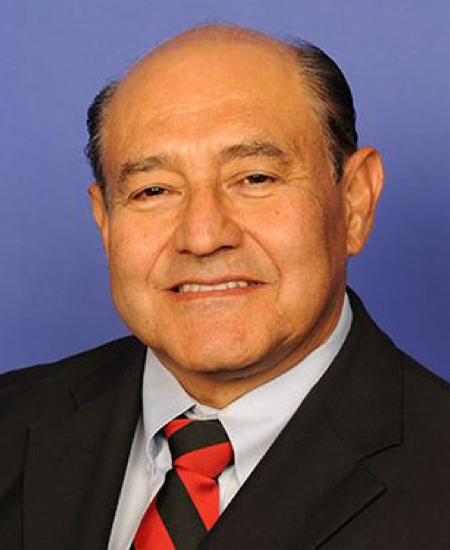
Rep. J. Luis Correa
Sponsored bills
Truth in Taxation Act of 2021 This bill requires any bill, resolution, or amendment that would increase or decrease federal taxes, fees, or similar amounts to include a description of this effect in its long title or heading. A measure's failure to comply results in a point of order that may be raised during the measure's consideration in the House of Representatives or the Senate, in accordance with specified procedures.
Temporary Family Visitation Act This bill establishes a new nonimmigrant visa classification for an alien temporarily entering the United States to visit a relative who is a U.S. citizen or lawful permanent resident. The maximum period of stay for a family visitor visa shall be 90 days. An alien seeking such a visa must have health insurance for the duration of the stay. An alien who holds such a visa may not change to another nonimmigrant visa classification except in certain limited instances. If an alien has been approved for a family-based immigrant visa and is waiting for one to become available, the alien may obtain a family visitor visa if the alien meets the eligibility requirements.
Common Sense Cannabis Reform for Veterans, Small Businesses, and Medical Professionals Act This bill removes federal restrictions on, and creates new protections for, marijuana-related conduct and activities that are authorized by state or tribal law. Among other things, the bill does the following: removes marijuana from the list of scheduled substances under the Controlled Substances Act and eliminates criminal penalties for an individual who manufactures, distributes, or possesses marijuana; directs the Food and Drug Administration and the Alcohol and Tobacco Tax and Trade Bureau of the Department of the Treasury to issue rules to regulate marijuana that are similar to the federal rules regulating alcohol; creates protections for depository institutions that provide financial services to marijuana-related businesses; creates protections for veterans who use, possess, or transport medical marijuana; and requires the National Institutes of Health to study and report on the effects of medical marijuana on individuals who are impaired or in pain and the relationship between state-approved treatment programs involving medical marijuana, access to such programs, and a reduction in opioid abuse.
Untraceable Firearms Act of 2021 This bill establishes a federal statutory framework to regulate the manufacture, sale, offer to sell, transfer, purchase, and receipt of ghost guns (i.e., guns without serial numbers). Additionally, the bill revises the federal statutory framework regulating the manufacture, possession, sale, import, shipment, delivery, receipt, and transfer of undetectable firearms. Among the revisions, the bill defines undetectable firearm as a firearm without a major component wholly made of detectable material.
Coronavirus Provider Protection Act This bill generally exempts health care professionals and related health care entities (e.g., hospitals and medical clinics) from liability for harm caused in the course of arranging or providing health care services during the COVID-19 public health emergency. To be exempt from liability, professionals and entities must provide these services in good faith, even if a service is outside a professional's normal area of practice, or withhold these services for reasons related to the COVID-19 public health emergency. However, this exemption does not apply (1) if the act or omission constitutes willful or criminal misconduct, gross negligence, reckless misconduct, or a conscious flagrant indifference to the rights or safety of the individual harmed; or (2) if the professional provides the services while under the influence of alcohol or certain drugs.
Raise the Age Act This bill establishes new restrictions on the sale or transfer of certain semiautomatic firearms to individuals under 21 years of age. Specifically, this bill makes it unlawful for a licensed gun dealer, importer, manufacturer, or collector to sell or deliver a semiautomatic center-fire rifle that has (or has the capacity to accept) an ammunition feeding device with a capacity of more than five rounds to an individual who the licensee knows or has reasonable cause to believe is under age 21. The prohibition does not apply if the individual under age 21 is a full-time law enforcement officer or active-duty member of the Armed Forces. The bill also requires the Federal Bureau of Investigation to report on the operation of its public access line, including a description of information sharing protocols and recommendations for improving such protocols.
Vietnam Human Rights Act This bill requires actions related to human rights in Vietnam and addresses related issues. The Department of State must assist eligible individuals and entities working to secure the release of political and religious prisoners in Vietnam. The Office of Internet Freedom within the U.S. Agency for Global Media and the Bureau of Democracy, Human Rights, and Labor within the State Department shall prioritize (1) the immediate distribution of censorship circumvention tools for computers and smartphones in Vietnam; and (2) projects to ensure the safety and privacy of bloggers, journalists, and human rights defenders in Vietnam. Foreign assistance may not be used to assist any unit of the Vietnamese government engaged in cyberespionage activities. The State Department may establish programs to (1) monitor and halt sex trafficking of women from Vietnam and other Asian countries, and (2) address Vietnam's growing sex-ratio disparity. The bill also requires various reports to Congress, including reports on (1) persons subject to U.S. sanctions for human rights violations in Vietnam, (2) a strategy to promote internet freedom in Vietnam, and (3) cyberespionage activities sanctioned by the Vietnamese government targeting Vietnamese dissidents and human rights advocates living outside of Vietnam.
Fiscal State of the Nation Resolution This concurrent resolution requires the congressional budget committees to conduct an annual joint hearing to receive a presentation from the Comptroller General regarding (1) the Government Accountability Office's audit of the financial statement of the executive branch, and (2) the financial position and condition of the federal government.
VA Medicinal Cannabis Research Act of 2021 This bill requires the Department of Veterans Affairs (VA) to conduct clinical trials of the effects of medical-grade cannabis on the health outcomes of covered veterans diagnosed with chronic pain and those diagnosed with post-traumatic stress disorder. Covered veterans are those who are enrolled in the VA health care system. The trials must include a control group and an experimental group that are of similar sizes and structures and represent the demographics of the veteran population. Data collected in the trials must be preserved to facilitate further research. Under the bill, participation in the clinical trials does not affect a covered veteran's eligibility or entitlement to other VA benefits.