

Summer Meals Act of 2021 This bill revises provisions related to the Summer Food Service Program (SFSP) of the Department of Agriculture (USDA), which provides meals to children and teens in low-income areas during the summer months when school is not in session. The bill redefines areas in which poor economic conditions exist , where the SFSP may operate, as areas in which at least 40% (currently, 50%) of the children have been determined to be eligible for free or reduced price school meals under the school lunch and breakfast programs. The bill reimburses service institutions (other than school food authorities) for up to one meal and one snack per child each day during after-school hours, weekends, and school holidays during the regular school calendar. Currently, such institutions are reimbursed for meals and snacks served to children over the summer months or to children who are on vacation under a continuous school calendar. USDA may award competitive grants to service institutions to increase participation in the summer food service program for children at congregate feeding sites through innovative approaches to limited transportation and mobile meal trucks. Service institutions that are participating in the summer food service program for children may serve up to three meals, or two meals and one snack, during each day of operation. Currently, this option is reserved for camps and service institutions that serve meals primarily to migrant children.
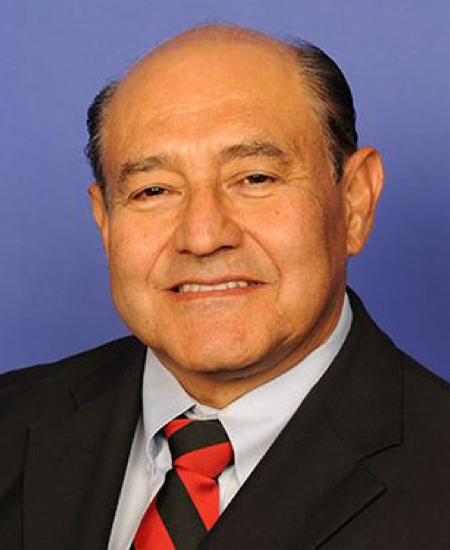
Rep. J. Luis Correa
Sponsored bills
National Plan to End Parkinson's Act This bill requires the Department of Health and Human Services (HHS) to carry out a project to prevent and cure Parkinson's disease (a progressive brain disorder that causes unintended or uncontrollable movements) and related conditions. Among other components of the project, HHS must (1) implement and periodically update a national plan to coordinate and guide efforts to prevent and cure the disease; (2) improve diagnosis, treatment, and care of those with the disease; and (3) address health and other disparities related to the disease. HHS must also conduct annual assessments on the preparation for and response to the increased burden of Parkinson's disease. In addition, the bill establishes a council, comprised of federal and nonfederal stakeholders, to advise HHS on and make recommendations concerning the prevention and cure of Parkinson's disease. The bill's provisions terminate at the end of calendar year 2035.
Securing and Enabling Commerce Using Remote and Electronic Notarization Act of 2022 or the SECURE Notarization Act of 2022 This bill allows a notary public commissioned under state law to remotely notarize electronic records and perform notarizations for remotely located individuals. The bill provides technical requirements for such notarizations, including the creation and retention of video and audio recordings and the use of communication technologies (i.e., video chat). Additionally, the bill requires U.S. courts and states to recognize notarizations—including remote notarizations of electronic records and notarizations of remotely-located individuals—that occur in or affect interstate commerce and are performed by a notary public commissioned under the laws of other states. The bill also allows a notary public to remotely notarize electronic records involving an individual located outside of the United States, subject to certain requirements.
Gabriella Miller Kids First Research Act 2.0 This bill reauthorizes through FY2027 a pediatric disease research initiative within the National Institutes of Health (NIH) and requires the NIH to coordinate pediatric research activities to avoid duplicative efforts. Additionally, the Department of Health and Human Services must report, within five years, to Congress about research funded through the initiative.
This resolution recognizes the importance of Chicano Heritage Month and asserts that Mexican Americans enhance the diversity and strength of the United States.
Original Slavery Remembrance Day Resolution of 2021 This resolution supports the designation of a Slavery Remembrance Day and condemns slavery and its progenies.
Shirley Chisholm Congressional Gold Medal Act This bill provides for the posthumous presentation of a Congressional Gold Medal in commemoration of Shirley Chisholm, in recognition of her activism, independence, and groundbreaking achievements in politics, election as the first African American woman in Congress, and campaign to be the first African American to gain the nomination of a major political party for President of the United States. Following its award, the gold medal shall be given to the Smithsonian Institution where it shall be available for display and research.
American Families United Act This bill authorizes the Department of Homeland Security (DHS) or the Department of Justice (DOJ) to exercise discretion in certain immigration cases. The bill also removes certain requirements related to birthright citizenship. Under this bill, DOJ or DHS may, on a case-by-case basis, exercise discretion by declining to remove an alien or bar an alien from entering the United States to prevent hardship for the alien's U.S. citizen spouse, parent, or child. However, DOJ or DHS may not exercise this discretion if the alien is removable or inadmissible due to certain grounds, including specified crime- and security-related grounds. The bill also removes certain requirements related to birthright citizenship for a child born outside of the United States to one U.S. citizen parent and one alien parent. Specifically, the bill removes a provision that requires the U.S. citizen parent to be physically present in the United States for at least five years before the child's birth in order for the child to acquire U.S. citizenship at birth.
Maddy summaryHRES 1282 is a non-binding House resolution expressing support for designating July as "Disability Pride Month." It recognizes that over 61 million U.S. adults live with disabilities and connects the designation to the anniversary of the Americans with Disabilities Act (signed July 26, 1990). The resolution urges Americans to observe the month with celebrations and actively work to prevent discrimination against people with disabilities. It does not create new laws or funding but formally endorses public recognition of disability pride.
No Shame at School Act of 20 22 This bill establishes requirements for the treatment of a child who is participating in the National School Lunch Program or the School Breakfast Program and owes unpaid school meal fees. It also requires local educational agencies to certify certain children (e.g., homeless children) as categorically eligible for free lunches or breakfasts without an application.