

Maddy summaryHCONRES 72 is a non-binding concurrent resolution recognizing the wage gap between Latina women and White, non-Hispanic men, where Latina women earn 57 cents for every dollar earned by White, non-Hispanic men working full-time. It highlights that this disparity results in Latina women losing over $1.2 million in potential earnings over a 40-year career and places them at risk of poverty. The resolution reaffirms congressional support for equal pay but does not create new laws or policy changes. It serves as a symbolic statement to raise awareness about systemic inequities affecting Latina women workers.
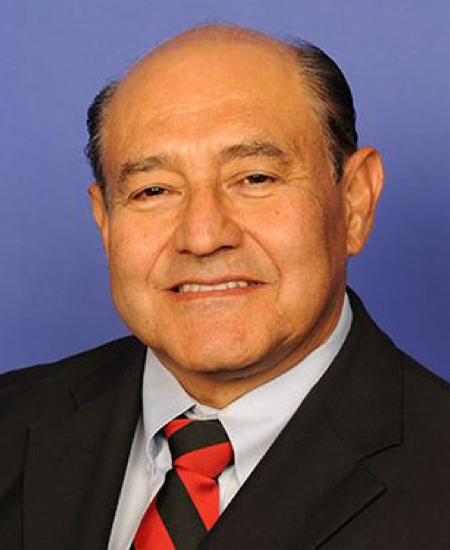
Rep. J. Luis Correa
Sponsored bills
Maddy summaryHRES 785 is a non-binding resolution introduced by the U.S. House of Representatives that formally recognizes the contributions of Hispanic lawyers and judges while highlighting their underrepresentation in the legal profession and judiciary. It cites specific statistics, noting Hispanic lawyers make up 5.8% of U.S. lawyers and Hispanic judges represent just 7% of federal judicial appointments. The resolution expresses support for increasing Hispanic representation in the legal field to better reflect the Hispanic population, which comprises 18.7% of the U.S. population. As a symbolic measure, it does not enact new laws or policies but serves as a statement of the House's acknowledgment of diversity efforts in the legal sector.
Maddy summaryHRES 771 is a non-binding resolution expressing the U.S. House of Representatives' support for Israel following Hamas' October 7, 2023, attack. It condemns Hamas' actions, affirms Israel's right to self-defense, and calls for the immediate release of hostages. The resolution also urges enforcement of existing laws restricting aid to terrorists and sanctions against Iran for supporting Hamas. It does not create new policies or allocate funds, as it is a symbolic statement of congressional support.
Maddy summaryHRES 768 is a symbolic House Resolution expressing congressional support for Israel following Hamas' October 7, 2023 attacks. It condemns Hamas' actions, reaffirms Israel's right to self-defense, and calls for the immediate release of hostages. The resolution references the U.S. commitment to Israel's security through existing military aid programs, including the 2016 U.S.-Israel Memorandum of Understanding, and emphasizes enforcement of laws like the Taylor Force Act to prevent U.S. aid from reaching terrorist groups. As a symbolic resolution, it does not create new policy but serves as a statement of congressional support for Israel.
Maddy summaryHRES 762 is a non-binding House resolution expressing congressional support for increasing Latino representation in science, technology, engineering, and mathematics (STEM) careers. It highlights that Latinos make up 18% of the U.S. workforce but only 8% of STEM workers, despite growing population and interest in STEM fields. The resolution cites challenges like unmet financial needs (70% of Latino students) and notes STEM job growth (10.8%) outpaces non-STEM sectors. It formally acknowledges the underrepresentation in STEM, encourages federal support for initiatives targeting Latino students, and recognizes Hispanic-serving institutions' role - without creating new programs or funding.
Maddy summaryHRES 761, the "MEMBERS Resolution," would amend House rules to require that only current or newly elected House members (including Delegates and Resident Commissioners) can be nominated as Speaker. This procedural change directly affects potential Speaker candidates by excluding non-members, such as Senators or former representatives, from nomination eligibility. The bill does not alter the election process but sets a new requirement for who qualifies to be put forward for the Speakership.
Maddy summaryThe Safe Schools Improvement Act (HR 6031) requires public elementary and secondary schools to implement comprehensive anti-bullying policies that specifically prohibit harassment based on protected characteristics like race, gender identity, disability, religion, and sexual orientation. It mandates schools to collect and publicly report annual data on bullying incidents while establishing clear grievance procedures for students and parents. The bill also requires states to submit biennial reports on school compliance and supports evidence-based interventions, such as restorative practices, to reduce exclusionary discipline. This legislation directly affects all public K-12 schools and students in the U.S., aiming to create safer learning environments through standardized policy requirements and data transparency.
Maddy summaryThis bill grants permanent residency to two specific individuals, Ivana Alexandra Sifuentes Arbirio and Luisa Mariana Sifuentes Arbirio, by waiving standard immigration requirements that would otherwise prevent them from obtaining lawful permanent residence. It allows them to file for adjustment of status or an immigrant visa within two years of the bill's enactment, rescinds any existing removal orders against them, and prevents their removal or denial of admission based on past immigration issues. The bill also requires the State Department to reduce the visa numbers available for their country of origin by two and denies preferential immigration benefits to their relatives under the law. This is a case-specific relief measure with no broader policy impact.
Maddy summaryThis bill creates a 40% tax credit for individuals and businesses purchasing zero-emission electric lawn, garden, and landscape equipment, such as electric mowers or trimmers. The credit covers 40% of the equipment's cost, with a yearly cap of $25,000 and a 10-year aggregate limit of $100,000 per taxpayer. Qualifying equipment must run on electricity (via solar, batteries, fuel cells, or grid power) and cannot use gasoline, diesel, or manual effort. The bill also includes related items like batteries, repair tools, and retrofitting equipment in the credit scope while preventing double benefits with other tax credits.
Maddy summaryThe Medical Debt Relief Act of 2023 would prevent credit bureaus from reporting medical debt on credit reports and stop creditors from using medical debt information when making credit decisions. It defines medical debt as any debt related to medical services, products, or devices, and requires the removal of existing medical debt entries from credit reports. Within one year of enactment, the Consumer Financial Protection Bureau must update regulations to prohibit creditors from considering medical debt in loan or credit applications. This directly affects consumers with medical debt (who may see improved credit scores) and creditors (who must adjust their credit evaluation practices).