

Maddy summaryHR 6081 amends the short title of the Lake Tahoe Restoration Act (Public Law 106-506) to honor Senator Dianne Feinstein, renaming it the "Dianne Feinstein Lake Tahoe Restoration Act." This change applies to all federal references in laws, maps, regulations, documents, or records that previously cited the original title. The bill does not alter the Act's policies or funding but updates its official name and all related references. It directly affects federal agencies and documents that reference the legislation. This is a purely procedural renaming with no substantive policy changes.
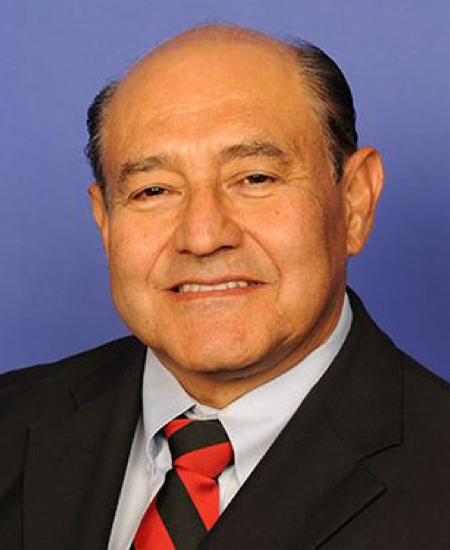
Rep. J. Luis Correa
Sponsored bills
Maddy summaryHRES 963 is a symbolic resolution honoring Korean American Day, which commemorates the January 13, 1903 arrival of the first large wave of Korean immigrants to the U.S. It recognizes Korean Americans' contributions to U.S. society, including their economic, cultural, and military impacts, and marks the 121st anniversary of this historic migration. The resolution urges all Americans to observe Korean American Day to appreciate these contributions. As a commemorative measure, it does not create new policies or affect specific groups beyond this ceremonial recognition.
Maddy summaryThe Affordable Connectivity Program Extension Act of 2024 allocates $7 billion in funding for the Affordable Connectivity Program (ACP) during fiscal year 2024. The ACP provides subsidies to low-income households to help cover the cost of internet service and connected devices like laptops or tablets. This funding ensures the program can continue supporting eligible households throughout the year, with the money remaining available until fully spent. The bill extends existing program funding without changing eligibility criteria or service requirements.
Maddy summaryThis bill requires tissue banks and manufacturers of human cell/tissue products to screen donors for both active and latent tuberculosis infections before tissue use. It mandates new FDA regulations (to be proposed within one year) requiring these facilities to implement TB screening and testing, with final rules set for promulgation within three months after public comments. The law updates existing FDA guidance on tissue safety within six months and treats innovative TB screening tests as "breakthrough devices" for faster approval. It applies directly to facilities handling tissue donations, aiming to prevent disease transmission through transplanted tissues, and uses existing funding without new appropriations.
Maddy summaryThe Restore Honor to Service Members Act of 2023 establishes a Department of Defense "Tiger Team" to improve outreach to veterans with certain discharge statuses (specifically those discharged under "former section 654" before 2011, often related to policies like the "Don't Ask, Don't Tell" era). The team will collaborate with the VA, veterans' groups, and other stakeholders to identify eligible veterans, share contact information, and guide them through the existing review process under Section 527 of the 2020 National Defense Authorization Act. The bill requires the team to submit regular progress reports to Congress and a final report within three years, tracking how many veterans successfully changed their discharge status to "honorable" through the review process. This focuses on streamlining access to an existing review mechanism, not creating new benefits or altering discharge standards.
Maddy summaryThis resolution urges the Biden administration to facilitate the safe, timely, and sufficient delivery of humanitarian aid to civilians in Gaza. It specifically calls for expanding aid convoys, opening additional border crossings, providing fuel to aid organizations, establishing safe shelters, and renewing humanitarian pauses to address the severe crisis. The resolution directly affects civilians in Gaza, where infrastructure damage, contaminated water, and shortages of medical supplies have created a dire humanitarian situation. It does not create new laws but expresses Congress's position on improving aid access.
Maddy summaryThis bill designates the Elk River Trail in California's Headwaters Forest Reserve as the "Senator Dianne Feinstein Memorial Trail." It updates all official federal references - such as laws, maps, and documents - to reflect this new name. The bill directly affects the Elk River Trail and federal records mentioning it. No substantive policy changes or funding are involved; it solely honors Senator Feinstein through a trail naming designation.
Maddy summaryThe STATES 2.0 Act would allow states to regulate cannabis according to their own laws without federal interference, while establishing a federal framework for interstate commerce. It would create a federal excise tax on marijuana to support regulation without adding excessive costs to consumers, and would require the FDA to regulate marijuana products as drugs, food, or cosmetics. The bill would exempt state-legal cannabis activities from federal prohibition, including removing cannabis from the federal controlled substances schedule when sold in compliance with state law. It would also allow federally recognized tribes to regulate cannabis within their jurisdictions under tribal law, and would require a study on how cannabis legalization affects traffic safety.
Maddy summaryThe PLAN for School Safety Act of 2023 creates a federal program to fund State and regional centers that help schools develop and improve individualized safety plans. These centers, established by eligible entities like state education agencies or Tribal organizations, provide tailored consulting on school safety, mental health, and violence prevention using research-backed methods. The program requires centers to cover 5% of activity costs and prioritizes support for schools in rural, Tribal, or low-resourced communities. Annual reports to Congress will track implementation progress, effectiveness, and how centers assist schools in accessing funding for safety initiatives.
Maddy summaryHR 6381, the Veterans Visa and Protection Act of 2023, helps noncitizen veterans and service members who face deportation by creating a pathway to legal permanent residency in the U.S. It requires the government to reopen removal cases for eligible veterans, adjust their status to lawful permanent residents if they served honorably without certain serious criminal convictions (like crimes of violence), and prohibit deportation except for such crimes. The bill also ensures these individuals can access military and veterans benefits they lost due to removal proceedings and allows them to apply for naturalization through military service. It mandates that immigration officials identify service members/veterans early in proceedings and track their cases to prevent unjust removal.