

Maddy summaryHRES 1392 is a symbolic resolution recognizing August as Chicano/Chicana Heritage Month to celebrate Mexican Americans' contributions to U.S. history. It encourages communities to observe the month through events highlighting cultural, historical, and social achievements, such as labor rights advocacy and legal milestones. The resolution has no legal force or direct impact on specific groups, as it is purely a ceremonial acknowledgment. It follows similar local designations by cities like Santa Ana and Anaheim, which already observe the month. This resolution does not create new policies or obligations.
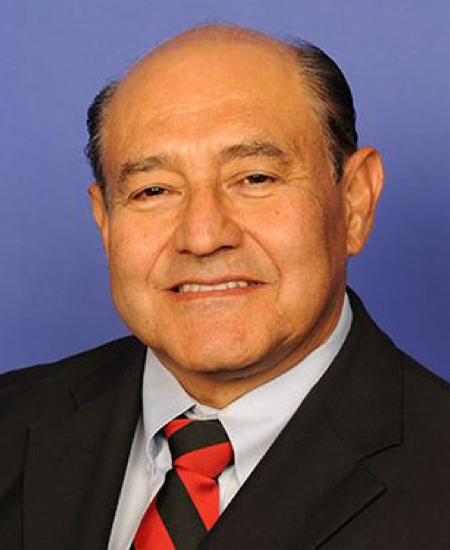
Rep. J. Luis Correa
Sponsored bills
Maddy summaryHR 9114 authorizes the President to award the Medal of Honor to Army Command Sergeant Major Ramon Rodriguez for acts of valor during the Vietnam War. The bill cites specific heroic actions, including guiding a helicopter under fire in 1967, entering enemy tunnels in 1967, and assuming command while wounded during a 1968 assault. It waives time limitations in military medal rules (Title 10 U.S. Code) to allow the award for service that earned him 17 combat medals, including multiple Bronze Stars with "V" devices and Purple Hearts. The bill directly affects Rodriguez, a now-retired soldier and current Chairman of Los Angeles' Military and Veterans Affairs Commission, who was nominated for the Medal of Honor in 1982 but never received it. The authorization reflects congressional findings on his distinguished service and courage.
Maddy summaryHR 9060 extends tax credits for biodiesel and renewable diesel producers and users through 2025, replacing the previous 2024 expiration date. It amends the Internal Revenue Code to extend the biodiesel credit (Section 40A) and biodiesel mixture credit (Section 6426) for fuels sold or used after December 31, 2024. The bill also adds a provision preventing double benefits by requiring the credit amount to be zero for fuels already claiming another credit under Section 45Z(a). This directly affects biodiesel producers, refiners, and businesses using these fuels for tax purposes.
Maddy summaryHR 9038, the FAIR Fleets Act, requires the U.S. Postal Service to conduct ongoing assessments of its vehicle distribution and develop a strategic plan to increase fleet availability in underserved areas using fuel-efficient, modern vehicles. The bill mandates an annual report to Congress by December 31 each year, detailing fleet distribution by state, steps taken to improve service in underserved areas, and recommendations for further action. Underserved areas are specifically defined to include rural regions, postal regions with aging vehicles, counties with significant delivery delays, high-poverty urban neighborhoods, and tribal lands. The law aims to improve fleet modernization and equitable distribution across all U.S. regions.
Maddy summaryThe Corner Post Reversal Act amends federal law to establish a six-year deadline for filing lawsuits challenging federal agency actions. It requires that any legal challenge to an agency decision must be initiated within six years of the agency's final action, unless another law specifies a different timeframe. This change directly affects individuals, organizations, or entities seeking to contest agency decisions in court by limiting the window for legal action. The bill does not alter substantive policies but modifies procedural rules governing judicial review of agency actions.
Maddy summaryThis bill (HR 2365, Public Law 118-66) directs the U.S. Department of Health and Human Services (HHS) to establish the National Parkinson’s Project. It requires HHS to create and update a coordinated national plan for preventing, diagnosing, treating, and researching Parkinson’s disease and related disorders (including multiple system atrophy and progressive supranuclear palsy), while coordinating federal research and care efforts across agencies like the NIH, CDC, and VA. The law mandates annual progress assessments, an advisory council with patient advocates and diverse experts, and annual reports to Congress on federal Parkinson’s programs and recommendations for improvement. It affects federal agencies managing Parkinson’s-related programs and aims to improve care coordination and research efficiency for patients and caregivers, with the law sunsetting in 2035.
Maddy summaryHRES 1332 is a symbolic resolution recognizing June as LGBTQIA+ Pride Month. It encourages the celebration of Pride Month to honor the historical struggles and achievements of LGBTQIA+ people in the United States, while acknowledging the ongoing challenges they face. This resolution does not create new laws or policies, but serves as a formal recognition of LGBTQIA+ rights as human rights and highlights their integral role in American history. The resolution was introduced by multiple members of Congress and passed by the House of Representatives.
Maddy summaryThis bill creates a federal framework for "extreme risk protection orders" (ERPOs) that temporarily remove firearms from individuals who pose a risk of harming themselves or others. Family members or law enforcement officers can petition a federal court for a temporary order (up to 14 days) based on probable cause, followed by a hearing within 72 hours to determine if a longer-term order (up to 180 days) is warranted. The bill requires clear and convincing evidence of risk at the hearing and mandates respondents to surrender firearms to law enforcement within 48 hours. It also includes provisions for reporting, training law enforcement on ERPOs, and a federal grant program to support state ERPO implementation, without preempting state laws.
Maddy summaryHRES 901 is a U.S. House resolution expressing support for democracy and human rights in Pakistan. It calls on the U.S. President and Secretary of State to collaborate with Pakistan to uphold democratic processes, human rights, and the rule of law. The resolution urges Pakistan to protect freedoms of speech, assembly, and press, and to avoid arbitrary detention or suppression of political participation. It also condemns efforts to undermine Pakistan's electoral or judicial systems, including harassment of citizens during protests or interference with elections.
Maddy summaryHR 8732, the Domestic Workers Bill of Rights Act, would establish new labor protections for domestic workers including nannies, housekeepers, and caregivers who work in private homes. The bill requires written agreements between employers and domestic employees, provides earned sick days, ensures fair scheduling practices, and prohibits unfair wage deductions for cash shortages or communications. It also creates a Domestic Employee Standards Board to recommend workplace standards and establishes a National Domestic Employee Hotline for assistance. The bill specifically targets domestic workers who have historically been excluded from labor protections under the Fair Labor Standards Act and Civil Rights Act, benefiting an estimated 2.2 million domestic workers in the U.S. who are disproportionately women of color and immigrants.