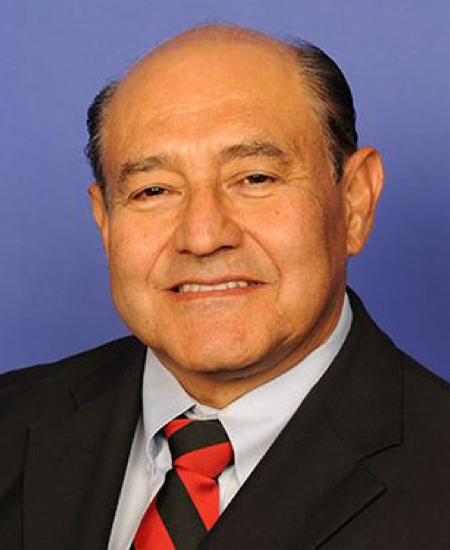
Photo of J. Luis Correa
D United States House · District 46 · California On the 2026 ballot

Rep. J. Luis Correa

Compare
Total votes
2,837
all sessions
Attendance
97%
79 missed
Lower than 80% of chamber peers
With party
96%
of cast votes
Lower than 80% of chamber peers
Bipartisan score
2%
crosses aisle rarely
Higher than 79% of chamber peers
Sponsored
1,182
bills & resolutions
Near the chamber average
Committees
6
assignments
1,182 bills and resolutions

Sponsored bills

Total
1,182
Primary
69
Co-sponsor
1,113
This page
1,182
matching current filters
Co-sponsor HR 6414
In committee · Indiana House · Co-sponsor
Innovation and Development in Ecuador Act of 2023

Maddy summaryThis bill adds Ecuador to the list of countries eligible for trade benefits under the Caribbean Basin Economic Recovery Act (CBERA), specifically designating it as a "CBTPA beneficiary country" for preferential tariff treatment. It requires the President to issue a formal proclamation designating Ecuador as such within 90 days of the bill's enactment. The change would allow Ecuadorian goods to enter the U.S. with reduced or eliminated tariffs under the CBERA framework, directly affecting Ecuador's exporters and U.S. importers of Ecuadorian products. This is a procedural adjustment to existing trade law, not a new policy.

In committee Dec 17, 2024 1 co-sponsor
Co-sponsor HR 6371
In committee · Indiana House · Co-sponsor
Provider Reimbursement Stability Act of 2023

Maddy summaryThis bill updates Medicare physician payment rules to improve stability and accuracy. It raises the budget neutrality threshold from $20 million (pre-2025) to $53 million in 2025, with annual indexing after 2026, to prevent excessive payment adjustments. The bill requires the Medicare program to correct budget neutrality payments based on actual service utilization data (not estimates) starting in 2025, and mandates updating direct cost inputs (like staff wages and equipment prices) every 5 years. It also caps annual changes to the physician payment conversion factor at 2.5% to limit sudden payment shifts, directly affecting Medicare physicians and healthcare providers receiving these payments.

In committee Dec 17, 2024 1 co-sponsor
Co-sponsor HR 5713
In committee · Indiana House · Co-sponsor
Homeland Security Fentanyl Enforcement Act

Maddy summaryHR 5713, the Homeland Security Fentanyl Enforcement Act, authorizes Homeland Security Investigations (HSI) agents and designated state/local officers to enforce drug laws related to fentanyl trafficking under the Controlled Substances Act for five years. It requires the Government Accountability Office (GAO) to review and report on coordination between the Drug Enforcement Administration (DEA) and HSI in drug investigations within 18 months, including whether investigations followed established coordination policies. The bill mandates the Homeland Security Secretary and Attorney General to address any coordination failures found in the GAO report, prioritizing existing interagency task forces. This bill focuses on improving interagency coordination to combat fentanyl smuggling by transnational criminal organizations, without altering DEA's core authorities or creating new drug penalties.

In committee Dec 17, 2024 1 co-sponsor
Co-sponsor HR 5644
In committee · Indiana House · Co-sponsor
End Diaper Need Act of 2023

Maddy summaryThe End Diaper Need Act of 2023 creates a federal program that will provide free diapers and incontinence supplies to low-income families with infants, toddlers, medically complex children (3+ years old with chronic health conditions), and low-income adults with disabilities. It allocates $200 million annually from 2024-2027 to fund this assistance through states and community organizations, making medically necessary diapers eligible for reimbursement through health savings accounts and other health benefit programs. The legislation requires integration with existing services like Medicaid, WIC, and TANF, and includes annual reporting requirements and an evaluation of the program's effectiveness within two years.

In committee Dec 17, 2024 1 co-sponsor
Co-sponsor HR 5601
In committee · Indiana House · Co-sponsor
MORE Act

Maddy summaryThe MORE Act (HR 5601) would federally decriminalize cannabis by removing it from the Schedule I list of controlled substances under the Controlled Substances Act. It requires federal courts to expunge non-violent cannabis convictions and associated arrests, with a focus on addressing racial disparities in cannabis enforcement. The bill creates an Opportunity Trust Fund that would allocate 50% of funds to criminal justice programs, 20% to small business assistance for minority cannabis entrepreneurs, and 20% to community reinvestment grants for individuals impacted by the War on Drugs. It also prohibits federal agencies from denying benefits or security clearances based on cannabis use or past cannabis convictions, and establishes a Cannabis Justice Office to administer these programs.

In committee Dec 17, 2024 1 co-sponsor
Co-sponsor HR 5008
In committee · Indiana House · Co-sponsor
HEAL for Immigrant Families Act of 2023

Maddy summaryHR 5008, the HEAL for Immigrant Families Act of 2023, would remove immigration status as a barrier to health insurance coverage for immigrants in the United States. The bill would make all lawfully present immigrants, including those with Deferred Action for Childhood Arrivals (DACA) status, eligible for Medicaid, CHIP, and Affordable Care Act health insurance subsidies. It would eliminate state-level restrictions on Medicaid eligibility for immigrants and allow individuals with federally authorized presence to access premium tax credits and cost-sharing reductions. This legislation aims to address health coverage disparities that disproportionately affect immigrant communities, particularly Black, Indigenous, Latinx, and other communities of color.

In committee Dec 17, 2024 1 co-sponsor
Co-sponsor HR 4583
In committee · Indiana House · Co-sponsor
Social Security 2100 Act

Maddy summaryThe Social Security 2100 Act would significantly enhance Social Security benefits for millions of Americans by increasing monthly payments for retirees, disabled workers, widows/widowers, and children. Key provisions include raising the minimum benefit for long-term low earners, improving cost-of-living adjustments using a more accurate index, eliminating the 5-month waiting period for disability benefits, and extending child benefits to age 26. The bill also changes how Social Security taxes are calculated by applying them to income above $400,000 and establishes a unified Social Security Trust Fund to manage program finances. Most provisions would apply to benefits payable from 2025 through 2034, affecting all current and future Social Security beneficiaries.

In committee Dec 17, 2024 1 co-sponsor
Co-sponsor HR 4392
In committee · Indiana House · Co-sponsor
PrEP Access and Coverage Act of 2023

Maddy summaryThe PrEP Access and Coverage Act of 2023 requires private health insurance plans, Medicare, Medicaid, and other public health programs to cover pre-exposure prophylaxis (PrEP) for HIV prevention without cost-sharing, including the medication, related lab tests, and follow-up care. The bill also prohibits life, disability, and long-term care insurance companies from denying coverage or charging higher premiums to people taking PrEP. It establishes public education campaigns to increase awareness of PrEP and PEP (post-exposure prophylaxis) and creates funding for state and community programs to expand access to HIV prevention services, particularly for populations disproportionately affected by HIV including Black, Hispanic/Latinx, and transgender individuals. The legislation specifically addresses current disparities in PrEP access, as data shows only 11% of Black/African American and 21% of Hispanic/Latinx individuals eligible for PrEP received prescriptions in 2022 compared to 82% of White individuals. Coverage requirements for most plans will take effect on January 1, 2025.

In committee Dec 17, 2024 1 co-sponsor
Co-sponsor HR 4319
In committee · Indiana House · Co-sponsor
Farm Workforce Modernization Act of 2023

Maddy summary# Summary of the Farm Workforce Modernization Act of 2023 This comprehensive legislation introduces significant reforms to employment verification and immigration processes in the United States, with particular focus on agricultural workers. Key provisions include: ## Electronic Verification System (Section 301) - Establishes a new electronic verification system (replacing E-Verify) that must confirm identity and employment authorization within 3 business days - Includes photo matching tools, individual monitoring features, and fraud prevention measures - Requires employers to verify employment eligibility through this system ## Agricultural Industry Requirements (Section 302) - Mandates electronic verification for agricultural employers based on business size: * 500+ employees: 6 months after application period * 100-499 employees: 9 months after application period * 20-99 employees: 12 months after application period * 1-19 employees: 15 months after application period - Creates rural access points through USDA offices to assist with verification challenges ## System Modernization (Section 303) - Repeals the E-Verify Program and replaces it with the new verification system - Requires former E-Verify users to transition to the new system ## Compensation for Errors (Section 301) - Establishes an Electronic Verification Compensation Account to reimburse workers for lost wages due to government errors in verification - Includes procedures for contesting non-confirmations and appealing final nonconfirmations ## Additional Protections - Prohibits unfair immigration-related employment practices (e.g., terminating employees due to tentative nonconfirmations) - Creates a new compensation mechanism for workers wrongfully denied employment - Requires employers to provide specific notices to individuals with verification issues This legislation represents a major overhaul of employment verification processes, with special attention to agricultural workers and a focus on reducing errors that could lead to wrongful termination or denied employment. It also includes significant protections for workers against discrimination based on immigration status.


In committee Dec 17, 2024 1 co-sponsor
Co-sponsor HR 4170
In committee · Indiana House · Co-sponsor
LIFT the BAR Act

Maddy summaryThe LIFT the BAR Act removes barriers preventing lawfully present noncitizens from accessing federal benefits like food assistance, Medicaid, and school meals. It repeals specific 1996 welfare law provisions that excluded noncitizens and updates terminology to replace "alien" with "noncitizen" throughout federal law. The bill expands eligibility to include noncitizens in categories such as Deferred Action for Childhood Arrivals (DACA) recipients, individuals with special immigrant juvenile status, and those with pending U-visa applications. This change ensures more noncitizens lawfully present in the U.S. can access essential services without being denied based on immigration status.

In committee Dec 17, 2024 1 co-sponsor
Showing 421 to 430 of 1,182 bills
Previous 1 … 42 43 44 … 119 Next