

Maddy summaryThis bill requires the Transportation Security Administration (TSA) to create and update guidance within 90 days (and every five years) to ensure hygienic handling of breast milk, baby formula, infant water, juice, and cooling accessories during airport security screening. The guidance must be developed with maternal health organizations and set standards to minimize contamination risks when these items undergo re-screening or additional testing. It also mandates a one-year audit by the DHS Inspector General to assess TSA compliance and evaluate how screening technologies impact the processing of these infant items. The bill directly affects traveling parents and caregivers who transport these essential supplies.
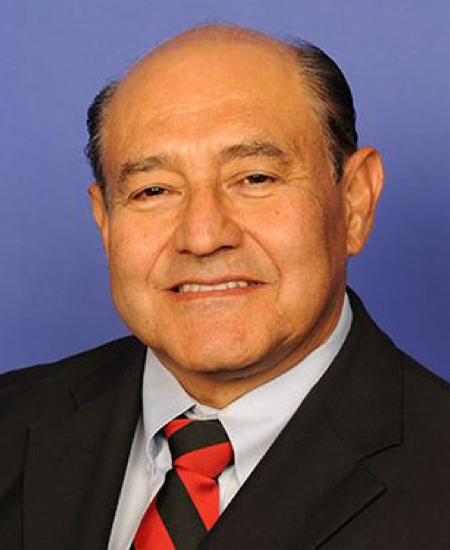
Rep. J. Luis Correa
Sponsored bills
Maddy summaryThe Improving Atmospheric River Forecasts Act aims to enhance forecasts of atmospheric rivers - narrow bands of moisture that cause heavy rain, snow, and flooding, particularly in the western U.S. - to reduce damage to communities and infrastructure. It authorizes a five-year pilot project (2026-2030) with $15 million annually to improve forecast models for mountainous terrain and atmospheric rivers, requiring coordination with NOAA, academic partners, and the National Weather Service. The bill also establishes a long-term program mandating NOAA to develop new forecast tools, incorporate social science for clearer public communication, and create annual budget plans for research and partnerships. These changes directly affect NOAA’s operations and water management efforts in the western U.S., without altering existing laws or imposing new regulations on the public.
Maddy summaryHR 4274, the Remittance Expense Minimization and Integrity for Transfers Act (REMIT Act of 2025), requires the Treasury Secretary to certify to Congress before imposing any excise tax or fee on money transmitting businesses. This applies to both licensed services and informal transfer systems (IVTS), such as those used by diaspora communities. The certification must confirm the tax/fee won’t increase money laundering risks or impose undue burdens on businesses. The bill responds to findings that current regulations have pushed users toward unregulated IVTS, which criminal groups exploit for money laundering and terrorist financing. It aims to prevent new fees from inadvertently worsening financial crime while protecting legitimate remittance flows.
Maddy summaryHRES 543 is a symbolic House resolution (not a law) introduced by multiple representatives. It affirms the constitutional right to peaceful protest under the First Amendment and condemns violent acts by some individuals during demonstrations, such as vandalism and looting. The resolution specifically criticizes the President’s 2025 deployment of National Guard and Marines to Los Angeles without proper legal authority (violating 10 U.S.C. § 12406 and the Posse Comitatus Act) and without coordination with California’s governor. It also denounces inflammatory rhetoric that escalated tensions and supports law enforcement efforts to protect public safety during protests. The resolution has no binding effect but formally expresses congressional position on these issues.
Maddy summaryThe No Secret Police Act of 2025 requires U.S. Immigration and Customs Enforcement (ICE) and other Department of Homeland Security officers working on border security or immigration enforcement to visibly display their official badges or uniforms and provide identification during detentions or arrests. It prohibits officers from wearing face coverings that conceal their face during these interactions. The bill also mandates that the Department report to Congress about tactical gear policies and research technology to improve badge visibility in different conditions like weather or lighting. These changes aim to increase transparency in immigration enforcement encounters.
Maddy summaryHRES 551 is a symbolic House resolution supporting the designation of "National Stop SuiSilence Day" on September 25th, during Suicide Prevention Month. It does not create new laws or policies but aims to reduce suicide stigma by encouraging open discussion about suicide prevention. The resolution cites statistics showing suicide as a leading cause of death (over 45,000 annual U.S. deaths) and emphasizes that talking about suicide can help save lives. It recognizes this day as a tool to engage communities and governments in suicide prevention efforts.
Maddy summaryThe CONNECT for Health Act of 2025 expands Medicare telehealth coverage by removing geographic restrictions that limited where patients could receive care, expanding the types of health care providers who can offer telehealth services, and eliminating the requirement for an in-person visit before receiving telemental health services. The bill includes specific provisions to support telehealth use for Native American health facilities, rural health clinics, and Federally Qualified Health Centers. It requires the Centers for Medicare & Medicaid Services to collect and publish data on telehealth usage and impacts, and to develop resources to improve accessibility for people with disabilities and limited English proficiency. Program integrity measures are added to monitor telehealth billing practices and prevent fraud while maintaining coverage for telehealth services during public health emergencies.
Maddy summaryHR 4167, the Expanding Access to Lending Options Act, amends the Federal Credit Union Act to extend the maximum time federally chartered credit unions can hold mortgage loans from 15 years to 20 years (or longer by NCUA regulation). This change directly affects federally chartered credit unions by allowing them to offer longer-term mortgage products to members. The key provision modifies Section 107(5) of the Federal Credit Union Act, specifically updating the time limit for mortgage loans held by credit unions. The bill also includes a non-binding sense of Congress statement emphasizing safety and soundness in NCUA oversight, but the core policy change is the extended mortgage holding period.
Maddy summaryHR 4153, the STRONG Act, increases maximum loan limits for two key Small Business Administration (SBA) programs. It raises the cap for standard 7(a) loans from $3.75 million to $7.5 million (and the threshold for higher amounts from $5 million to $10 million), and doubles the cap for development company loans from $5 million to $10 million (for both standard and higher thresholds). These changes directly affect small businesses seeking SBA financing by allowing them to access larger loans for growth, expansion, or recovery. The bill modifies specific provisions in the Small Business Act and Small Business Investment Act to expand access to capital.
Maddy summaryThis bill prohibits defendants in federal criminal cases from using a victim's LGBTQ identity (sexual orientation, gender identity, or expression) as a defense to excuse or reduce punishment for violent crimes. It amends federal law to ban arguments that claim a "nonviolent sexual advance" or inaccurate perception of someone's LGBTQ status justified the defendant's actions. The law allows limited admission of past trauma evidence under standard federal rules but requires the Attorney General to annually report on federal prosecutions involving bias-motivated violence against LGBTQ individuals. This directly affects defendants in federal court cases where such defenses were previously used, aiming to end the practice of treating LGBTQ victims' identities as justification for violence.