

Maddy summaryThe Protect Our Hospitals Act (HR 4807) repeals a specific provision (Section 71115 of Public Law 119-21) that altered Medicaid provider tax rules. This bill restores the prior tax structure for Medicaid providers, including hospitals and clinics that accept Medicaid, returning them to the tax treatment that existed before the change. As a result, these providers will no longer be subject to the modified tax rules enacted by the repealed provision. The bill does not affect Medicaid eligibility, benefits, or coverage - it solely reverts a tax policy change without introducing new requirements.
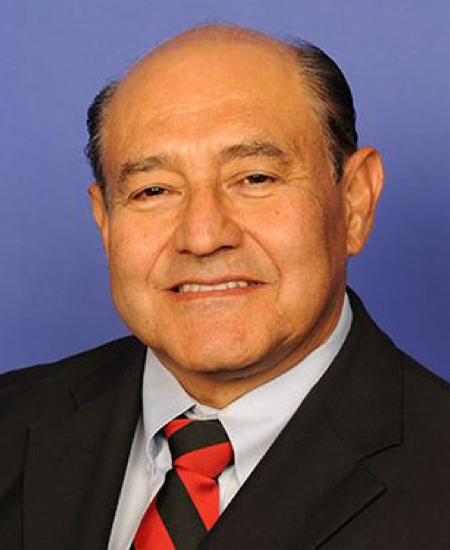
Rep. J. Luis Correa
Sponsored bills
Maddy summaryThe Medical Debt Relief Act of 2025 would prevent medical debt from being reported as negative information on credit reports. It defines medical debt as any debt related to medical services, products, or devices and prohibits credit reporting agencies from including such debt - even if sent to collections - in credit reports. The bill also requires the Consumer Financial Protection Bureau to update regulations within one year to ban creditors from using medical debt when making credit decisions. This change directly affects consumers with unpaid medical bills and alters standard credit reporting practices.
Maddy summaryThis bill removes a barrier preventing most low-income students from accessing SNAP benefits. It amends the Food and Nutrition Act to explicitly allow students enrolled at least half-time in recognized higher education programs to qualify for SNAP, reversing a prior exclusion. The key change eliminates the previous requirement that students meet specific exceptions (now deleted) and adds a new eligibility category under Section 3(m)(5). This directly affects low-income undergraduate and graduate students at colleges and training programs who were previously ineligible. The changes take effect January 2, 2026.
Maddy summaryHR 4796, the Restoring Essential Healthcare Act, repeals a provision that blocked Medicaid payments to certain healthcare providers during a specific period. It directly affects Medicaid beneficiaries who received care from these providers between the enactment of the prior law (Public Law 119-21) and this bill's enactment. The key provision retroactively restores Medicaid payments for services already provided during that blocked period, treating the payment restriction as if it never existed. This change ensures eligible individuals and providers receive reimbursement for covered care delivered during the prohibited timeframe.
Maddy summaryThis bill requires transportation project sponsors (like cities or transit agencies) to establish "BUMP Funds" for projects over $50 million funded through federal grants. The funds, partially funded by the sponsor's local contribution (up to 25% of their share), reimburse affected private businesses or nonprofits for specific costs like rent, payroll, utilities, or lost income during construction disruptions. Sponsors must detail eligibility, impact assessment, and distribution processes in grant applications. Unused funds can be reused for project enhancements or other eligible work, with oversight by the Secretary of Transportation. The program applies to highway and transit projects under federal grant programs.
Maddy summaryHR 4683, the Securing America’s Ports of Entry Act of 2025, requires U.S. Customs and Border Protection (CBP) to hire at least 1,000 additional officers annually until staffing targets are met based on workload data. This directly affects CBP officers, port operations, and facilities like airports and land borders by mandating increased staffing and infrastructure improvements for drug interdiction. Key provisions include a report on port infrastructure needs to enhance opioid detection, requiring CBP to identify technology gaps and safety equipment for officers. The bill also adds reporting requirements for temporary officer reassignments and agreements with ports, ensuring transparency for congressional committees. These changes aim to strengthen border security operations through concrete staffing and resource planning.
Maddy summaryThis bill would prohibit the detention of pregnant women, lactating women, and postpartum mothers (within one year of childbirth) in immigration custody, requiring their immediate release except in rare circumstances involving public safety threats. It bans the use of physical restraints on these individuals during pregnancy, labor, delivery, and postpartum recovery, with only extremely limited exceptions. The bill mandates that facilities provide comprehensive reproductive health care including prenatal care, labor and delivery services, postpartum care, and access to abortion services. It requires facilities to maintain medical records, obtain informed consent for medical procedures, and conduct weekly reviews of any detained individuals under exceptional circumstances. The bill also establishes reporting requirements for facilities and creates transparency through public reporting of detention practices.
Maddy summaryHR 4696 amends Section 249 of the Immigration and Nationality Act to update eligibility for a registry program that provides a pathway to legal status for long-term residents. It changes the requirement from entering the U.S. before January 1, 1972, to entering at least 7 years before the application date. This adjustment bases eligibility on a rolling 7-year window instead of a fixed historical cutoff, allowing more recent long-term residents to qualify. The bill directly affects individuals who entered the U.S. after 1972 but maintained continuous residence for at least seven years prior to applying.
Maddy summaryThis bill requires the Department of Homeland Security (DHS) to create a system tracking all detentions or removals of U.S. citizens and lawful permanent residents (LPRs) during immigration enforcement. DHS must report these cases quarterly to Congress, including instances where minors were removed alongside undocumented parents. The system must also include cases involving citizens or LPRs detained by other agencies and transferred to DHS. A separate process for individuals to prove citizenship or LPR status during detention must be established within 180 days.
Maddy summaryHR 4652 makes it illegal for non-ICE personnel to wear, display, or sell apparel, badges, or insignia bearing "ICE" or "Immigration and Customs Enforcement" in a way that could deceive the public into believing they are federal officers. Violators face criminal penalties of up to 7 years in prison for impersonation or civil fines of $100,000 per violation for selling fake ICE gear. The bill also requires the Department of Homeland Security to establish public awareness campaigns, a national reporting hotline and online portal for suspected impersonation, and mandates regular studies on the issue. It directly affects individuals posing as ICE officers, businesses selling counterfeit gear, and communities impacted by such fraud.