

Maddy summaryThe Veteran Service Recognition Act of 2025 requires the Departments of Defense, Homeland Security, and Veterans Affairs to study noncitizen veterans removed from the U.S. between 1990 and 2025, including their service records and reasons they were denied benefits. It creates a system to identify noncitizen veterans before removal proceedings begin and establishes a Military Family Immigration Advisory Committee to review cases and recommend against removal for veterans. The bill also creates a program to streamline citizenship for noncitizen service members, allows adjustment of status for certain removed veterans, and modifies immigration requirements for family members of service members. These provisions directly affect noncitizen veterans, active duty service members, and their family members who are not U.S. citizens. The law aims to ensure veterans' service is properly recognized in immigration proceedings and to facilitate their path to citizenship.
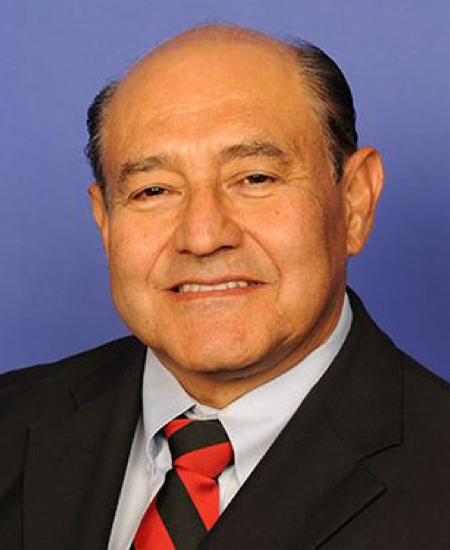
Rep. J. Luis Correa
Sponsored bills
Maddy summaryThis bill requires health plans and insurers to create a clear, timely process for patients or doctors to request exceptions when step therapy protocols (which force patients to try cheaper drugs first) might harm them. It mandates approval for exceptions in six specific cases, such as when prior treatments failed, delaying care risks severe harm, or the required drug causes adverse reactions. Plans must respond within 72 hours (24 hours for emergencies) and cover the requested drug for at least one year if approved. Additionally, health plans must report annual data on exception requests, approvals, denials, and reasons to the government for transparency.
Maddy summaryHRES 746 is a non-binding resolution passed by the U.S. House of Representatives condemning all political violence - including attacks on elected officials, candidates, and public figures - and rejecting rhetoric that dehumanizes opponents. It specifically urges law enforcement to investigate and prosecute such violence, calls on public officials and media to avoid inflammatory language, and references recent incidents like the 2025 assassination of activist Charlie Kirk and targeted shootings of Minnesota legislators. The resolution does not create new laws but formally expresses the House’s commitment to protecting public servants and promoting peaceful political discourse. It directly affects the House’s public stance and serves as a call to action for officials, media, and communities to foster civil engagement.
Maddy summaryThe Tyler Clementi Higher Education Anti-Harassment Act of 2025 requires U.S. colleges and universities participating in federal financial aid programs to create and distribute clear anti-harassment policies covering harassment based on race, color, national origin, sex (including sexual orientation and gender identity), disability, or religion. These policies must explicitly prohibit harassment in all settings - including online, on campus, off-campus housing, and during school-sponsored activities - and outline reporting procedures and support services for victims. The bill also establishes a $50 million annual grant program to fund schools developing prevention programs, victim support services, or staff/student training on recognizing and addressing harassment. Grants are competitive, require annual reporting on effectiveness, and must be used to improve existing efforts without replacing existing civil rights laws like Title IX.
Maddy summaryThe Redistricting Reform Act of 2025 requires states to use independent redistricting commissions for congressional redistricting, banning partisan gerrymandering and requiring plans to comply with constitutional and Voting Rights Act standards. The bill establishes ranked criteria for redistricting, prioritizing population equality, voting rights protections, and community preservation over partisan advantage. It mandates multi-partisan commission composition with public input and transparency requirements, with states facing court-developed plans if they miss deadlines. The law would apply to redistricting after the 2030 census, affecting all 50 states' congressional district maps.
Maddy summaryThis bill requires the 988 Suicide Prevention Lifeline to establish a dedicated "Press 3" option (via IVR) for LGBTQ+ youth seeking crisis support, directly affecting LGBTQ+ youth who face a four times higher suicide risk than peers. It mandates that at least 9% of funds allocated for the lifeline's services be reserved specifically for these specialized LGBTQ+ youth services. The bill amends existing law to formalize this dedicated resource, building on current services that handled over 1.5 million contacts from LGBTQ+ youth in 2025. This creates a concrete policy change for accessing tailored crisis support without altering other lifeline operations.
Maddy summaryThis bill ensures Medicare coverage for new medical devices designated as "breakthrough devices" during a 4-year period after FDA approval. To qualify, devices must meet specific criteria, including FDA priority review, clinical data from Medicare beneficiaries, and a safety review showing benefits outweigh risks. Medicare must finalize coverage decisions within 6 months of manufacturer applications and before the 4-year period ends. The law appropriates $10 million annually (2025-2030) for Medicare to administer this process.
Maddy summaryHR 5401, the Pay Our Troops Act of 2026, ensures military personnel, civilian Defense workers, and supporting contractors receive pay during government funding gaps in fiscal year 2026. It appropriates emergency funds for active-duty service members, reserves, and their supporting personnel (including Coast Guard staff under DHS) if regular appropriations aren't enacted by the end of the fiscal year. The bill provides necessary pay and allowances during any period when full-year funding is unavailable, covering both active service and support roles. Funding expires when regular appropriations are passed, a funding resolution is enacted, or January 1, 2027, whichever comes first. This is a procedural measure to prevent pay delays for military and support staff during fiscal year 2026 funding lapses.
Maddy summaryThe George Floyd Justice in Policing Act of 2025 would establish a National Police Misconduct Registry to track officer complaints, disciplinary actions, and misconduct records across all law enforcement agencies. It would require law enforcement agencies to implement body-worn camera programs with specific recording and retention policies, ban chokeholds and no-knock warrants in drug cases, and reform qualified immunity to make it easier to hold officers accountable for misconduct. The bill mandates comprehensive data collection on use of force incidents, requiring agencies to report detailed information about stops, searches, and force used, disaggregated by race, ethnicity, gender, and other demographics. These provisions would directly affect all Federal, State, and local law enforcement agencies that receive federal grant funding, with requirements for policy changes, training, and data reporting.
Maddy summaryThe 9/11 Immigrant Worker Freedom Act creates a pathway for certain immigrants who worked or volunteered in the immediate aftermath of the September 11, 2001, attacks to adjust to lawful permanent resident status. It covers individuals who provided rescue, recovery, or cleanup services at the World Trade Center site (lower Manhattan, Staten Island, or barge piers), the Pentagon, or the Shanksville, Pennsylvania, crash site for specified hours during defined periods, as well as vehicle-maintenance workers exposed to debris. Key provisions include work authorization during the application process, fee waivers for low-income applicants (at or below 250% of the federal poverty level), and strict confidentiality to prevent immigration enforcement actions based on application information. Approved status does not reduce the overall number of available immigrant visas.