

Maddy summaryThis bill requires colleges receiving federal work-study funds to notify eligible students about potential eligibility for the SNAP food assistance program. It specifically targets students participating in federal work-study or receiving Pell Grants, mandating that institutions send email notifications with state-specific SNAP eligibility details and a document confirming their work-study status to overcome a key ineligibility barrier. The notifications, developed jointly by the Education and Agriculture Departments, include application contacts and guidance for schools on identifying eligible students. The policy change directly enables more college students to access nutrition assistance by clarifying their SNAP eligibility through institutional outreach.
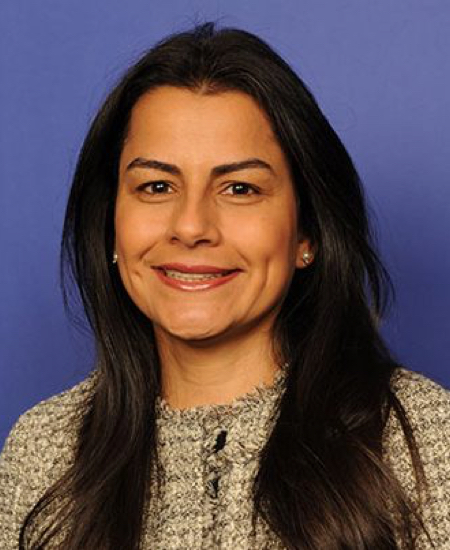
Rep. Nanette Diaz Barragán
Sponsored bills
Maddy summaryHR 3975, the Tax Fairness for Disaster Victims Act, adjusts tax credits for individuals affected by federally declared disasters. It allows eligible taxpayers whose income dropped due to a disaster (like a hurricane or flood) to use their *previous year's* earned income and social security taxes instead of their current year's reduced income when calculating certain tax credits, such as the Earned Income Tax Credit (EITC). This applies only to those living in the disaster area on the date FEMA defines as the disaster period and requires them to elect this adjustment. The change ensures disaster victims aren't penalized with lower tax credits because their income temporarily fell due to the disaster.
Maddy summaryThe PHARA Act of 2025 requires the National Institutes of Health (NIH) to immediately release all required funding for existing research grants and rapidly pay pending reimbursements. It prohibits NIH from terminating active research grants (entered after the bill's enactment) solely due to shifting agency priorities or program goals, and mandates new termination clauses requiring 90 days' written notice and attempts to amend terms before ending agreements. This directly affects researchers and institutions receiving NIH grants, ensuring funding continuity for ongoing projects. The bill aims to prevent abrupt halts in scientific research by restructuring grant termination processes.
Maddy summaryThe Domestic Workers Bill of Rights Act (HR 3971) would establish key labor protections for domestic workers, including nannies, housekeepers, and caregivers who work in private homes. The bill requires written agreements for workers employed 8+ hours per week, provides earned sick days (1 hour for every 30 hours worked), mandates fair scheduling practices with 72-hour notice for schedule changes, and extends overtime protections to live-in domestic employees. It also prohibits unfair wage deductions, guarantees meal and rest breaks, and ensures privacy protections including no monitoring in private living spaces. The bill directly affects approximately 2.2 million domestic workers across the U.S., who are disproportionately women of color and immigrants. Enforcement would be handled by the Department of Labor through new complaint resolution mechanisms and oversight.
Maddy summaryThis bill, HR 3916 (My Body, My Data Act of 2025), requires businesses and other "regulated entities" to minimize collection and sharing of personal reproductive or sexual health data - such as pregnancy status, contraceptive use, or abortion-related information - and gives individuals specific rights. It mandates that entities provide individuals with easy access to their data, the ability to correct inaccuracies, and the right to request deletion of such information within 15 days. The law also requires clear privacy policies detailing data practices and prohibits retaliation against individuals who exercise these rights, such as charging higher prices or denying services. It applies broadly to most businesses (excluding HIPAA-covered healthcare providers) and is enforced by the FTC with private lawsuits allowed for violations.
Maddy summaryHR 3906, the Medical Research for Our Troops Act, restores funding levels for military medical research by increasing the Defense Health Agency's research budget from $40.395 billion to $41.576 billion in the 2025 appropriations act. It ensures Congressionally Directed Medical Research Programs funds are used consistently with the Consolidated Appropriations Act, 2024, requiring the Defense Secretary to support all previously identified research programs and maintain existing funding allocations. The bill directly affects military medical research initiatives and the Defense Health Agency's budget implementation. This is a procedural funding adjustment, not a new policy, maintaining continuity for ongoing research projects.
Maddy summaryThis bill requires private firearm transfers between individuals to go through a licensed dealer who must conduct a background check. It applies to most private sales but includes exceptions for transfers between family members (like parents and children), law enforcement, emergencies preventing harm, and temporary loans at shooting ranges or for hunting. Dealers must provide background check notices in both English and Spanish. The law aims to prevent prohibited individuals from obtaining firearms through private transactions while maintaining existing state authority on firearm laws.
Maddy summaryHR 3868, the Enhanced Background Checks Act of 2025, modifies federal firearm background check procedures to address delays. It requires federal firearms licensees to wait 10 business days after a background check query if the system doesn’t immediately flag a transfer, unless the buyer submits an electronic petition confirming they aren’t prohibited from owning firearms. The petition process includes a 10-day response deadline from the Attorney General, with licensees allowed to proceed if the system remains silent after 10 days. The bill also mandates detailed annual reports from the FBI on petition delays and GAO reports on implementation, focusing on how these changes affect firearm transfers to prohibited individuals.
Maddy summaryThe Runaway and Homeless Youth and Trafficking Prevention Act of 2025 amends federal law to provide funding for programs serving runaway, homeless, and at-risk youth, primarily aged 15-22 with some services extending to youth up to age 26. It establishes basic center grants for temporary shelter (up to 30 days) and transitional living programs that provide housing, counseling, and services tailored to youth's age, gender, and developmental needs. The bill requires programs to collect data on vulnerable populations including LGBTQ youth, youth of color, and those in the child welfare system, and mandates trauma-informed services for youth victims of trafficking. It authorizes $200 million annually for these programs, with specific funding allocations to support prevention services, street outreach, and coordination with education and child welfare systems.
Maddy summaryHR 3874, the Rim of the Valley Corridor Preservation Act, expands the Santa Monica Mountains National Recreation Area by formally adding the "Rim of the Valley Unit" to its boundaries. This unit consists of specific land, water, and related interests depicted on two maps (2001 and 2023), directly affecting properties within this newly defined area. The bill ensures any new land acquired for this unit is managed as part of the existing recreation area, while allowing existing water and utility facilities to operate normally - provided their activities minimize harm to the park's resources. The legislation primarily adjusts park boundaries without changing land use or creating new regulations for affected landowners.