

Maddy summaryHR 1244 authorizes Congress to award a gold medal collectively to Africans and their descendants who were enslaved in the U.S. from 1619 to 1865, recognizing their contributions to America's economic foundation. The bill directs the Treasury Secretary to design and strike the medal, which will be permanently displayed at the Smithsonian's National Museum of African American History & Culture. It also permits the sale of bronze duplicates to cover costs, with proceeds going to the U.S. Mint. This is a commemorative measure, not a policy change, focusing on symbolic recognition of historical contributions.
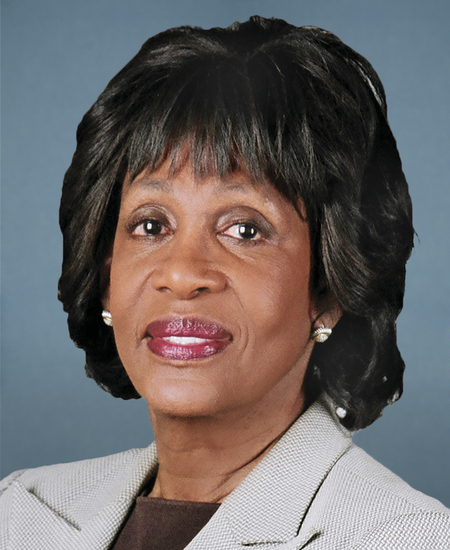
Rep. Maxine Waters
Sponsored bills
Maddy summaryThe Richard L. Trumka Protecting the Right to Organize Act of 2023 strengthens workers' rights to organize unions by making it harder for employers to interfere with organizing efforts. Key provisions include changing the definition of "employee" to make it more difficult to classify workers as independent contractors, prohibiting employers from threatening to permanently replace striking workers, and requiring employers to provide voter lists for union elections. The bill also creates a new electronic voting system for union elections, strengthens whistleblower protections for workers reporting labor violations, and increases penalties for unfair labor practices. These changes directly affect workers seeking to form unions, employers who may interfere with organizing, and labor organizations. The bill aims to make it easier for workers to exercise their right to collective bargaining under the National Labor Relations Act.
This resolution condemns Russia for committing acts of genocide against the Ukrainian people. It also calls on the United States, in cooperation with North Atlantic Treaty Organization and European Union allies, to undertake measures to support the Ukrainian government to prevent further acts of Russian genocide against the Ukrainian people.
Dr. Norman C. Francis Congressional Gold Medal Act This bill provides for the award of a Congressional Gold Medal to Dr. Norman Christopher Francis in recognition of his contributions to the United States through his lifelong dedication to education, justice, and public service.
Maddy summaryThe Justice for Black Farmers Act of 2023 addresses historical discrimination against Black farmers by the USDA through several key provisions. It establishes an Equity Commission to study discrimination and recommend solutions, creates an independent Civil Rights Oversight Board to review discrimination complaints, and provides land grants of up to 160 acres to eligible Black farmers at no cost. The bill also improves access to credit for socially disadvantaged farmers, requires the USDA to collect and publish data on racial disparities in its programs, and includes protections against discriminatory practices in the livestock industry. These measures aim to increase land ownership and economic opportunity for Black farmers while addressing systemic barriers they've faced for decades.
Maddy summaryHRES 150 is a ceremonial House resolution honoring the late civil rights leader John Robert Lewis (1940-2020). It formally recognizes his lifelong commitment to nonviolent activism, including his leadership in the Civil Rights Movement, the 1965 Selma voting rights march ("Bloody Sunday"), and his 30+ years serving as a U.S. Representative from Georgia. The resolution specifically commends his "towering achievements in the nonviolent struggle for civil rights" and his dedication to building the "Beloved Community" through justice and equality. As a commemorative resolution, it has no policy impact but serves as an official tribute to Lewis's legacy for the public and Congress.
Maddy summaryThe Department of Peacebuilding Act of 2023 would establish a new Cabinet-level Department of Peacebuilding within the executive branch of the U.S. government. The department would include multiple offices focused on domestic and international peacebuilding, violence prevention, peace education, and conflict resolution, with specific offices dedicated to areas like peace education, domestic activities, international activities, technology, arms control, and human rights. It would create a Secretary of Peacebuilding position and require the department to develop policies addressing root causes of violence, promote nonviolent conflict resolution, and collaborate with existing federal agencies. The bill would mandate annual reports on progress toward peace in the United States and require consultation with other departments on matters related to conflict prevention and peacebuilding.
Maddy summaryHR 1088, the Shirley Chisholm Congressional Gold Medal Act, authorizes a posthumous Congressional Gold Medal to honor Congresswoman Shirley Chisholm, the first African-American woman elected to Congress (1968) and the first Black candidate for a major party's presidential nomination (1972). The bill directs the Treasury Secretary to design and strike a gold medal featuring Chisholm's image, which will be presented by Congress and then permanently displayed at the Smithsonian Institution. Duplicate bronze medals may be sold to the public to cover production costs, with proceeds deposited into the U.S. Mint fund. This bill commemorates Chisholm's legacy and achievements without creating new laws or affecting any current policies.
Maddy summaryThis bill authorizes a posthumous Congressional gold medal for Constance Baker Motley, a pioneering civil rights attorney and federal judge. It directs the Treasury to strike a gold medal featuring her image and name, to be presented to her son, Joel Motley III, and niece, Constance Royster. The medal is a commemorative tribute recognizing her historic contributions to civil rights and her service as the first African-American woman appointed to a federal judgeship. No new policies or programs are created; the bill solely honors her legacy through a commemorative medal.
Maddy summaryHR 949, the Insular Area Medicaid Parity Act, removes federal funding caps on Medicaid for U.S. territories, directly affecting Puerto Rico, the U.S. Virgin Islands, Guam, the Northern Mariana Islands, and American Samoa. The bill amends the Social Security Act to eliminate the existing limit on federal Medicaid funding for these territories, allowing them to receive full federal matching funds like states. This change takes effect for fiscal year 2023, ending the previous restriction that required territories to fund a portion of their Medicaid costs themselves. The policy change ensures these territories can access the same level of federal Medicaid support as states.