Maddy summaryThis bill amends the Securities Exchange Act to require the Securities and Exchange Commission (SEC) to help underrepresented small businesses access capital. It directly affects women-owned, minority-owned, rural, and disaster-affected small businesses by mandating the SEC provide educational resources and host events about capital-raising options. The SEC must also hold annual meetings with state securities commissions to coordinate assistance efforts for these businesses and investors. These changes focus on improving access to existing capital markets through education and collaboration, without altering securities regulations.
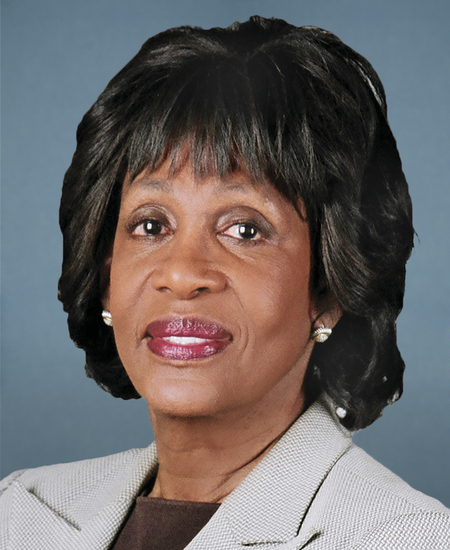
Rep. Maxine Waters
Sponsored bills
Maddy summaryHR 3713 creates federal grants to fund comprehensive school-based mental health programs for students in grades K-12, including those in Bureau of Indian Education schools. It requires partnerships between schools and community mental health providers to deliver trauma-informed, culturally appropriate services addressing suicide risk, grief, violence, and trauma exposure. The bill authorizes $300 million annually (2024-2027) for these programs, mandating privacy protections under HIPAA and FERPA, and requires annual reporting on program effectiveness.
Maddy summaryThis bill creates a new tax credit for expenses related to "qualified access technology for the blind" under the Internal Revenue Code. It allows taxpayers to claim a credit of up to $2,000 per year (adjusted for inflation) for costs paid for hardware, software, or IT that converts visual information into formats usable by blind individuals, covering the taxpayer, their spouse, or a dependent who is blind. The credit is limited to $2,000 over any three consecutive tax years per blind individual and expires after 2028. It directly affects blind individuals and their families who purchase qualifying assistive technology. The credit cannot be claimed for expenses already covered by other tax deductions or credits.
Maddy summaryHRES 439 is a non-binding resolution expressing the House of Representatives' support for keeping the U.S. Postal Service (USPS) as an independent federal agency, not subject to privatization. It highlights USPS's constitutional role, self-sustaining nature (relying on service revenue, not taxpayer funds), and its importance to rural communities, e-commerce, and over 600,000 employees. The resolution urges Congress to take action to preserve USPS's independence, emphasizing that privatization could raise prices, reduce services, and harm the nation's mail infrastructure. As a procedural resolution, it does not change law but formally states the House's position.
Maddy summaryThis bill expands TRICARE coverage to include wigs and treatment for traction alopecia - a type of hair loss caused by tight hairstyles, chemical treatments, or prolonged tension on the hair - directly affecting active-duty military members who develop this condition. It amends military health law to explicitly add "traction alopecia" to coverage for wigs and treatment, and requires the military to issue new grooming guidelines by September 2024 warning service members about the health risks of tight hairstyles, dyes, and chemical products. The key change is broadening existing TRICARE benefits to specifically cover this preventable condition, while mandating education on its causes. This is a policy adjustment to improve health care access for affected service members, not a new benefit.
Maddy summaryThis bill renames a U.S. Postal Service facility at 300 Long Beach Boulevard in Long Beach, California, as the "Alan S. Lowenthal Post Office Building." It directly affects the postal facility and all federal documents, maps, or records referencing it. The key provision updates every official reference to the building to use the new name, ensuring consistency in government records. The bill does not change postal services, funding, or policy - only the building's official designation.
Maddy summaryThis bill designates the U.S. Postal Service facility at 7911 Imperial Highway in Downey, California, as the "Lucille Roybal-Allard Post Office Building." It updates all official references in federal laws, documents, and records to use this new name for the specific post office location. The change affects the facility's official identification but does not alter its operations or services.
Maddy summary# Comprehensive Summary: Maternal Health and Vaccination Legislation This proposed legislation establishes a comprehensive framework to improve maternal health outcomes across multiple dimensions, with a strong focus on equity and addressing systemic disparities. The bill is organized into 13 titles covering various aspects of maternal health care. ## Key Focus Areas 1. **Maternal Health Equity**: The legislation emphasizes reducing racial and ethnic disparities in maternal health outcomes, with specific provisions targeting communities of color and underserved populations. 2. **Incarcerated Mothers**: Includes provisions to end shackling of pregnant individuals in correctional facilities and establishes programs for maternal health care in prisons and jails. 3. **Technology and Telehealth**: Creates grant programs for telehealth models, technology-enabled collaborative learning, and digital tools to improve access to maternal care. 4. **Climate Change Impact**: Addresses how climate change affects maternal and infant health, with a focus on vulnerable populations. 5. **Public Health Emergencies**: Establishes protocols for maternal care during public health crises like pandemics. 6. **Vaccinations**: Expands maternal vaccination awareness and equity campaigns. ## Major Provisions **Maternal Vaccination Campaign (Title XIII)**: - Expands awareness campaigns to specifically target pregnant and postpartum individuals - Allocates $17 million annually (2024-2028) for vaccination outreach - Includes specific efforts to increase vaccination rates among racial/ethnic minority groups **Technology and Telehealth (Titles IX)**: - $6 million annually for technology-enabled collaborative learning models - $6 million annually for digital tools to promote equity in maternal health - Creates a demonstration project for alternative payment models in maternal care **Climate Change and Maternal Health (Title XII)**: - $100 million for a grant program to protect vulnerable mothers and babies from climate change risks - $5 million for education and training at health profession schools - Establishes a National Institutes of Health Consortium on Birth and Climate Change Research **Incarcerated Mothers (Title VIII)**: - Requires 25% grant reduction for states that don't restrict restraints on pregnant incarcerated individuals - Establishes model programs in Bureau of Prisons facilities for pregnant and postpartum incarcerated individuals - $10 million annually for State and local prison and jail programs **Public Health Emergency Response (Title XI)**: - $100 million for data collection on maternal health during public health emergencies - $30 million for expanding maternal mortality reviews - $45 million for Pregnancy Risk Assessment Monitoring System (PRAMS) - $15 million for research on public health emergencies' impact on maternal health ## Cross-Cutting Themes - **Equity Focus**: Nearly every provision includes specific measures to address racial and ethnic disparities - **Data Collection**: Strong emphasis on collecting and analyzing demographic data - **Community Involvement**: Requires input from community-based organizations and affected populations - **Interagency Coordination**: Mandates collaboration between multiple federal agencies - **Long-Term Investment**: All funding is allocated for 5-year periods (2024-2028) The legislation represents a comprehensive, multi-faceted approach to improving maternal health outcomes in the United States, with particular attention to vulnerable populations and systemic barriers that contribute to poor maternal health outcomes.

Maddy summaryThe Keeping All Students Safe Act prohibits the use of "unlawful" seclusion and restraint in schools, including physical restraint that's life-threatening, contraindicated for a student's disability, or not properly trained for. It requires schools to use less restrictive interventions first, mandates training for school personnel in crisis intervention, and establishes reporting requirements for restraint incidents, including immediate parent notification and annual public reporting. The bill prohibits using physical restraint as a planned intervention in student education plans and requires states to submit compliance plans with data on restraint incidents disaggregated by race, disability status, and other factors. It applies to public schools and programs receiving federal funding, but does not affect private schools not receiving federal funds or home schools.
Maddy summaryThe Clean Energy Minerals Reform Act of 2023 establishes a new regulatory framework for hardrock mineral mining on federal lands, replacing the 1872 Mining Law. It requires permits for exploration and operations, imposes new royalty rates (minimum 8-12.5% of gross value), and creates a new Abandoned Hardrock Mine Reclamation Program funded by fees and royalties. The bill establishes a "small miner's lease" program with reduced fees for small operations (up to 200 acres) and requires financial assurance to cover reclamation costs. It also mandates consultation with Indian Tribes before mineral activities that may impact tribal lands or resources, and prohibits mining in protected areas including National Parks, wilderness areas, and sacred sites. The bill applies to all existing mining claims and new mineral activities on federal lands, with new rules taking effect upon enactment.