

Maddy summaryHR 4422 (Global Respect Act) requires the President to publicly identify foreign officials responsible for violence, torture, or arbitrary detention against LGBTQI individuals and block their entry to the U.S., including revoking visas for them and their immediate families. It mandates annual reporting to Congress on the list of sanctioned individuals, the reasons for additions/removals, and efforts to coordinate with other countries on similar sanctions. The bill also updates U.S. human rights reporting requirements to explicitly include data on violence and discrimination against LGBTQI people worldwide. These measures aim to increase accountability for human rights violations against LGBTQI individuals without advocating for specific policy outcomes.
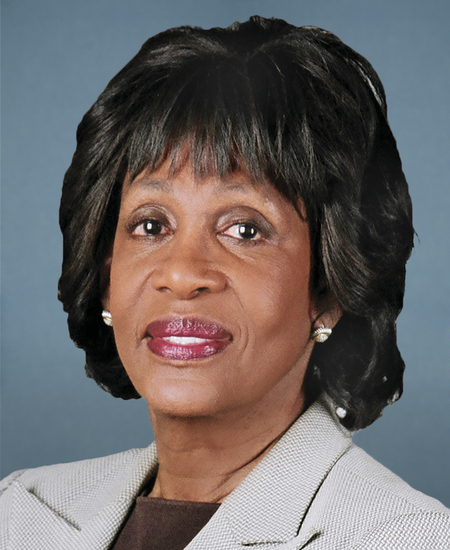
Rep. Maxine Waters
Sponsored bills
Maddy summaryHR 4343, the Organ Donation Clarification Act of 2023, amends the National Organ Transplant Act to permit limited noncash reimbursements for organ donors, such as medical costs, lost wages, travel expenses, and dependent care. It allows federal or state pilot programs to test these reimbursements under strict ethical oversight, aiming to increase donation rates without enabling financial incentives. The bill directly affects potential organ donors and transplant recipients by addressing financial barriers to donation, such as costs of medical care and lost income, while prohibiting cash payments or tradable benefits. These pilots must measure impacts on donation rates, donor demographics, and fairness in organ distribution, with reports to Congress after three years.
Maddy summaryHR 4340, the Therapeutic Fraud Prevention Act of 2023, prohibits paid providers from offering conversion therapy - defined as any commercial service attempting to change a person's sexual orientation or gender identity - and bans advertising that claims such therapy is effective or harmless. It directly affects therapists, counselors, or organizations offering paid conversion therapy services, including those advertising such services. Key provisions make it unlawful to provide, advertise, or facilitate paid conversion therapy, with enforcement led by the Federal Trade Commission (FTC) under consumer protection laws and allowing states to pursue civil actions. The bill explicitly excludes supportive care for gender transition or identity exploration from its definition of prohibited therapy.
Maddy summaryHRES 553 is a symbolic resolution honoring Gloria Molina, the first Latina elected to the California State Legislature, Los Angeles City Council, and Los Angeles County Board of Supervisors. It recognizes her 32-year political career and historic firsts, celebrating her legacy as a pioneer for Latinas in public office. The resolution does not create new policy or affect any specific group, as it is purely commemorative. It follows existing honors like the Gloria Molina East Los Angeles Civic Center station and the Gloria Molina Grand Park.
Maddy summaryThe PRIDE Act of 2023 amends the Internal Revenue Code to replace gender-specific terms like "husband and wife" with gender-neutral language such as "married couple" or "spouses" across numerous tax code sections. This bill affects all legally married couples who file federal tax returns by updating language in over 30 sections of the tax code related to filing status, deductions, credits, and other tax matters. The bill is a language update that makes the tax code more inclusive without changing existing tax treatment for married couples. It does not alter tax rates, benefits, or policies, but ensures all provisions apply equally regardless of gender.
Maddy summaryThe SAFE Act of 2023 extends a 2018 law that prohibits slaughtering animals for human consumption to include horses, donkeys, and other equine animals, such as ponies. It amends Section 12515 of the Agriculture Improvement Act of 2018 by updating the language to replace "dog or cat" with "dog, cat, or equine" in both the section title and the main prohibition. This change directly affects the livestock industry and slaughter facilities by banning the processing of equines for food. The bill modifies existing law without adding new enforcement mechanisms, closing a gap in animal protection.
Maddy summaryHJRES 76 proposes renaming the Robert E. Lee Memorial in Arlington National Cemetery to the "Arlington House National Historic Site." This procedural bill would replace all official references to the memorial with the new name and repeal two prior resolutions (1955 and 1972) that established the memorial. The change affects how the site is identified in federal laws, documents, and records but does not alter its management or historical significance. The bill focuses solely on the official designation, not on policy changes or historical interpretation.
Maddy summaryThe Ending Homelessness Act of 2023 would expand housing assistance for low-income families by creating a new entitlement program for housing choice vouchers starting in 2028, with 500,000 new vouchers in 2024 and 1,000,000 annually through 2027. It would provide $1 billion annually for emergency relief grants to address unmet needs of homeless populations, prioritizing jurisdictions with the highest need and local policies that decriminalize homelessness. The bill prohibits housing discrimination based on source of income, including rental vouchers and Social Security benefits, and repeals current ineligibility criteria for housing programs. It also permanently authorizes funding for McKinney-Vento Homeless Assistance Act grants and expands eligibility for private nonprofit and faith-based organizations to receive housing assistance. The bill directly affects extremely low-income families, homeless individuals, and housing providers by increasing access to affordable housing and reducing barriers to housing stability.
Maddy summaryThe Housing Crisis Response Act of 2023 authorizes over $100 billion in funding for housing programs, including $10 billion for public housing capital improvements, $9.9 billion for the HOME Investment Partnerships Program, and $1.77 billion for energy efficiency improvements in affordable housing. It creates new down payment assistance programs for first-time and first-generation homebuyers, expands housing vouchers for vulnerable populations including those experiencing homelessness, and establishes new requirements for accessible housing units. The bill mandates that many housing projects maintain affordability for at least 20 years and includes specific provisions for rural housing, Native American communities, and lead-based paint hazard control. It also creates a new Housing Investment Fund to support affordable housing development and preservation, primarily for low-, very-low, and extremely low-income renters.
Maddy summaryThe Downpayment Toward Equity Act of 2023 creates a federal program to provide down payment assistance to first-generation homebuyers, defined as individuals whose parents did not own a home. The program would provide grants to states (75% of funds) and eligible entities (25% on competitive basis) to help cover down payments, closing costs, and mortgage interest reductions, with maximum assistance of $20,000 or 10% of purchase price. To qualify, homebuyers must have household income up to 120-140% of median area income, be first-time homebuyers, and meet the "first-generation" definition. States must comply with fair housing requirements, and recipients must repay assistance if they don't occupy the home as their primary residence within five years, with exceptions for hardship.