

Maddy summaryThis bill amends reporting requirements for countries receiving U.S. foreign aid related to narcotics-related money laundering. It requires countries to provide specific examples of their anti-money laundering efforts - such as new laws, enforcement actions, international evaluations, and collaborative initiatives - rather than just general findings. The U.S. Treasury must also standardize Bank Secrecy Act examinations across agencies and submit a separate report on money laundering to relevant congressional committees. The bill directly affects foreign governments receiving U.S. aid and U.S. financial oversight agencies.
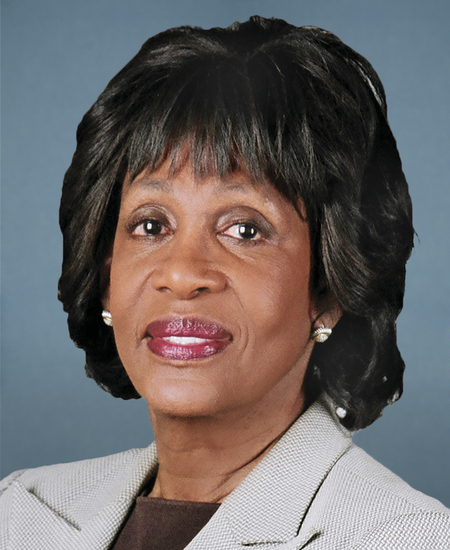
Rep. Maxine Waters
Sponsored bills
Maddy summaryThis bill extends the expiration date for certain authorities under the Defense Production Act of 1950. Specifically, it changes the deadline from September 30, 2025, to September 30, 2026, for provisions in Section 717(a) of the Act. This extension directly affects the government's ability to use these authorities - such as prioritizing defense-related contracts and securing critical supply chains - through 2026. The change is procedural and does not alter the scope or requirements of the underlying authorities.
Maddy summaryHRES 1600 is a non-binding resolution expressing the House of Representatives' view on artificial intelligence (AI) in financial services and housing. It highlights AI's growing use for tasks like mortgage underwriting and fraud detection, while noting risks including bias, security vulnerabilities, and resource gaps for small institutions. The resolution urges the House Financial Services Committee to lead oversight, ensure existing anti-discrimination laws are enforced with AI, and address regulatory gaps. It specifically calls for the committee to examine AI's impact on workforce, data privacy, and U.S. global leadership in AI. This resolution does not create new laws but directs committee action on AI oversight.
Maddy summaryHR 10262, titled the "AI Act of 2024," is a study mandate requiring five key financial regulators to examine AI's role in the U.S. financial system. The bill directs the Federal Reserve, FDIC, SEC, housing agencies (HUD, FHFA), and Treasury to submit detailed reports within 180 days of enactment, analyzing AI's benefits and risks across banking, securities, housing, and national security contexts. These reports must cover specific use cases (like AI in loan underwriting, fraud detection, fair lending, and cybersecurity), current regulatory gaps, and challenges in staffing with AI expertise. The studies aim to inform future regulatory proposals but do not impose new rules or requirements on financial institutions.
Maddy summaryThe Responsible AI Disclosure Act of 2024 requires major U.S. financial regulatory agencies (including the Federal Reserve, CFPB, SEC, and FDIC) to conduct a 6-month study on standardized disclosures for AI systems used by financial institutions. It mandates that agencies issue a report detailing how AI training data is categorized, sourced, and designed - specifically covering synthetic vs. real data ratios, data sources, and model functionality. After the report, agencies may require banks, credit unions, and AI vendors to disclose this information to regulators or the public. The bill directly affects financial institutions (regulated entities) and AI vendors supplying them, focusing on transparency around AI systems used in banking and finance. It does not impose immediate rules but sets the stage for future disclosure requirements based on the study’s findings.
Maddy summaryThis bill names the U.S. Postal Service building at 333 West Broadway in Anaheim, California, as the "Dr. William I. 'Bill' Kott Post Office Building." It requires all federal documents, maps, and references to update the building's official name to honor Dr. Kott, a former Anaheim physician and community leader. The change applies immediately to all government records and communications involving the facility.
Maddy summaryThis bill designates the U.S. Postal Service facility at 517 Seagaze Drive in Oceanside, California, as the "Charlesetta Reece Allen Post Office Building." It updates all federal references in laws, maps, regulations, and documents to use this new name for the facility. The bill has no policy impact beyond renaming the building and altering official references. It was signed into law on November 25, 2024.
Maddy summaryThis bill designates the United States Postal Service facility at 28081 Marguerite Parkway in Mission Viejo, California, as the "Major Megan McClung Post Office Building." It changes all official references to this specific post office location to the new name. The bill directly affects the USPS facility and any government documents or records referencing it. This is a procedural naming resolution with no policy changes or financial impact.
Maddy summaryHR 1060 designates the United States Postal Service facility at 1663 East Date Place in San Bernardino, California, as the "Dr. Margaret B. Hill Post Office Building." The bill updates all federal references - such as in laws, maps, regulations, and official documents - to use this new name for the building. This is a procedural designation with no policy changes or direct impact on residents or services. The bill was passed by Congress and signed into law on November 25, 2024.
Maddy summaryThe Working Dog Commemorative Coin Act (HR 807) directs the U.S. Treasury to mint three types of commemorative coins honoring working dogs' service: $5 gold coins, $1 silver coins, and half-dollar coins with specific weight and composition requirements. Each coin will carry a surcharge ($35 for $5 coins, $10 for $1 coins, $5 for half-dollars) that will be paid directly to America's VetDogs to support their programs providing service dogs for veterans, the disabled, and others. The coins will be issued in 2027 with designs reflecting working dogs' roles in military, detection, therapy, and assistance work. The legislation specifies that all surcharge revenue must fund America's VetDogs' operations without creating new government programs. This is a commemorative measure focused on honoring working dogs' contributions through coin sales, with all surcharge funds going to a specific nonprofit organization.