

Maddy summaryHRES 754 is a symbolic House resolution recognizing the heritage, culture, and contributions of Latinas in the United States. It highlights Latinas' roles in business (owning over 2 million businesses), military service (45,710 active duty), arts (Oscar-winning artists like Rita Moreno), and public service, while noting persistent challenges like the 57-cent pay gap. The resolution does not create new laws or policies but formally honors these contributions and acknowledges the need for further progress toward equality. It was introduced by multiple representatives and referred to the Committee on Oversight and Accountability.
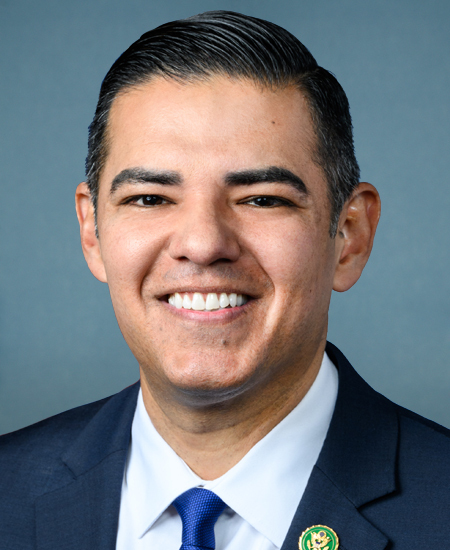
Rep. Robert Garcia
Sponsored bills
Maddy summaryThe Mental Health Infrastructure Improvement Act of 2023 provides federal loans and loan guarantees to help build or improve mental health and substance use disorder treatment facilities. It prioritizes projects that increase psychiatric bed capacity in underserved areas, serve rural communities, or provide integrated care, with 25% of funds reserved specifically for pediatric facilities. Borrowers must contribute 25% of project costs from non-federal sources, and the program allocates up to $200 million annually for fiscal years 2024-2028. The bill includes specific terms for loan repayment, guarantee coverage, and requirements for eligible facility types that qualify for funding.
Maddy summaryHR 5784 would provide federal grants to public schools (including Bureau of Indian Education schools) to make them more environmentally sustainable and equitable. It prioritizes schools in the most vulnerable communities (based on CDC Social Vulnerability Index) for full funding to become "healthy zero-carbon schools" through energy-efficient retrofits and new construction, while offering reduced funding for less vulnerable schools. The grants require community engagement in planning, mandate hiring from local communities with specific diversity goals, fund social services and mental health support, and include strict energy efficiency standards for all projects. The bill also includes funding for educational equity planning and climate resiliency programs to help schools serve as community centers during disasters.
Maddy summaryThis bill requires the Federal Emergency Management Agency (FEMA) to implement concrete measures to ensure equitable disaster response and assistance. It mandates FEMA to modify data collection systems, develop equity criteria for all programs, appoint an equity advisor, and establish a steering group with diverse representation - all to address barriers faced by underserved communities (including racial minorities, rural areas, low-income populations, and those with disabilities). FEMA must also submit annual reports to Congress on progress and metrics measuring equity impacts, while the GAO will review FEMA’s decision-making factors for disaster declarations. These changes directly affect how FEMA delivers federal disaster aid, aiming to reduce disparities in access and outcomes for communities historically underserved in emergency management.
Maddy summaryThis bill prevents federal regulators from requiring banks, credit unions, and trust companies to treat custody assets (like digital assets held for clients) as liabilities on their financial statements or to hold extra capital against them. It specifically stops institutions from recognizing liabilities for digital asset services they don’t own, unless those liabilities exceed related expenses. The law applies broadly to depository institutions but includes an exception: commingled cash held for third parties must still be listed as a liability. Key provisions aim to clarify accounting rules for digital assets, reducing regulatory complexity for financial institutions managing client custody. It directly affects banks, credit unions, and trust companies handling digital assets or custody services.
Maddy summaryHR 5097 establishes new federal funding programs to support the development of alternative proteins - foods that mimic animal meat using plants, cell cultivation, or fermentation. It allocates $15 million annually (2024-2028) for Centers of Excellence focused on research and workforce training, $10 million for USDA research, $50 million for manufacturing grants to U.S. companies and institutions, and $25 million for workforce development programs. The bill requires the USDA to create a national strategy coordinating multiple federal agencies to advance this sector. These provisions directly affect U.S. businesses, universities, and workers in the alternative protein industry by providing targeted funding for research, production, and job training.
Maddy summaryThe Agricultural Worker Justice Act (HR 4978) improves working conditions for agricultural and meatpacking workers through several key provisions. It requires USDA to only purchase from entities paying prevailing wages (based on local rates and collective bargaining agreements), prohibits stock buybacks by USDA-funded companies, and creates a list of companies with labor violations that would be ineligible for USDA contracts. The bill establishes new safety standards for meatpacking plants including restrictions on line speeds (requiring safety inspections before increases), requirements for toilet facilities, and enhanced protections for workers reporting safety concerns. It also mandates a GAO report on racial disparities in meatpacking employment and authorizes $400 million for local food purchase programs. The bill directly affects meatpacking facilities, agricultural businesses receiving USDA funds, and the workers employed in these industries.
Maddy summaryThis bill amends the Higher Education Act to require all U.S. colleges and universities receiving federal financial aid to create detailed anti-harassment policies covering physical, online, and institution-sponsored settings. It mandates policies prohibiting harassment based on race, sex (including sexual orientation and gender identity), disability, religion, and other protected characteristics, including harassment via institutional email, computers, or electronic messaging. The bill also establishes a $50 million annual grant program to fund colleges developing prevention programs, victim support services, and training for students and staff on recognizing and addressing harassment. These policies and grants must comply with existing civil rights laws like Title IX but add specific requirements for reporting and prevention.
Maddy summaryHR 5592, the VISIONS Act of 2023, prevents federal funds from being used to block states or local governments from implementing their own laws regarding psilocybin. It directly affects states, territories, and local governments (like counties or cities) that have legalized psilocybin for use, distribution, sale, possession, research, or cultivation. The key provision prohibits federal agencies from using taxpayer money to interfere with these state or local initiatives. This bill does not legalize psilocybin federally but ensures states can move forward with their own regulations without federal financial obstruction.
Maddy summaryHR 5610 establishes a 15-member Commission to examine historical discrimination against LGBTQ+ service members and veterans. The Commission will document policies targeting LGBTQ+ individuals in the military since WWII, gather testimonies from affected veterans, and analyze impacts on mental health, benefits access, and financial stability. It must hold public hearings, examine how discrimination affected racial minorities and women within the military, and recommend solutions like record corrections, improved benefits for LGBTQ+ veterans, and better diversity training. The Commission will submit a final report to Congress within one year, proposing concrete steps to address past harms and improve inclusion in the military.